
Alcoholic Liver Disease: Stages From Hepatitis to Cirrhosis
 May, 4 2026
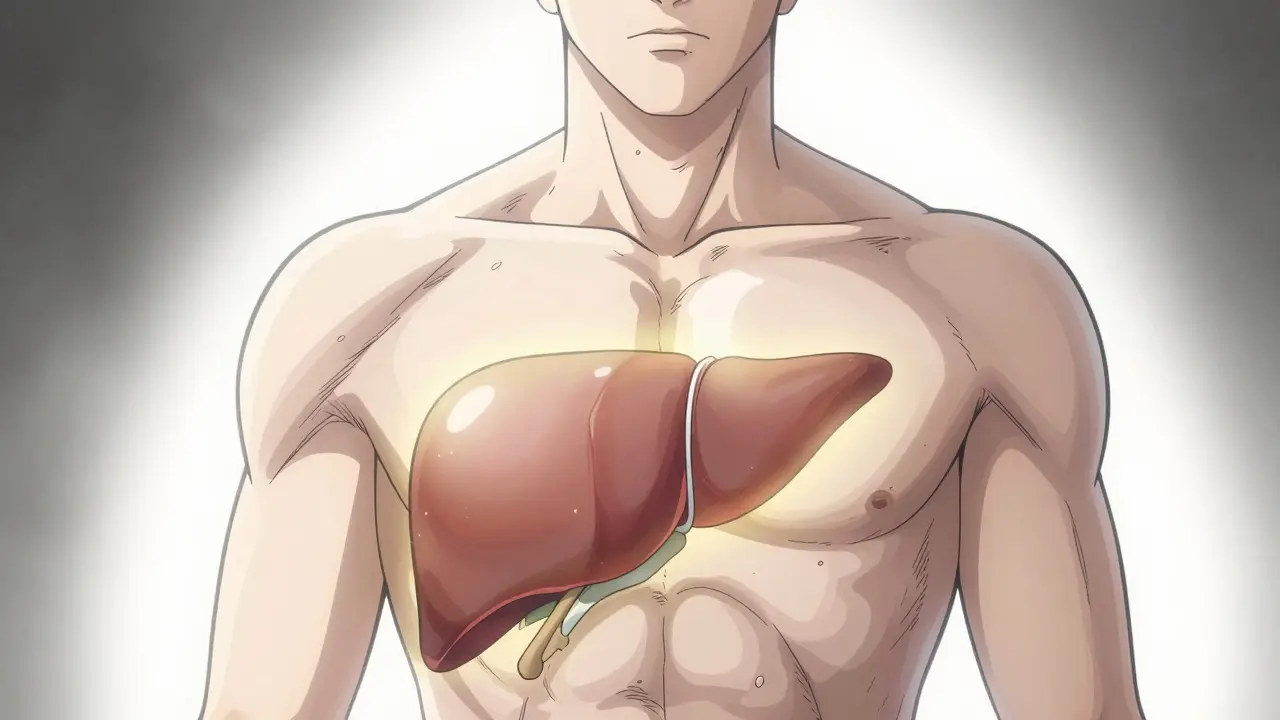
Many people believe that only lifelong heavy drinkers end up with serious liver problems. The reality is much sharper. You can develop Alcoholic Liver Disease, now medically referred to as Alcohol-Associated Liver Disease (ALD), after just a few days of sustained heavy drinking. This condition isn't a single diagnosis; it is a spectrum of injury that progresses through distinct stages if left unchecked. Understanding these stages-from the silent accumulation of fat to the life-threatening scarring of cirrhosis-is the difference between full recovery and irreversible damage.
The terminology shift from "alcoholic" to "alcohol-associated" wasn't just about political correctness. It reflects a crucial medical insight: alcohol causes the injury, regardless of whether you meet the clinical criteria for dependency. Whether you are a binge drinker or a daily consumer, the path your liver takes follows a predictable pattern. Let’s break down exactly what happens inside your body at each stage, how to spot the warning signs, and most importantly, what you can do to stop the progression.
Stage 1: Alcoholic Fatty Liver (Hepatic Steatosis)
This is the entry point for nearly everyone who drinks heavily. If you consume more than four units of alcohol a day, there is a 90% chance you will develop hepatic steatosis. In this stage, fat begins to accumulate within the liver cells. To put that in perspective, normal liver tissue contains very little fat. When fat makes up more than 5-10% of your liver's weight, you have fatty liver.
Here is the good news: this stage is almost always reversible. A study published in the *Journal of Hepatology* showed that fat accumulation can begin within 72 hours of sustained heavy drinking. However, another clinical trial demonstrated that 85% of participants saw complete resolution of steatosis after just six weeks of total abstinence. The key here is timing. At this stage, you likely feel fine. About 95% of patients are asymptomatic. You might not even know your liver is struggling until routine blood work shows elevated enzymes, specifically an AST-to-ALT ratio where AST is typically 1.5 to 2 times higher than ALT.
- Risk Factor: Consuming >4 units of alcohol daily.
- Reversibility: High (with 4-6 weeks of abstinence).
- Symptoms: Usually none, possibly mild fatigue.
Stage 2: Alcohol-Associated Hepatitis (AH)
If you continue drinking while your liver is fatty, inflammation sets in. This is alcoholic hepatitis, or AH. It develops in about 30-35% of people with persistent fatty liver who keep drinking. This stage is dangerous because it can strike suddenly. You might have been drinking moderately for years, then hit a period of intense bingeing-exceeding 100 grams of alcohol in 24 hours-and trigger acute inflammation.
AH is not just a bad cold; it is a serious inflammatory response. Doctors use the Maddrey Discriminant Function (mDF) score to gauge severity. An mDF score below 32 indicates mild hepatitis, which carries a low mortality rate and can still be reversed with immediate cessation of alcohol. But once that score hits 32 or higher, we are talking about severe AH. This condition has a 30-40% short-term mortality rate. Symptoms become impossible to ignore: yellowing of the skin and eyes (jaundice), swelling in the abdomen (ascites), and confusion due to toxin buildup in the brain (hepatic encephalopathy).
Treatment for severe AH often involves corticosteroids like prednisolone to calm the inflammation. However, steroids only work if you stop drinking completely. If you don’t, the treatment fails, and the damage accelerates toward the final stage.
| Stage | Primary Damage | Reversibility | Key Risk |
|---|---|---|---|
| Fatty Liver | Fat accumulation | Fully Reversible | Progression to inflammation |
| Hepatitis | Inflammation & cell death | Potentially Reversible | Acute liver failure |
| Cirrhosis | Scar tissue formation | Irreversible | Liver cancer & transplant need |

Stage 3: Cirrhosis and End-Stage Liver Disease
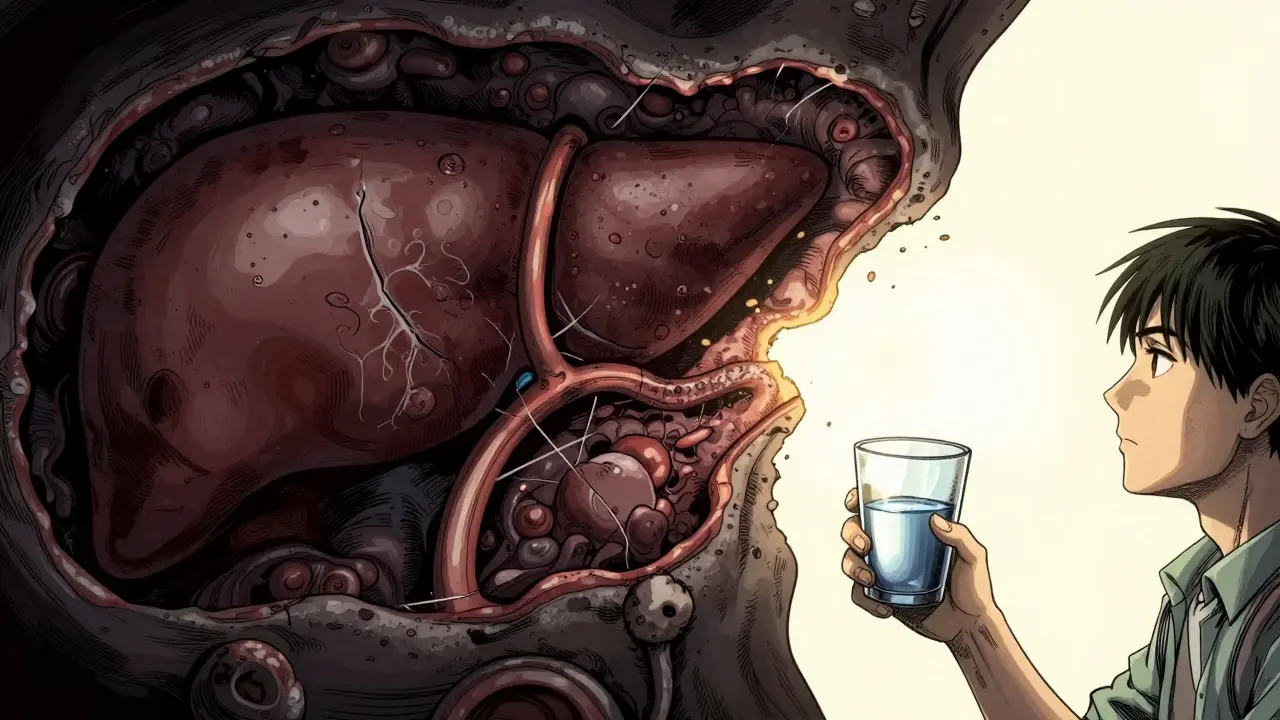
Cirrhosis is the point of no return for liver architecture. It affects about 10-20% of chronic heavy drinkers. In this stage, healthy liver tissue is replaced by hard scar tissue. More than 75% of your liver’s normal structure may be destroyed. The Metavir scoring system classifies this as F4 fibrosis-the highest level of scarring.
You might hear terms like "compensated" and "decompensated" cirrhosis. Compensated means your liver is scarred but still manages to perform its essential functions. With strict abstinence, 50-60% of compensated cases stabilize, and 5-year survival rates jump from 30% to over 90%. Decompensated cirrhosis is when the liver gives up. Fluid builds up in the belly, veins in the esophagus swell and can burst (variceal bleeding), and toxins flood the brain. Without a liver transplant, decompensated cirrhosis carries a 50% mortality rate within two years.
The risk factors for progressing to cirrhosis aren't just about volume. Women are at significantly higher risk-developing disease after less alcohol exposure than men due to differences in metabolism. Genetic factors, such as variations in the PNPLA3 gene, also play a role. Additionally, having metabolic syndrome or viral hepatitis alongside alcohol use accelerates the timeline dramatically.
Diagnosis: Beyond the Biopsy
In the past, knowing your liver's stage required a painful biopsy. Today, technology has caught up. Transient elastography, commonly known as FibroScan, is now the standard non-invasive tool. It measures liver stiffness with 85-90% accuracy compared to biopsy results. For hepatitis severity, doctors use scores like the Glasgow Alcoholic Hepatitis Score (GAHS). A GAHS score of 9 or higher indicates a grim prognosis without aggressive intervention, including potential transplantation evaluation.
Blood tests remain vital markers. Elevated AST levels relative to ALT are a classic red flag. However, remember that enzyme levels can fluctuate. They tell you something is wrong, but they don't tell you the extent of the scarring. That’s why imaging and elastography are critical for accurate staging.
Treatment and Recovery Strategies
The cornerstone of treating any stage of ALD is abstinence. There is no medication that fixes an alcohol-damaged liver if you keep drinking. Here is how treatment differs by stage:
- Fatty Liver: Stop drinking for 4-6 weeks. Combine this with weight management if applicable. Most patients see full normalization of liver enzymes and fat reduction.
- Hepatitis: Hospitalization is often required. Corticosteroids reduce inflammation in severe cases. Nutritional support is critical, as malnutrition worsens outcomes.
- Cirrhosis: Management focuses on complications. Propranolol reduces bleeding risks. Lactulose helps clear toxins from the brain. Liver transplantation is the only cure for end-stage disease, offering a 70-75% five-year survival rate, though most centers require six months of documented sobriety before listing.
New therapies are emerging. Research into gut microbiome modulation, including fecal microbiota transplantation, has shown promise in improving survival rates for severe hepatitis. Integrated care models, combining hepatology with addiction medicine specialists, have also proven effective, boosting one-year abstinence rates from 35% to 65%.
Why Early Action Saves Lives
Data from patient forums and clinical registries paints a stark picture. Many people wait until they are jaundiced or hospitalized to seek help. By then, the window for easy reversal has closed. Patients who achieved abstinence within six months of a fatty liver diagnosis reported full recovery in 80% of cases. Those who delayed beyond a year saw reversal rates drop to just 35%.
If you are worried about your liver health, do not wait for symptoms. Fatigue and mild discomfort are late signals. Get tested early. Ask for a FibroScan if your enzymes are off. The liver is resilient, but it has limits. Respect those limits, and you can turn back the clock.
How long does it take for alcohol to cause liver damage?
Fat accumulation (steatosis) can begin within 72 hours of sustained heavy drinking. Significant inflammation (hepatitis) usually develops after years of chronic consumption or acute binge episodes. Cirrhosis typically takes 10-20 years of heavy drinking to develop, though individual genetics and sex play major roles.
Can alcoholic liver disease be reversed?
Fatty liver is fully reversible with abstinence. Hepatitis can be reversed if caught early and treated. Cirrhosis is generally irreversible, but stopping alcohol can stabilize the condition and prevent further decline, significantly extending life expectancy.
What are the first signs of alcoholic hepatitis?
Common signs include jaundice (yellow skin/eyes), abdominal swelling (ascites), unexplained fever, and extreme fatigue. Blood tests showing high AST levels relative to ALT are also key indicators.
Is FibroScan better than a biopsy for diagnosing liver disease?
FibroScan is less invasive and highly accurate (85-90%) for detecting fibrosis. While biopsy remains the gold standard for specific cellular details, FibroScan is preferred for initial screening and monitoring progression due to its safety and ease of use.
Do women get alcoholic liver disease faster than men?
Yes. Women develop ALD after significantly less alcohol exposure due to physiological differences in alcohol metabolism and hormone interactions. Their risk is 2-3 times higher at lower doses compared to men.
Natali Brown
May 5, 2026 AT 03:40I really appreciate how you broke this down because it’s so easy to feel overwhelmed when you hear medical terms like steatosis or cirrhosis. It’s scary to think that damage can start in just three days, but knowing that fatty liver is reversible gives me a lot of hope for people who are struggling right now. We all have those moments where we slip up, and the last thing anyone needs is shame; they need actionable steps and kindness. If you’re reading this and feeling worried about your drinking habits, please know that seeking help is a sign of strength, not weakness. Your body is resilient, and it wants to heal if you give it the chance. Take it one day at a time, and don’t hesitate to lean on your support system. You are not alone in this journey, and every small step toward abstinence counts. Let’s be gentle with ourselves as we navigate these health challenges together. Sending lots of positive vibes to everyone here. :)
Kelsey Thomas
May 5, 2026 AT 05:18This is such a crucial topic 🌟 I’ve seen too many friends ignore the early signs until it’s too late. The part about women being at higher risk is something more people need to know since we often drink less than men but still face serious consequences. It’s great that FibroScan exists now because no one should have to suffer through an invasive biopsy just to get answers. Early detection really does save lives, and sharing this info helps break the stigma around alcohol-related issues. Thanks for posting this! 💖
swetha r
May 6, 2026 AT 18:17They want you to believe it’s just about willpower, but what about the toxins in the tap water? Or the microplastics in our food? The pharmaceutical industry profits from keeping us sick, pushing pills instead of real healing. They don’t tell you that alcohol might actually be masking deeper environmental poisoning. Think about it. Who benefits from your silence? The system is designed to keep you dependent and confused. Wake up. 🙄
Nisha Koshti
May 8, 2026 AT 14:58ugh... another article telling us what to do. like wow. thanks. i already knew all this stuff. why do people keep rehashing the same old boring facts?? it’s not rocket science. stop drinking. duh. seriously though, this post is so long-winded and unnecessary. who has time to read all this? just say 'alcohol bad' and move on. typical. :-(
Jannet Suen
May 9, 2026 AT 00:48I’m glad someone finally wrote this clearly without all the judgment. It’s important to remember that addiction is a disease, not a moral failing. We need to create spaces where people can talk openly without fear of being shamed. That said, let’s not forget personal responsibility plays a role too. Balance is key. Don’t let anyone guilt-trip you into staying silent, but also don’t use victimhood as an excuse to avoid change. Boundaries matter. Respect yourself first. ;)
Claire A
May 9, 2026 AT 21:47You can totally turn this around if you catch it early!
andrew iregbayen
May 10, 2026 AT 15:20Hey, this was super helpful. I didn’t realize the AST-to-ALT ratio was such a big deal. My dad had liver issues years ago, and he never understood why his tests were off until it was late stage. Makes me wonder if getting a FibroScan would be worth it even if I don’t have symptoms yet. Just curious-does insurance usually cover these scans?
Laura ciotoli
May 12, 2026 AT 08:14The data presented here is accurate and reflects current clinical guidelines. However, patients must understand that self-diagnosis is dangerous. Elevated enzymes require professional interpretation. Do not rely on internet forums for medical advice. Consult a hepatologist immediately if you suspect liver dysfunction. Abstinence is non-negotiable for recovery. There are no shortcuts.
Sarah O'Donnell
May 13, 2026 AT 14:48People are so lazy these days 😒 Instead of taking care of their bodies, they blame everything on genetics or environment. If you drink too much, it’s on you. No excuses. The world doesn’t owe you sympathy for poor choices. Get your act together before you end up needing a transplant while sober folks wait years. Disgusting.
Amelia Vaughan
May 15, 2026 AT 02:29Stop whining. Drink less. Problem solved. Why is this even a discussion? Americans are weak. Other countries don’t have this problem because they respect discipline. Grow up.
Kevin S
May 15, 2026 AT 15:32This is awesome info! 👍 I shared this with my buddy who’s been cutting back. He’s proud of himself for quitting cold turkey last month. Small wins matter. Keep going guys! 💪
Madison Jones
May 15, 2026 AT 22:32I cannot stress enough how important nutrition is during recovery!! Many people forget that malnutrition worsens outcomes significantly!!! Please eat well!!!! Hydrate!!!!! And please see a doctor if you have concerns!!! This isn’t something to ignore!!! Your liver works hard for you!!! Show some love back to it!!! ❤️
Sarah Grenberg
May 16, 2026 AT 09:25The resilience of the human body is truly remarkable when given the right conditions. Yet, we often overlook the subtle signals until crisis strikes. This article serves as a vital reminder that prevention is far superior to cure. We must advocate for accessible screening methods like FibroScan in primary care settings. Early intervention changes trajectories. Let us commit to proactive health management rather than reactive despair. The path to wellness begins with awareness.