
Authorized Generics: Same Drug, Different Label
 Mar, 17 2026
Have you ever picked up a prescription and noticed the pill looks different-maybe a different color or shape-but the name on the bottle is the same as your usual brand? You might think you got a cheaper version. But what if I told you it’s not just a generic-it’s the exact same drug your doctor originally prescribed, just sold under a different label? That’s what an authorized generic is.
What Exactly Is an Authorized Generic?
An authorized generic is not a copy. It’s not a look-alike. It’s the brand-name drug itself, made by the same company that invented it, packaged without the brand name, and sold at a lower price. Think of it like a car manufacturer selling the exact same vehicle under a private label-same engine, same parts, different logo.
The U.S. Food and Drug Administration (FDA) defines it clearly: an authorized generic is a drug approved under the original brand’s New Drug Application (NDA), but marketed with different labeling, packaging, or product codes. No new approval is needed. No extra testing. It’s the same pill, just repackaged.
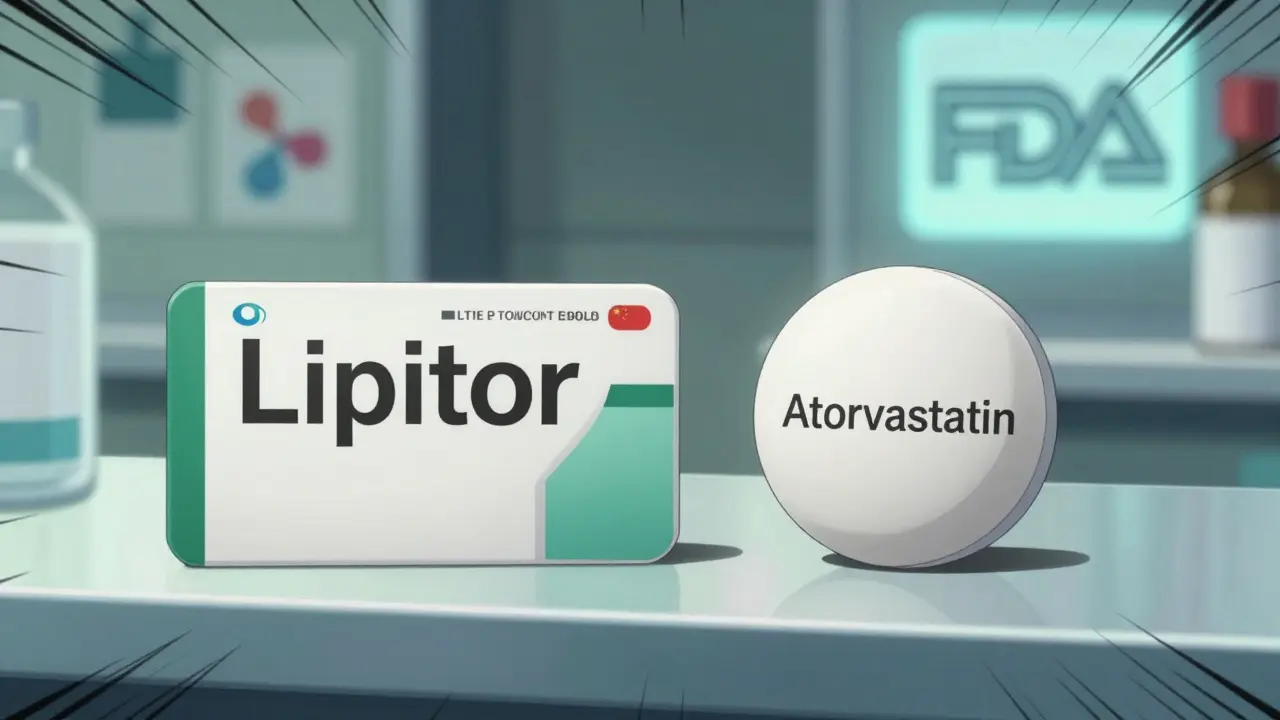
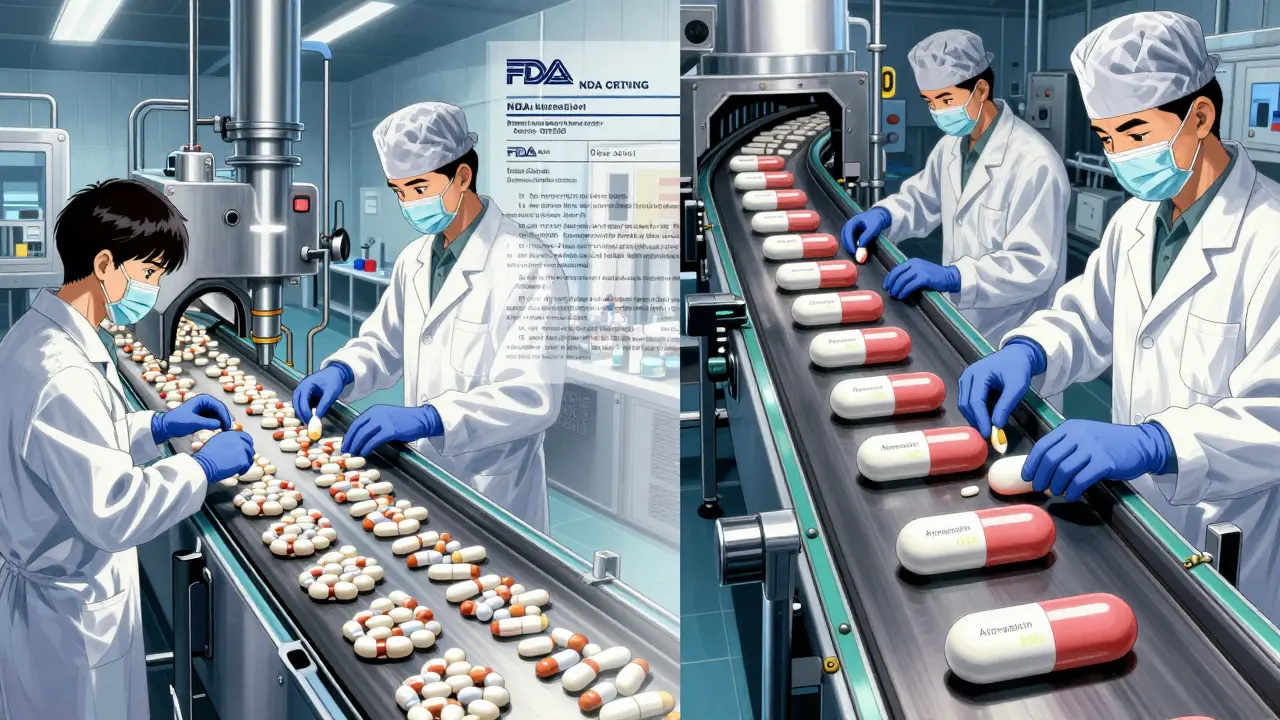
For example, if you take Lipitor (atorvastatin), the brand-name cholesterol drug made by Pfizer, you might receive a pill from Greenstone-Pfizer’s own subsidiary. Same active ingredient. Same inactive ingredients. Same manufacturing line. Only the label says "Atorvastatin" instead of "Lipitor."
How Is This Different from Regular Generics?
Regular generics are approved through a separate process called an Abbreviated New Drug Application (ANDA). They must prove they’re bioequivalent to the brand drug-meaning they work the same way in your body. But they can have different fillers, coatings, or dyes. That’s why your generic pill might be blue when the brand is white, or oval instead of round.
Authorized generics don’t need to prove bioequivalence. Why? Because they’re not different. They’re the same product, made in the same factory, with the same ingredients, under the same approval. The FDA doesn’t list them in the Orange Book (the official guide to generic equivalents) because they’re not technically generics-they’re the brand drug in disguise.
Here’s how they stack up:
| Feature | Brand-Name Drug | Authorized Generic | Regular Generic |
|---|---|---|---|
| Manufacturer | Original brand company | Same as brand (or subsidiary) | Third-party generic company |
| Active Ingredient | Identical | Identical | Identical |
| Inactive Ingredients | Identical | Identical | May differ |
| Approval Pathway | New Drug Application (NDA) | Uses brand’s NDA | Abbreviated NDA (ANDA) |
| Bioequivalence Testing | Not required | Not required | Required |
| Listed in FDA Orange Book? | Yes | No | Yes |
| Price | Full brand price | Generic price | Generic price |
Why Do Drug Companies Make Authorized Generics?
It’s not charity. It’s strategy.
When a brand-name drug’s patent expires, the law gives the first generic company that challenges the patent 180 days of exclusive market access. That’s a huge financial incentive. But here’s the twist: the brand company can launch its own generic version-called an authorized generic-right before or during that 180-day window.
Now the first generic company isn’t just competing with other generics. It’s competing with the exact same product from the original manufacturer. That slashes its profits. In some cases, it wipes them out entirely.
Companies like Pfizer (through Greenstone), Procter & Gamble (through Prasco), and others have built entire divisions just to make authorized generics. They’re not trying to help patients save money-they’re trying to keep their own revenue flowing after patent expiration.
According to research published in Health Affairs in 2023, authorized generics are now common on major drugs. In fact, when a brand launches an authorized generic during the exclusivity period, it can reduce the first generic’s market share by over 70%.
What Does This Mean for Patients?
For you, the patient, it’s mostly good news.
You get the same drug you’ve been taking-no risk of different absorption, no surprise side effects from new fillers. You pay less. The pill might look different, but it works the same.
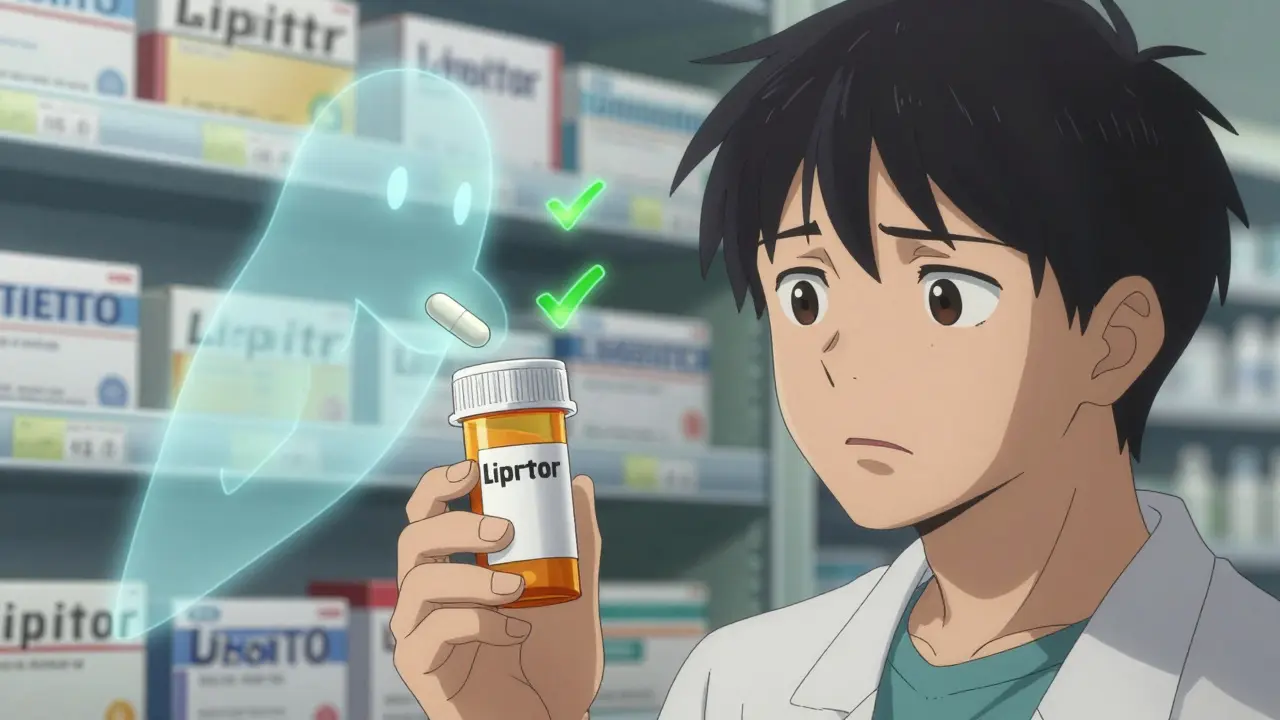
But confusion is real. Pharmacists often don’t know an authorized generic is in stock because it’s not listed in the Orange Book. Some patients report being told, "This isn’t your medication," when they get a different-looking pill-even though it’s chemically identical.
GoodRx and other patient resources say: if your pill looks different, check the imprint code (the letters or numbers stamped on it). If it matches the brand, you’ve likely been given an authorized generic. Call your pharmacy if you’re unsure. Ask: "Is this made by the same company as the brand?"
Why Aren’t Authorized Generics Listed in the Orange Book?
The Orange Book is the FDA’s official list of approved generic drugs that are considered therapeutically equivalent to brand-name products. But authorized generics aren’t listed there because they’re not generics-they’re brand drugs under a different label.
This creates a real headache for pharmacies. When a prescription comes in for "atorvastatin," the system might default to the cheapest generic in stock. But if that generic is an authorized version, the pharmacy may not know it. Some pharmacists have to manually check the FDA’s separate List of Authorized Generic Drugs to confirm what they’re dispensing.
It’s a regulatory blind spot. And it’s why some patients get confused, or even worried, when they receive what looks like a new medication.
Are Authorized Generics Safe?
Yes. Absolutely.
The FDA confirms that authorized generics are therapeutically equivalent to their brand-name counterparts. Because they’re made on the same production lines, with the same quality controls, there’s no added risk. In fact, they’re more consistent than many regular generics, which can vary slightly in inactive ingredients.
Patients with conditions like epilepsy, thyroid disorders, or heart disease-who are sensitive to small changes in drug absorption-often prefer authorized generics because they eliminate any uncertainty about formulation changes.
Studies from the American Journal of Health-System Pharmacy show no difference in outcomes between patients taking brand-name drugs and those taking authorized generics.
What’s the Future of Authorized Generics?
More than ever, authorized generics are here to stay.
As blockbuster drugs like Humira, Enbrel, and others lose patent protection, brand manufacturers are increasingly using authorized generics to protect revenue. The Hatch-Waxman Act of 1984 was meant to encourage competition. But authorized generics turned it into a loophole.
Some lawmakers have pushed to close this gap. In 2023, bills were introduced in Congress to require authorized generics to be listed in the Orange Book or to limit their use during the 180-day exclusivity window. So far, none have passed.
For now, the FDA continues to maintain its official List of Authorized Generic Drugs. It’s updated regularly, and pharmacists can access it to verify what’s being dispensed.
What’s clear is this: the line between brand and generic is blurring. And for patients who want the same drug at a lower price, authorized generics offer a rare win-no trade-offs, no compromises.
Are authorized generics as safe as brand-name drugs?
Yes. Authorized generics are made by the same company, in the same factory, with the exact same ingredients as the brand-name drug. The FDA considers them therapeutically equivalent. There is no difference in safety or effectiveness.
Why does my pill look different if it’s the same drug?
The color, shape, or imprint may change because the manufacturer is required to distinguish the authorized generic from the branded version. This is purely for labeling purposes. The active and inactive ingredients are identical.
Can I ask my pharmacist for an authorized generic?
Yes. You can ask if the pharmacy carries the authorized version of your medication. Many do, especially for high-cost drugs. It’s often priced the same as regular generics but offers more consistency.
Are authorized generics cheaper than regular generics?
Usually, they’re priced similarly. Sometimes they’re slightly more expensive than the cheapest generic, but often they’re the same. The big advantage isn’t always price-it’s reliability. You know you’re getting the exact same product as the brand.
Do authorized generics affect insurance coverage?
No. Insurance plans treat authorized generics the same as regular generics. They’re counted as generic drugs for formulary purposes and typically fall under the same copay tiers.
cara s
March 19, 2026 AT 06:04Linda Olsson
March 20, 2026 AT 14:23Ryan Voeltner
March 21, 2026 AT 01:40Shameer Ahammad
March 21, 2026 AT 16:41Manish Singh
March 21, 2026 AT 18:07Amadi Kenneth
March 22, 2026 AT 21:35Alexander Pitt
March 23, 2026 AT 09:33jared baker
March 23, 2026 AT 22:05Emily Hager
March 25, 2026 AT 19:33Michelle Jackson
March 26, 2026 AT 23:35David Robinson
March 27, 2026 AT 23:30Jeremy Van Veelen
March 29, 2026 AT 08:44Robin Hall
March 30, 2026 AT 09:05Nilesh Khedekar
March 31, 2026 AT 18:25Ayan Khan
March 31, 2026 AT 20:25