
Botox for Migraine: Who Benefits and How It Works
 Feb, 23 2026
When you’re stuck in a cycle of 15 or more headache days a month - with at least eight of them being full-blown migraines - traditional painkillers and oral preventives often don’t cut it. That’s where Botox comes in. Not for smoothing forehead lines, but as a medically proven tool to stop migraines before they start. It’s not a cure, but for many people, it’s the only thing that brings real, lasting relief.
How Botox Stops Migraines (It’s Not Just About Muscles)
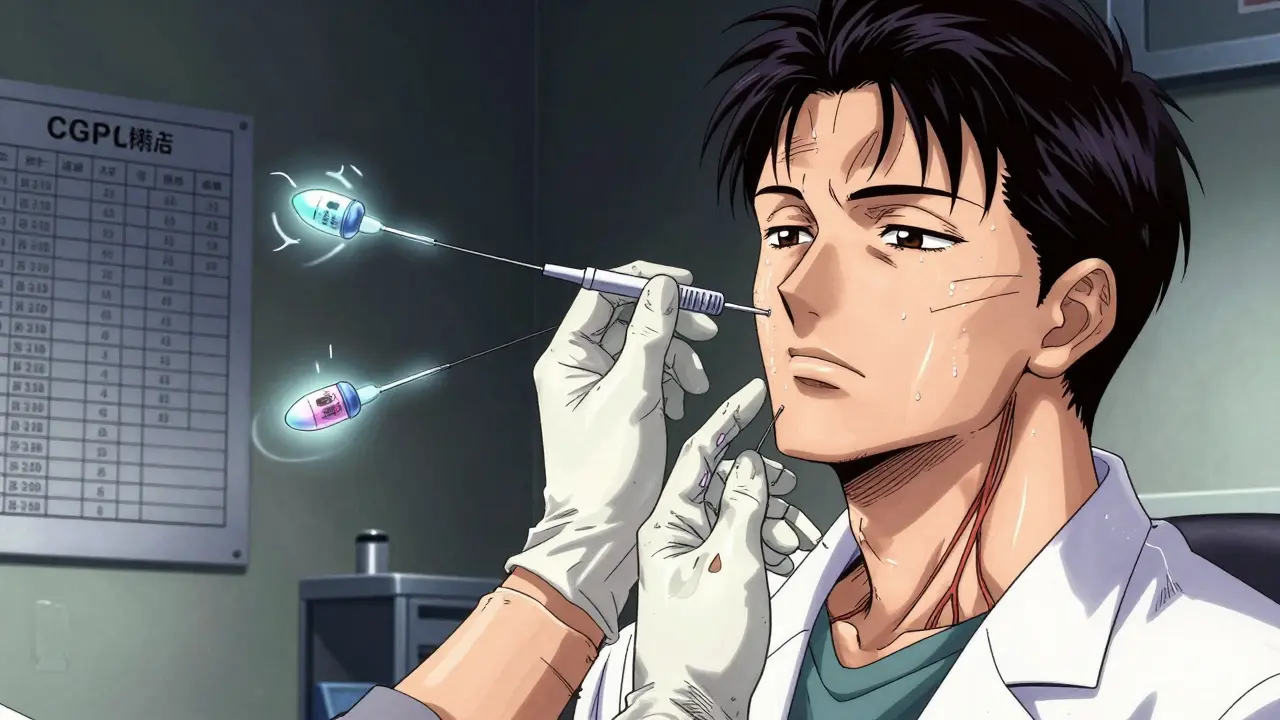
Most people think Botox works by relaxing tight neck and forehead muscles. That’s part of it, but the real magic happens at the nerve level. Botox, or onabotulinumtoxinA, blocks the release of chemicals like CGRP (calcitonin gene-related peptide) that trigger inflammation and pain signals in the brain. It targets the trigeminal nerve system - the main pathway for migraine pain - and silences the overactive nerves that keep sending false alarms. It doesn’t just sit at the injection site. Studies show it can travel backward along nerve fibers, affecting pain pathways in the brainstem. This means it doesn’t just calm local muscle tension; it helps reset the entire pain system that’s gone haywire in chronic migraine. The effect isn’t instant. You won’t feel better after one shot. It takes two to three treatment cycles - spaced 12 weeks apart - before you see the full benefit.Who Actually Benefits From Botox for Migraine?
This treatment isn’t for everyone. It’s specifically approved for people with chronic migraine, defined as having 15 or more headache days per month, with at least eight meeting migraine criteria. If you get migraines only three or four times a month, Botox likely won’t help. Clinical trials showed no significant benefit for episodic migraine sufferers. The best candidates are those who’ve tried and failed at least three other preventive treatments - like beta-blockers (propranolol), anti-seizure drugs (topiramate), or antidepressants. Many of these patients also have medication-overuse headache, where frequent use of painkillers makes migraines worse. Botox breaks that cycle. Real-world data from 1,247 patients showed 63.2% had at least a 50% drop in headache days after one year. For some, it’s even better. One patient went from 25 migraine days a month down to 8-10. Their worst attacks went from debilitating to manageable. That’s not just a number - it’s the difference between missing work, staying in bed, or being able to pick up your kids.What Happens During a Botox Treatment?
The procedure is quick and doesn’t require anesthesia. A trained neurologist or headache specialist uses a fine needle to deliver 31-39 tiny injections across seven key areas: the forehead, temples, back of the head, neck, and shoulders. The total dose is 155-195 units, given exactly as outlined in the PREEMPT protocol. Each session takes about 15 minutes. You might feel a pinch, but most people describe it as mild discomfort. There’s no downtime. You can drive yourself home and go back to work. Some report slight soreness or bruising at the injection sites. A small number (about 7%) notice temporary weakness in their forehead or neck muscles - enough to make raising eyebrows harder for a few weeks. It’s not dangerous, but it’s worth knowing ahead of time. The effects last about 12 weeks. After that, you need another round. Most patients need three to four cycles before they hit their peak response. Patience is key. This isn’t a quick fix. It’s a long-term strategy.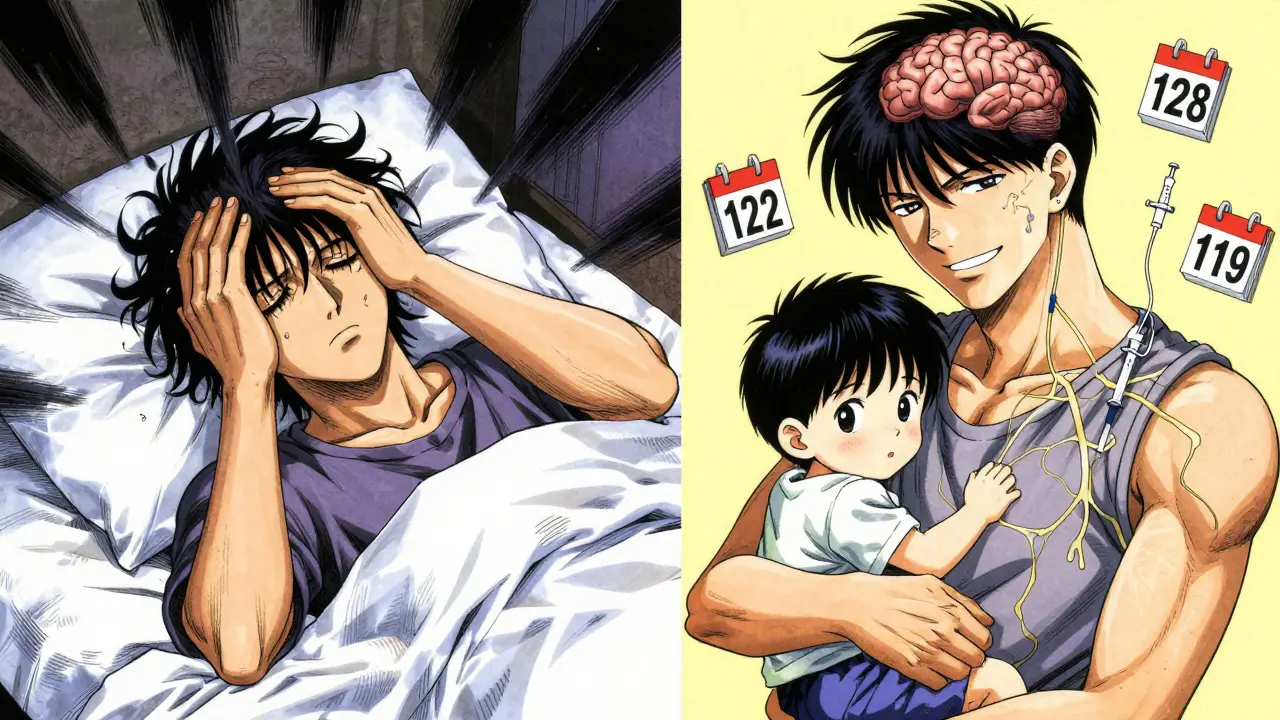
How It Compares to Other Migraine Treatments
Let’s put Botox in context. Here’s how it stacks up against common options:| Treatment | Responder Rate (50%+ reduction) | Common Side Effects | Dosing Frequency | Cost (Annual, USD) |
|---|---|---|---|---|
| OnabotulinumtoxinA (Botox) | 47.2% | Neck pain, headache, eyelid droop | Every 12 weeks | $6,000-$7,200 |
| Topiramate | 38.5% | Cognitive fog, tingling, weight loss, kidney stones | Daily | $500-$1,000 |
| Propranolol | 35.1% | Fatigue, low blood pressure, dizziness | Daily | $200-$600 |
| Erenumab (CGRP antibody) | 51.8% | Constipation, injection site reaction | Monthly | $7,000-$9,000 |
Botox wins on side effects. While topiramate can make you feel like you’re walking through fog, Botox’s side effects are mild and short-lived. But it’s pricier than pills. And unlike CGRP antibodies, which target one specific molecule, Botox works on multiple pain pathways - which might explain why combining it with CGRP drugs gives even better results.
Insurance and Cost: The Real Hurdle
The biggest barrier for many isn’t the treatment itself - it’s getting insurance to pay for it. In the U.S., most major insurers cover Botox for chronic migraine, but only if you’ve tried and failed at least three oral preventives. You’ll need to keep a detailed headache diary for at least three months. Some insurers demand proof you’ve seen a specialist. Without insurance, each treatment costs $1,500-$1,800. That’s $6,000-$7,200 a year. It’s expensive. But for someone who’s missed 100 workdays a year due to migraines, the cost of lost income often outweighs the cost of treatment. Many patients say the trade-off is worth it.
What Patients Really Say
On patient forums, Botox gets a 3.8 out of 5 rating. About 58% say they had “significant improvement.” Common wins: fewer trips to the ER, less reliance on painkillers, better sleep, and more time with family. But it’s not perfect. About 43% of dissatisfied users cite insurance denials. Others mention inconsistent results between cycles - one round works wonders, the next barely helps. A few report temporary muscle weakness that affects their job, like a graphic designer struggling to hold a stylus. One Reddit user wrote: “After three rounds, I went from 25 migraine days a month to 8-10. My worst attacks are now moderate. I can actually plan things again.” That’s the kind of story that keeps neurologists prescribing it.What’s New in 2026?
In 2023, the FDA expanded approval to teens aged 12-17 with chronic migraine. A trial showed an average drop of 7.8 headache days per month - a big deal for adolescents missing school or sports. Researchers are now testing longer-lasting versions of Botox that might last 16-20 weeks instead of 12. Early results are promising. There’s also growing evidence that pairing Botox with CGRP antibodies gives a synergistic boost - over 68% of patients respond when both are used together. The bottom line? Botox isn’t going anywhere. It’s been used for over a decade with a solid safety record. Even with newer drugs on the market, 78% of patients stick with it after two years. Why? Because it works - for the right people.Is Botox Right for You?
Ask yourself:- Do I have 15+ headache days a month, with at least 8 being migraines?
- Have I tried at least three oral preventives and had bad side effects or no improvement?
- Am I willing to commit to regular injections every 12 weeks?
- Can I afford the cost or have insurance that covers it?
If you answered yes to all four, talk to a headache specialist. Don’t go to a cosmetic clinic. This isn’t a spa treatment. It requires precise injection technique - the difference between a 30% improvement and a 70% one often comes down to who’s holding the needle.
Botox for migraine isn’t glamorous. It doesn’t make headlines. But for tens of thousands of people, it’s the thing that brought their life back.
Can Botox stop a migraine once it starts?
No. Botox is only for prevention. It doesn’t work like triptans or gepants, which are taken at the first sign of a migraine. Botox needs to be injected regularly to reduce how often attacks happen - not to treat them when they occur.
How long until I see results from Botox for migraine?
Most people don’t feel the full effect until their second or third treatment cycle - that’s about 6 to 9 months. Some notice small improvements after the first round, but the biggest drop in headache days usually happens after 6 months of consistent treatment.
Is Botox safe for long-term use?
Yes. Over 12 years of post-marketing data show no serious safety issues. The most common side effects - neck pain, mild headache, or temporary eyelid droop - are short-lived and not dangerous. No long-term nerve damage or organ toxicity has been linked to its use for migraine.
Do I need to stop other migraine meds if I get Botox?
No. Many patients continue taking acute medications like triptans or gepants for breakthrough attacks. Some even combine Botox with CGRP monoclonal antibodies for even better results. The key is to avoid overusing painkillers, which can make migraines worse over time.
Who should not get Botox for migraine?
People with certain nerve or muscle disorders like myasthenia gravis or Lambert-Eaton syndrome should avoid it. Pregnant women and those with infections at injection sites should also wait. If you have fewer than 15 headache days per month, it’s unlikely to help. Always consult a neurologist specializing in headaches before starting.
Anil bhardwaj
February 24, 2026 AT 14:45Been through this for years. Botox didn’t cure me, but it turned my life from ‘can’t leave the house’ to ‘can at least walk the dog.’
Worth every penny if your insurance covers it. No more ER visits. No more begging for painkillers that don’t work.
Just wish more docs knew how to do the injections right. Some places just poke you randomly and wonder why it doesn’t work.
lela izzani
February 26, 2026 AT 11:44I’m a neurology nurse and I’ve seen this firsthand. Botox isn’t magic, but for chronic migraine patients who’ve tried everything else? It’s often the only thing that gives back their life.
Key thing: it’s not for episodic. Don’t waste your time if you get 4 migraines a month. And yes, the timing matters-wait for the third round. Most give up too soon.
Joanna Reyes
February 26, 2026 AT 18:43For me, it took four cycles before I realized how much my brain had been screaming in the background. I didn’t even know I was living with constant low-grade pain until it was gone.
My neurologist uses the PREEMPT protocol exactly-155 units, seven sites, no shortcuts. I’ve had friends go to dermatologists who just ‘do the forehead’ and wonder why they got zero results.
It’s not a spa treatment. It’s a precise neurological intervention. And yes, the temporary eyebrow droop is weird, but it fades. I’d rather look slightly sleepy than spend three days in a dark room.
Also, combining it with a CGRP antibody? Game-changer. I’m at 80% reduction now. No one told me that combo was an option until I asked. Always ask about combination therapy.
Nerina Devi
February 27, 2026 AT 07:02As someone from India where migraine stigma is real, I want to say this: if you’re suffering, you’re not weak. You’re not lazy. You’re not overreacting.
My mom thought I was faking until I showed her the 100+ headache days I logged last year.
Botox gave me back my job, my ability to hold my niece, and the peace to sleep through the night.
It’s not glamorous, but it’s real. And if you’re eligible, don’t let insurance bureaucracy stop you. Keep pushing. Keep documenting. You deserve relief.
Dinesh Dawn
February 27, 2026 AT 08:43My sister got Botox last year. She went from 22 headache days a month to 11. Not perfect, but now she can cook dinner without crying.
She said the injections felt like tiny bee stings. No big deal. No downtime. She’s still on topiramate too, and it’s been a solid combo.
Wish more people knew this was an option. So many just suffer in silence.
Vanessa Drummond
February 28, 2026 AT 23:41Ugh. Another ‘miracle cure’ post. Botox is just a fancy placebo for people who can’t handle real medicine. Topiramate makes you foggy? Good. Maybe then you’ll stop scrolling and get some sleep.
And $7,000 a year? That’s not treatment, that’s a luxury spa for the rich.
Real people can’t afford this. Stop acting like it’s the holy grail.
Gabrielle Conroy
March 2, 2026 AT 17:07Just had my 4th round last week!! 🙌
And YES-it’s working better than ever! I went from 28 days to 9 this month!!
My neuro said combining Botox with Aimovig (CGRP) is the new gold standard-and I’m so glad I didn’t give up after round 2!!
Side effects? Sore neck for a day. Eyelid droop? Barely noticeable. Worth it.
Also-KEEP THE HEADACHE DIARY. Insurance doesn’t care if you say ‘it hurts.’ They care about dates, times, triggers, meds taken. My doc printed mine out like a novel. It saved me.
Spenser Bickett
March 3, 2026 AT 05:53So you’re telling me injecting poison into your face to stop headaches… is science? Cool.
Next they’ll tell me drinking bleach fixes acid reflux.
Also, $7k a year? That’s not medicine, that’s a pyramid scheme with needles.
And why does everyone act like this is a breakthrough? We’ve had triptans since the 90s.
Maybe the problem isn’t your brain… maybe it’s your life.
Christopher Wiedenhaupt
March 3, 2026 AT 11:53It is important to note that the efficacy of onabotulinumtoxinA for chronic migraine is supported by multiple randomized controlled trials and long-term observational studies.
While cost remains a significant barrier, particularly in uninsured populations, the reduction in emergency department visits and lost productivity often offsets the direct medical expenditure.
Additionally, the safety profile over a 12-year period demonstrates minimal cumulative toxicity, supporting its use as a long-term preventive modality.
Adherence to the PREEMPT injection protocol is non-negotiable for optimal outcomes.
Improper technique may lead to suboptimal response, regardless of patient eligibility.
John Smith
March 4, 2026 AT 10:36Botox works because people believe it works
Same as crystals and chiropractors
Also who pays for this
Not me
Not you
Some rich guy’s insurance
Wake up
Natanya Green
March 4, 2026 AT 14:23OMG I JUST HAD MY FIRST ROUND AND I’M CRYING!!
My husband said I looked like a zombie for a week after-my forehead was so stiff I couldn’t smile properly!!
But then-after 3 months-I woke up and didn’t reach for the Excedrin!!
And I went to my niece’s birthday party!!
And I didn’t nap for 6 hours!!
AND I ATE PIZZA WITHOUT FEELING LIKE I WAS GOING TO DIE!!
IT’S A MIRACLE!! I’M ALIVE AGAIN!!
Steven Pam
March 4, 2026 AT 18:00Look, I was skeptical too. Thought it was just a fancy trend. But after 18 months of 20+ headache days? I was desperate.
Went to a headache specialist-not a dermatologist. Got the full PREEMPT protocol. Three rounds in.
Now? 10 days max. My worst attacks are just ‘annoying,’ not ‘I need to call 911.’
And yes, it’s expensive. But I’m working again. I’m sleeping. I’m present.
That’s not a miracle. That’s just good medicine. And if you’re eligible? Do it. Don’t wait. You won’t regret it.