
Chloroquine: What It Is, How It's Used, and What You Need to Know Today
 Dec, 1 2025
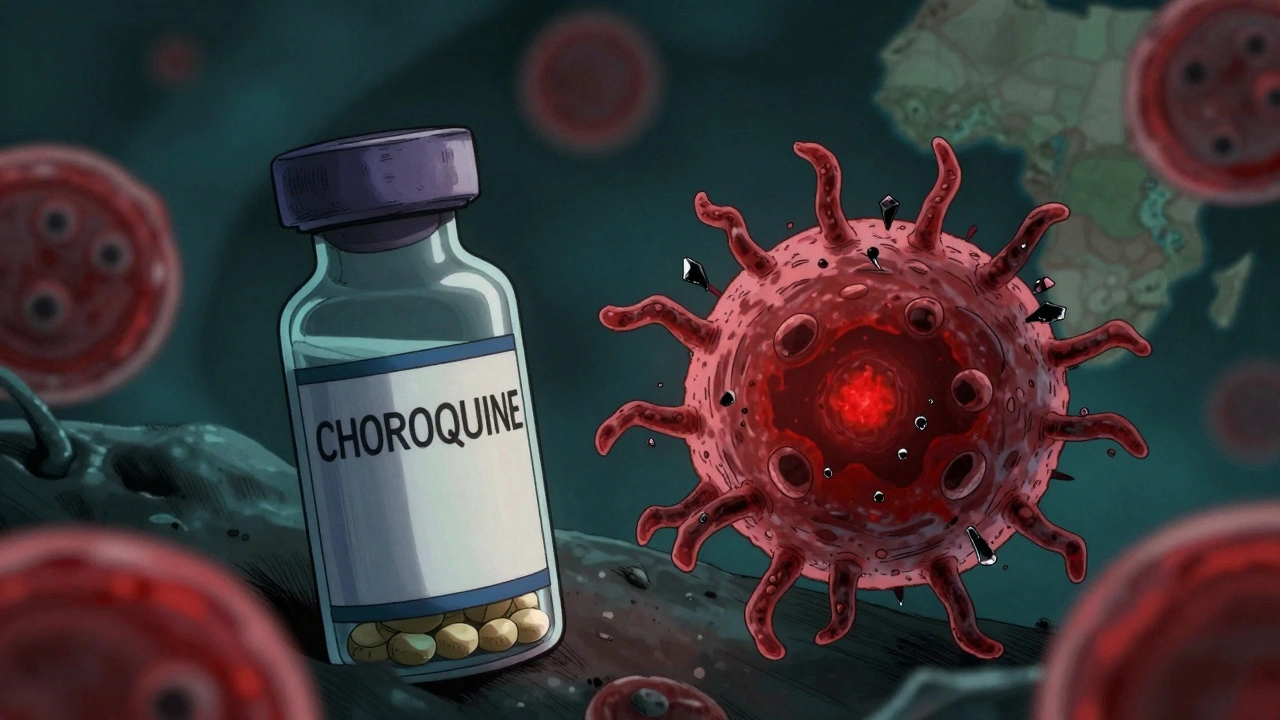
Chloroquine isn’t just another drug on the shelf. For decades, it was the go-to weapon against malaria - a disease that still kills hundreds of thousands each year, mostly in tropical regions. But its story didn’t end there. In 2020, it became a global talking point during the early days of the COVID-19 pandemic. Suddenly, people were lining up for prescriptions, pharmacies were running out, and headlines screamed about miracles and dangers. The truth? It’s more complicated than either side claimed.
What chloroquine actually is
Chloroquine is a synthetic antimalarial drug first developed in the 1930s by German scientists. It belongs to a class called 4-aminoquinolines and works by interfering with how malaria parasites digest hemoglobin inside red blood cells. Without that food source, the parasite can’t survive. It’s cheap, stable at room temperature, and easy to produce - which made it ideal for use in low-resource areas.
Chloroquine also has anti-inflammatory properties. That’s why doctors sometimes prescribe it for autoimmune conditions like lupus and rheumatoid arthritis. In those cases, it doesn’t kill pathogens - it calms down the immune system’s overreaction. The dose for autoimmune diseases is usually lower than for malaria, and taken long-term.
How chloroquine treats malaria
When someone gets infected with Plasmodium falciparum - the deadliest malaria parasite - chloroquine enters the bloodstream and travels to the liver and red blood cells. Inside infected red blood cells, the parasite breaks down hemoglobin to get amino acids. In the process, it releases toxic heme. Normally, the parasite converts heme into harmless crystals. Chloroquine blocks that conversion. Heme builds up, poisoning the parasite from within.
This mechanism works well against some strains of malaria, but not all. Resistance started appearing in Southeast Asia in the 1950s and spread to Africa by the 1980s. Today, chloroquine is no longer recommended for treating malaria in most of sub-Saharan Africa or parts of South America because the parasites have evolved to pump the drug out of their cells. In places where resistance isn’t widespread - like parts of Central America or the Middle East - it’s still used.
Chloroquine and COVID-19: what really happened
In March 2020, a small, poorly designed study in France claimed chloroquine and its cousin hydroxychloroquine could reduce viral load in COVID-19 patients. The study had only 24 participants, no control group, and was later retracted. But it went viral anyway. Political figures promoted it. Social media exploded. People started taking it without prescriptions.
By June 2020, the World Health Organization paused its global trials after data showed no benefit and increased risk of heart rhythm problems. The U.S. Food and Drug Administration revoked its emergency use authorization. Large, rigorous studies - including one with over 10,000 patients in the UK’s RECOVERY trial - found no reduction in death or hospital stay. In fact, patients taking chloroquine or hydroxychloroquine had higher rates of irregular heartbeats and liver damage.
Today, no major health authority recommends chloroquine for treating or preventing COVID-19. The hype wasn’t just wrong - it was dangerous. People died from self-medicating with aquarium cleaner (a form of chloroquine sold for fish tanks) or overdosing on pills bought online.
Side effects you can’t ignore
Chloroquine isn’t harmless. Even at normal doses, common side effects include nausea, vomiting, headaches, dizziness, and blurred vision. These usually go away after a few days. But long-term use - especially for autoimmune diseases - carries serious risks.
The biggest danger is retinal toxicity. Chloroquine can damage the retina, leading to irreversible vision loss. That’s why patients on long-term therapy need annual eye exams. The risk increases after 5 years of use or if the total dose exceeds 1,000 grams. Doctors now use weight-based dosing to reduce this risk.
Other rare but severe side effects include heart rhythm disturbances (like QT prolongation), low blood sugar, muscle weakness, and nerve damage. People with liver or kidney disease, G6PD deficiency, or existing heart conditions are at higher risk. Mixing chloroquine with other drugs like antibiotics or antidepressants can be deadly.
Who should never take chloroquine
Chloroquine is not for everyone. You should avoid it if you:
- Have retinal disease or a family history of retinal problems
- Have a history of cardiac arrhythmias or long QT syndrome
- Are allergic to 4-aminoquinoline drugs
- Have severe liver or kidney impairment
- Have G6PD deficiency - this can trigger hemolytic anemia
- Are pregnant or breastfeeding without medical supervision
Even if you’re healthy, never take chloroquine without a prescription. It’s not an over-the-counter supplement. It’s a potent drug with narrow safety margins.
Alternatives and current uses
For malaria, artemisinin-based combination therapies (ACTs) are now the global standard. Drugs like artemether-lumefantrine or artesunate-amodiaquine are faster, more effective, and less prone to resistance.
For autoimmune diseases, hydroxychloroquine - a slightly modified version of chloroquine - is preferred because it has a better safety profile. It’s still widely used for lupus and rheumatoid arthritis, especially in patients who don’t respond to other treatments. Studies show it can reduce flare-ups and slow joint damage.
There’s also ongoing research into chloroquine derivatives for cancer treatment and antiviral applications, but nothing has moved beyond early trials. No new approved uses have emerged since 2020.

Where to get chloroquine legally
Chloroquine is a prescription-only medication in the UK, the US, Canada, and most European countries. You can’t buy it online without a valid prescription from a licensed doctor. Websites selling it as a "miracle cure" or "COVID remedy" are illegal and often sell fake, contaminated, or overdosed pills.
If you need chloroquine for malaria prevention while traveling, talk to a travel clinic at least 4-6 weeks before departure. They’ll check if it’s still effective in your destination and prescribe the right dose. For lupus or arthritis, your rheumatologist will monitor your blood work and eye health regularly.
What to do if you’ve taken chloroquine without a prescription
If you’ve taken chloroquine without medical supervision - especially in large doses - seek help immediately. Symptoms of overdose include drowsiness, confusion, seizures, slow heartbeat, and trouble breathing. Call emergency services or go to the nearest hospital. There’s no antidote, but doctors can support your heart and breathing while the drug leaves your system.
If you took it for COVID-19 and are feeling fine, still get checked. Retinal damage and heart rhythm issues can develop slowly. Ask your GP for an ECG and an eye exam if you’ve taken more than a few doses.
Is chloroquine still used for malaria today?
Yes, but only in areas where malaria parasites haven’t developed resistance. It’s no longer effective in most of Africa or Southeast Asia. Artemisinin-based combination therapies are now the first-line treatment globally.
Can you take chloroquine with alcohol?
It’s not recommended. Alcohol can increase the risk of liver damage and worsen side effects like dizziness and nausea. If you’re on chloroquine for a chronic condition, avoid heavy drinking.
Is hydroxychloroquine the same as chloroquine?
They’re similar but not the same. Hydroxychloroquine is a modified version with fewer side effects, especially on the eyes. It’s the preferred drug for autoimmune diseases. Chloroquine is stronger for malaria but has higher toxicity.
How long does chloroquine stay in your body?
Chloroquine has a very long half-life - about 20 to 60 days. That means it can stay in your system for months after your last dose. This is why eye exams are required even after stopping the drug.
Can chloroquine cause depression?
Rarely, but it’s possible. Some patients report mood changes, anxiety, or depression while taking chloroquine. If you notice sudden emotional shifts, talk to your doctor. It may be a side effect, not just stress.
Is it safe to buy chloroquine online?
No. Online sellers often sell counterfeit, expired, or contaminated versions. Some pills contain no active ingredient. Others have dangerous overdoses. Always get chloroquine from a licensed pharmacy with a valid prescription.
Final thoughts
Chloroquine is a drug with a real history - and real risks. It saved millions from malaria. It helps people manage chronic illness. But it’s not a miracle cure. It’s not safe to experiment with. The panic around COVID-19 showed how easily misinformation can turn a life-saving tool into a deadly gamble.
If you need chloroquine, get it through proper medical channels. If you’re curious about it, read the science - not the headlines. And if you’ve ever taken it without a prescription, don’t wait for symptoms. Get checked. Your eyes and heart won’t tell you they’re damaged until it’s too late.
Erin Nemo
December 2, 2025 AT 03:43Rachel Stanton
December 2, 2025 AT 11:10elizabeth muzichuk
December 2, 2025 AT 15:30Debbie Naquin
December 4, 2025 AT 08:41Karandeep Singh
December 4, 2025 AT 23:08Mary Ngo
December 5, 2025 AT 12:03James Allen
December 7, 2025 AT 02:01Kelly Essenpreis
December 7, 2025 AT 14:59Alexander Williams
December 8, 2025 AT 19:35