
Colchicine and Macrolides: Toxicity via P-gp and CYP Inhibition
 Mar, 28 2026
Drug Interaction Safety Checker
Evaluate potential toxicity risks when combining Colchicine with other medications.
- ✓ Safe: Azithromycin
- ⚠ Caution: Erythromycin
- ✖ Avoid: Clarithromycin
Based on Stamp et al. (2024) and FDA guidelines.
Analysis Result
Mechanism:
Waiting for input...
Recommendation:
Imagine taking two common medications that save lives individually but become deadly together. That is exactly what happens when certain antibiotics meet gout treatment. It isn't just a theoretical risk we are discussing here. This combination can lead to severe poisoning, organ failure, and even death if doctors miss the warning signs. You need to understand why specific pairs of drugs clash so violently.
The core issue involves how your body processes these substances. Most people think of the liver as the sole worker bee for medication breakdown. While true for many drugs, colchicine faces a stricter security system. Your cells use transporters called pumps to move drugs out. When a strong antibiotic blocks both the chemical breaker and the pump, the level of medicine in your blood skyrockets beyond safety limits. Understanding this mechanism is the difference between safe care and a medical emergency.
The Biology Behind the Clash
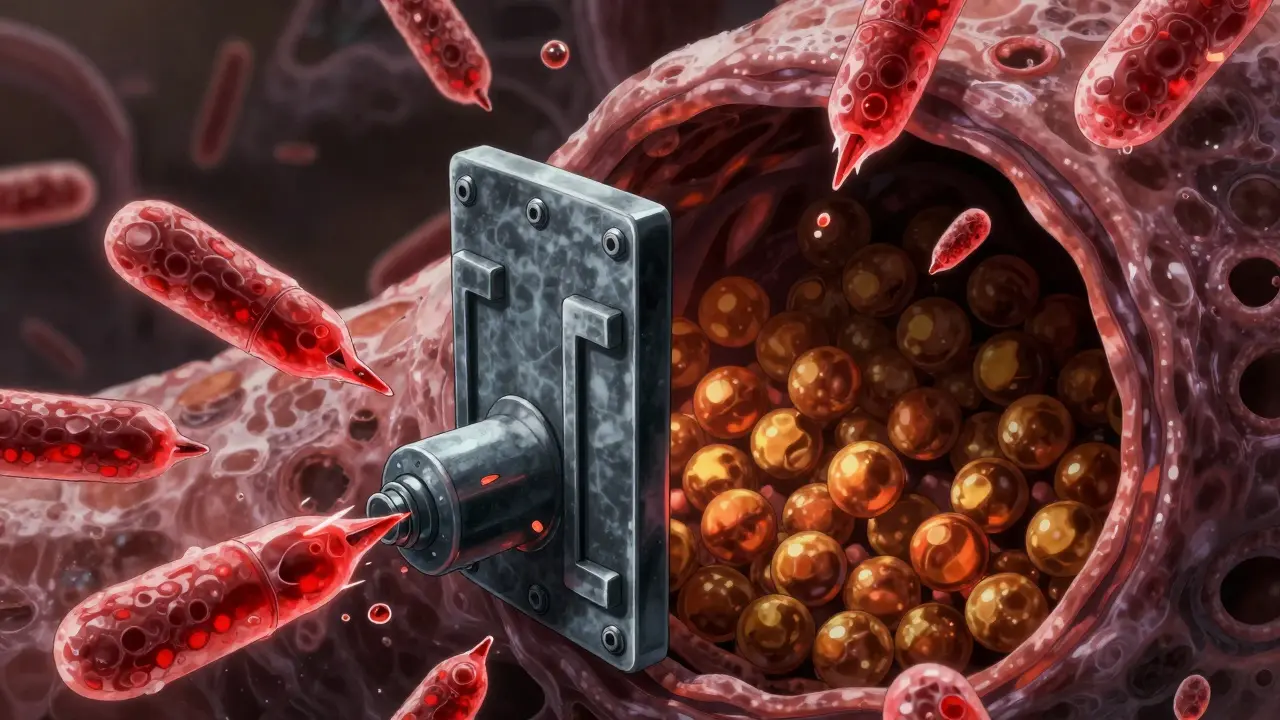
To get why this happens, you have to look at two specific molecular machines inside your body. The first is CYP3A4, a liver enzyme responsible for breaking down dozens of medicines. The second is P-glycoprotein, also known as P-gp. Think of P-gp as a bouncer standing at the exit of a club. Its job is to push toxins back out into the gut so they get excreted rather than absorbed. Colchicine relies heavily on both systems to clear itself from your system.
When a patient takes a standard dose of Colchicine, about 30 to 50% gets absorbed into the bloodstream. The rest gets filtered out by CYP3A4 and P-gp. Now, introduce a macrolide antibiotic. These drugs act like roadblocks. They inhibit CYP3A4, stopping the chemical breakdown. Simultaneously, they jam the P-gp pumps, trapping colchicine inside the cells where it causes damage. Research shows that inhibiting just one pathway might be manageable, but hitting both at once is catastrophic.
Data from Stamp and colleagues published in 2024 highlights the math behind this. Concurrent use of these inhibitors can double colchicine plasma concentration. If you add P-gp inhibition to that mix, concentrations could quadruple. With such a narrow safety margin, going from therapeutic levels to toxic levels requires very little extra accumulation. It turns a routine prescription into a high-stakes gamble.
Not All Macrolides Are Equal
A common misunderstanding is treating all macrolide antibiotics the same way because they share a similar chemical structure. However, their ability to cause harm varies wildly. You cannot assume every cough medicine carries the same weight regarding this interaction. Knowing which specific agents are the biggest threats helps clinicians choose safer options when a patient needs both treatments.
Here is the breakdown of the most common culprits:
| Antibiotic Name | Inhibition Strength | Clinical Risk |
|---|---|---|
| Clarithromycin | Strong Dual Inhibitor | High Risk |
| Erythromycin | Moderate Inhibitor | Moderate Risk |
| Azithromycin | Minimal Inhibitor | Low/No Risk |
Clarithromycin sits at the top of the danger list. It acts as a potent inhibitor for both pathways involved. Studies cited in patent documentation show it has a very low IC50 value for CYP3A4, meaning it binds tightly even at low concentrations. Erythromycin is the next concern; it is weaker than clarithromycin but still risky enough to demand caution. On the flip side, Azithromycin is structurally related but behaves differently. It barely touches CYP3A4 or P-gp. A large cohort study by Tan in 2022 confirmed that swapping to azithromycin resolves almost 92% of potential interaction scenarios safely.
This distinction matters immensely for prescribing habits. If a doctor prescribes clarithromycin for pneumonia without checking for colchicine use, they are setting up a disaster. But if they switch to azithromycin immediately, the risk vanishes. Many patients do not realize that over-the-counter supplements or other heart medications can trigger the same effect. Verapamil and diltiazem, often used for blood pressure, are also potent dual inhibitors. They reduce colchicine clearance by roughly 50%. This means anyone on these combinations likely needs their colchicine dose cut in half to stay safe.

Clinical Evidence and Real Outcomes
Theories are one thing, but actual patient outcomes tell the real story. We have concrete data showing that ignoring this interaction leads to severe complications. The FDA Adverse Event Reporting System tracked hundreds of cases between 2015 and 2020. Of the reports involving colchicine toxicity linked to macrolides, clarithromycin was present in 63% of them. Erythromycin showed up in another 28% of those serious adverse events. These aren't minor side effects like a stomach ache. We are talking about life-threatening conditions.
Specifically, the body reacts to the overdose in predictable ways. Bone marrow suppression is a major red flag. Patients develop neutropenia, where white blood cell counts drop dangerously low, leaving them vulnerable to infection. Muscle breakdown, known as rhabdomyolysis, occurs when colchicine levels destroy muscle fibers. This releases proteins into the blood that overwhelm the kidneys, leading to multi-organ failure. A case series in the Journal of Clinical Pharmacy documented twelve patients who developed these symptoms after receiving standard doses with clarithromycin. Tragically, three of those twelve cases ended fatally.
Community surveys from physician forums suggest this is happening more often than reported in literature. Around 68% of surveyed doctors said they had seen this interaction happen in their practice. Emergency room physicians report seeing it nearly twice as often as specialists like rheumatologists. Why? Because generalists often don't know the patient's full history. Patients forget to mention they take daily gout meds while visiting the ER for an ear infection treated with antibiotics. This gap in information sharing drives many of these preventable toxicities.

Safety Protocols and Management
You can manage this risk effectively if you stick to strict protocols. The goal isn't necessarily to stop using either drug, but to adjust how they are combined. Guidelines from the American College of Rheumatology and the American College of Cardiology provide clear paths forward. First, screen every patient starting colchicine for interacting drugs. If you must treat an infection requiring a macrolide, assess the kidney function immediately. People with renal impairment are far more susceptible because their bodies filter colchicine poorly anyway. Toxic levels exceed 3.3 nanograms per milliliter in patients with kidney issues, a threshold easily crossed with a simple antibiotic prescription.
- Avoid Strong Inhibitors: Do not prescribe clarithromycin with colchicine unless absolutely necessary. There is no justification for the risk.
- Select Safer Alternatives: Switch to azithromycin or a non-macrolide antibiotic like penicillin or cephalosporins whenever possible.
- Dose Adjustment: If a moderate inhibitor like erythromycin is required, reduce the colchicine dose by 50% according to current guidelines.
- Monitor Closely: Check blood counts and muscle enzymes within days of starting the antibiotic course.
Even with these steps, challenges remain. Therapeutic drug monitoring exists, but access is limited. Only about 37% of US hospitals have labs capable of routinely testing colchicine levels. This leaves many doctors guessing. Education bridges this gap. Residency training programs improved recognition rates from 43% to 87% after implementing targeted education modules. It shows that doctors know better when they learn the specifics. Technology helps too. Electronic health records updated in 2023 now fire tiered alerts when a clinician tries to write this bad combination. In one multi-center study, these alerts reduced inappropriate prescribing by 63%.
Looking ahead, newer solutions are emerging. Companies are developing modified versions of colchicine designed not to interact with these transporters. Trials show derivatives like COL-098 could lower interaction risk significantly compared to the standard version. Until those hit pharmacies, however, vigilance is your best tool. Personalized dosing algorithms based on genetic makeup are also in development, predicting which patients carry genetic markers that make them prone to buildup.
Frequently Asked Questions
Is it safe to take azithromycin with colchicine?
Yes, azithromycin is generally considered safe. Unlike its cousins, it does not significantly block the P-gp or CYP3A4 pathways needed to process colchicine.
What symptoms indicate colchicine toxicity?
Look for nausea, vomiting, abdominal pain, muscle weakness, or numbness in hands and feet. Severe cases involve difficulty breathing and seizures.
Does age affect the risk of this interaction?
Older adults are at higher risk due to naturally declining kidney function, which slows down colchicine clearance further.
Can I stop taking colchicine if I need an antibiotic?
Consult your doctor. Sometimes pausing colchicine for a few days is safer than mixing them. Do not change your regimen without medical advice.
Are there any heart drugs that worsen this interaction?
Yes, calcium channel blockers like verapamil and diltiazem are strong inhibitors and can increase colchicine toxicity risk significantly.
Angel Ahumada
March 29, 2026 AT 03:59Biological machinery operates on a level most medical practitioners refuse to acknowledge truly
Symptoms attract attention while molecular pumps govern cellular exit strategies quietly in shadows
Colchicine accumulation within hepatocytes transforms into a silent assassin awaiting systemic collapse
Modern medicine treats interactions as theoretical footnotes rather than immediate existential threats
P-glycoprotein serves as the ultimate gatekeeper yet we ignore saturation points with reckless abandon
Macrolides block metabolic pathways entirely without sufficient consideration of transport inhibition
Educational failure drives negligence regarding transporter kinetics alongside enzymatic breakdown processes
Consequences manifest through slow mitochondrial function degradation over several long hours
Muscle tissue breakdown releases myoglobin floods renal filtration units causing inevitable kidney shutdown
Bone marrow suppression removes defense lines against opportunistic pathogens entering blood
Multisystem organ failure represents the final stage of this predictable biochemical catastrophe
Physicians claim inability to predict toxicity despite literature outlining mathematical probabilities clearly
Patient safety relies on specialists understanding kinetics beyond basic metabolism parameters
Ignoring mechanisms equals malpractice disguised as routine clinical judgment error today
True expertise requires reading subtext of interactions rather than relying on automated alerts
Kendell Callaway Mooney
March 30, 2026 AT 14:09This explains why azithromycin is the safest choice for infections
Clarithromycin causes major problems when taken with gout pills
My family member had to switch meds quickly to stay safe
Hospitals should check kidney numbers before giving both drugs
Always talk to your doctor about what you are taking now
dPhanen DhrubRaaj
March 30, 2026 AT 22:27People forget how fast kidneys fail on this mix
Vikash Ranjan
April 1, 2026 AT 12:37Not every doctor makes mistakes here because the guidelines exist already
Why does everyone blame the prescriber when patients hide their history
Maybe the issue lies with the patient disclosure habits in clinics
Some think all antibiotics kill the same way
That is not true based on what I read yesterday
RONALD FOWLER
April 2, 2026 AT 17:52It is really sad when preventable things happen in hospitals
Everyone just wants to get better without extra complications
Hope doctors stay careful with these prescriptions for everyone
Biraju Shah
April 3, 2026 AT 12:56Stop letting people die over simple prescription errors
The risk is huge and doctors ignore it too often
You need to demand safer antibiotics immediately
Cameron Redic
April 4, 2026 AT 04:27Most people scroll past these warnings without reading a single word of the details
Ignorance spreads faster than any virus affecting the general public population today
Doctors prescribe dangerous combinations because they prioritize speed over safety standards daily
Hospital liability insurance does not care about the families losing their breadwinner
The pharmaceutical industry profits from selling two drugs that interact poorly together
Regulatory bodies seem asleep while patients end up on dialysis for unnecessary reasons
Pharmacists fail to catch these errors during the verification process most times
Electronic health record alerts get ignored by overwhelmed clinicians constantly working late shifts
We accept this negligence as normal operating procedure for modern healthcare systems worldwide
Patients deserve better protection than vague disclaimers buried in a consent form somewhere
Toxicology data proves that small changes in concentration create massive physiological damage rapidly
It costs far less to change an antibiotic than to treat multiorgan failure later on
Insurance companies pay the bills while nobody faces accountability for prescribing errors
Systemic change requires vocal patients demanding transparency in medication management practices
Silence allows these preventable deaths to continue happening in emergency rooms tonight
Marwood Construction
April 5, 2026 AT 14:25Observation of renal function remains paramount in these scenarios
Protocol adherence reduces incident frequency significantly
Medical education needs updating regarding cytochrome p450 interactions
William Rhodes
April 7, 2026 AT 08:36We can fix this if we push harder on hospital protocols
New technology will save lives soon enough
Never give up on finding better treatment options