
Diabetes Foot Care: Ulcer Prevention and Daily Inspection Checklist
 Feb, 7 2026
Every year, over 82,000 people in the U.S. lose a foot or leg to diabetes-related amputation. Most of these cases could have been avoided. The key isn't complex surgery or expensive tech-it's a simple daily habit: checking your feet. If you have diabetes, your feet are at risk. Nerve damage hides pain, poor circulation slows healing, and even a small blister can turn into a life-changing ulcer. But here’s the truth: diabetic foot ulcers are preventable. And the most powerful tool you have is a 5-minute daily inspection.
Why Your Feet Are at Risk
Diabetes doesn’t just affect blood sugar. Over time, high glucose levels damage nerves, especially in your feet. This is called peripheral neuropathy. You might not feel a pebble in your shoe, a hot floor, or a cut from trimming your nails. At the same time, blood flow to your feet drops. That means cuts, scrapes, and blisters don’t heal fast. In fact, a minor injury that would vanish in days for someone without diabetes can turn into a deep ulcer in weeks for someone with it. The numbers don’t lie. About 15% to 25% of people with diabetes will develop a foot ulcer at some point. And once an ulcer forms, the chance of amputation jumps dramatically. The International Working Group on the Diabetic Foot (IWGDF) says 79% of midfoot ulcers and 87% of forefoot ulcers start because of ill-fitting shoes. Barefoot walking-even indoors-increases ulcer risk by more than 11 times. This isn’t fearmongering. It’s data from the CDC and global medical guidelines updated in 2023.The 5 Pillars of Ulcer Prevention
The 2023 IWGDF guidelines, backed by 37 experts across podiatry, endocrinology, and vascular surgery, outline five non-negotiable steps to prevent ulcers:- Identify your risk level
- Inspect your feet every day
- Get educated-repeatedly
- Wear the right shoes
- Treat modifiable risks like smoking or poor blood sugar
- Risk 0: No nerve damage, no history of ulcers. You’re low risk, but not immune.
- Risk 1: Nerve damage, but no foot deformity. You need checks every 6 months.
- Risk 2: Nerve damage + foot deformity (like bunions or hammertoes). You need checks every 1-3 months.
- Risk 3: You’ve had an ulcer or amputation before. This is high risk. You need weekly checks and specialist care.
The Daily Foot Inspection Checklist
This isn’t a suggestion. It’s a proven protocol used by NYU Langone, the CDC, and the University of Michigan. Do this every day, preferably between 10 a.m. and 2 p.m. when your body temperature is most stable.- Wash feet in lukewarm water (90-95°F). Use mild soap. Never use hot water. Test it with your elbow or a thermometer. Nerve damage means you won’t feel scalding.
- Dry thoroughly. Pay attention to the spaces between your toes. Moisture there invites fungal infections and cracks.
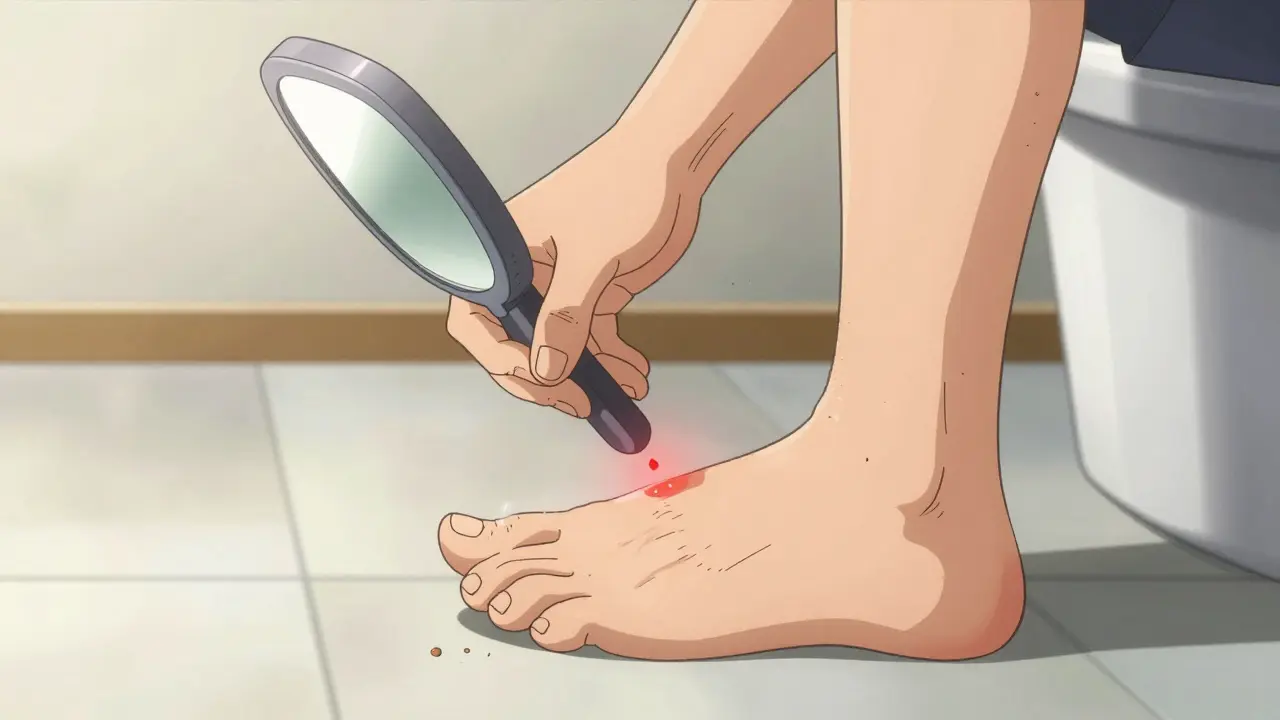
- Look at every inch. Use a 12-inch mirror or ask someone to help. You need to see the bottom of your feet, the sides, and between toes. Don’t skip the heel or the ball of the foot. That’s where 92% of ulcers form.
- Check for these signs: Blisters larger than 3mm, cuts deeper than 1mm, redness over 1cm wide, swelling that increases foot circumference by 5% or more, or warmth that feels hotter than the other foot (over 99°F).
- Moisturize. Use unscented lotion on dry skin-except between toes. Dry skin cracks. Cracks turn into openings for infection.
- Trim nails straight across. Cut them so they’re 1-2mm above the skin fold. Don’t round the edges. Don’t dig into the corners. Ingrown nails are a leading cause of infection.
- Don’t walk barefoot. Not even in the house. Not even for 5 minutes. That’s not a rule-it’s a survival tactic.
Footwear: It’s Not Just About Comfort
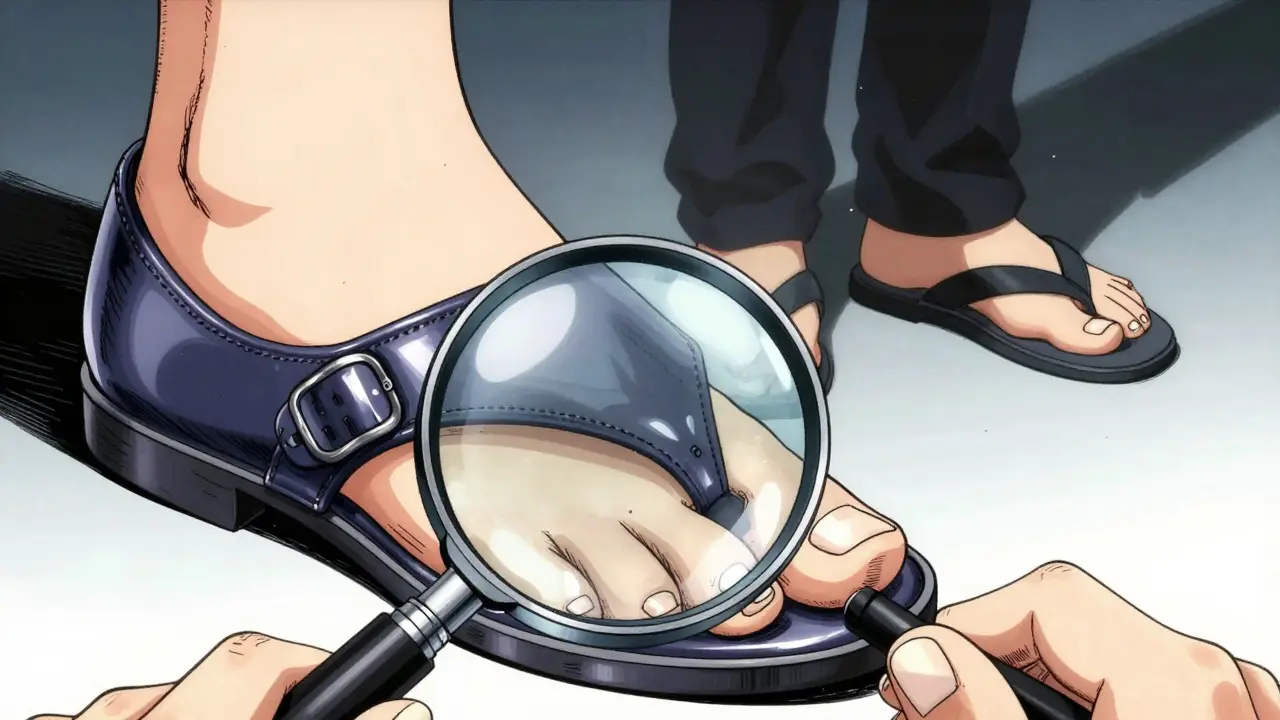
Shoes aren’t optional. They’re medical equipment. For people with Risk 2 or Risk 3, the 2023 IWGDF guidelines say you need therapeutic footwear proven to reduce pressure under the foot by at least 25%. That’s not a fancy label-it’s a measurable standard tested during gait analysis. Here’s what good diabetic footwear must have:- 0.5 inches (12.7mm) of space between your longest toe and the shoe tip
- Width that allows your toes to spread naturally (15mm splay)
- A rigid heel counter that doesn’t collapse when pressed (45-60 degrees of resistance)
What Doesn’t Work-And Why
There’s a lot of noise out there. Let’s cut through it. Antibiotics for uninfected ulcers? No. The IDSA’s 2023 guidelines say using antibiotics before an infection sets in doesn’t help healing-and it increases antibiotic resistance by 37%. Don’t take them unless there’s clear infection. Nerve decompression surgery? No. Nine randomized trials show it doesn’t prevent ulcers. It’s outdated. Exercise without guidance? Be careful. The IWGDF says foot-ankle exercises are okay for low-to-moderate risk patients-but a 2022 study in Diabetic Medicine found unsupervised ankle exercises increased ulcer risk by 22%. Always get your gait checked first. Walking 1,000 steps a day? Only if you have no nerve damage and no past ulcers. Dr. David Armstrong, lead author of the 2023 guidelines, says this rule doesn’t apply to most people with diabetes. Too many assume “any movement is good.” It’s not.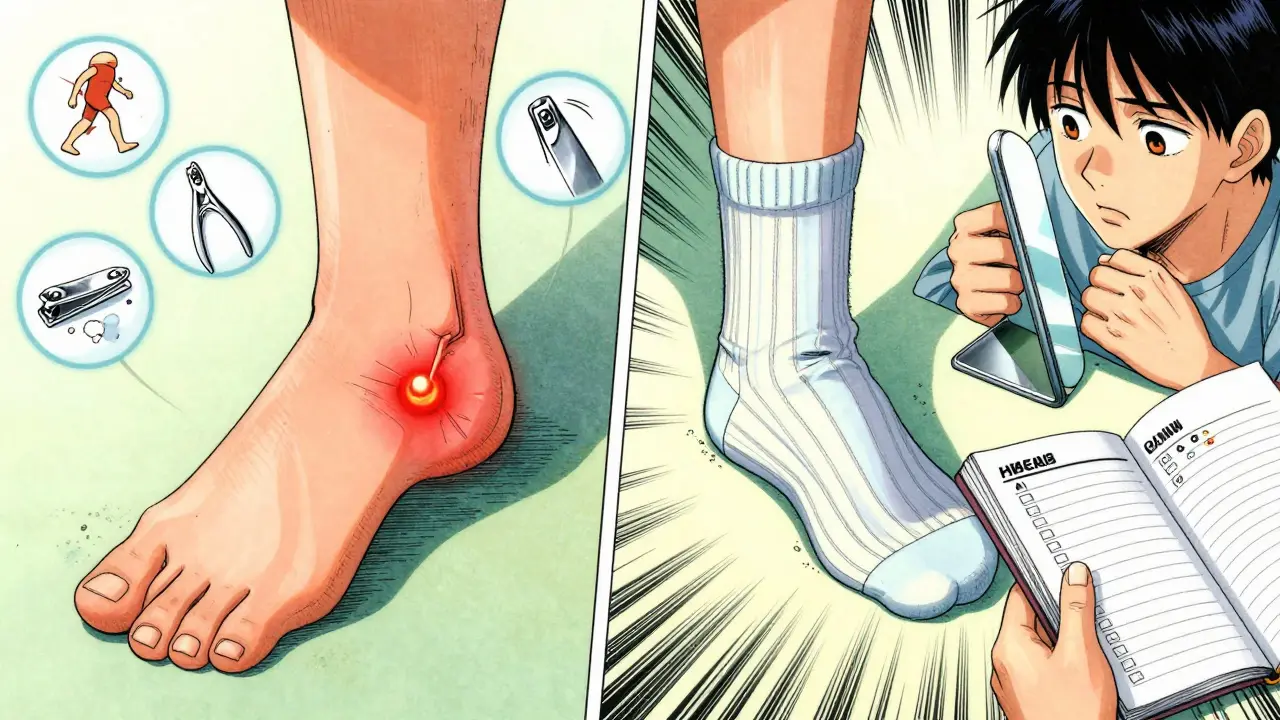
Barriers Are Real-But Not Insurmountable
Only 38.7% of doctors in the U.S. do the full annual foot exam. Why? Time, lack of training, no tools. And only 42.1% of patients do daily inspections. Vision problems, severe nerve damage, and low income all make it harder. If you have trouble seeing your feet, get a mirror. If you can’t afford therapeutic shoes, ask your clinic about programs that provide them. Medicaid now requires annual foot exams in 47 states as of January 2024. You have a right to this care. Emerging tech like smart socks and AI phone apps can detect temperature changes that predict ulcers 4-7 days before they form. But they cost $150-$300/month. For many, they’re out of reach. That’s why the basics still matter most.Integrated Care Works
The best outcomes come when care is coordinated. That means your primary doctor, podiatrist, diabetes educator, and orthotist are all on the same page. The CDC’s 2022 Diabetic Foot Care Model showed that integrated care reduced ulcers by 35.7% and amputations by 42.3% in Medicare patients. If you’re Risk 2 or 3, ask for a care coordinator. Don’t wait for a crisis. Prevention is cheaper, less painful, and far more effective than treatment.Final Thought: Your Feet Are Your Foundation
You don’t need expensive gadgets or perfect blood sugar to prevent ulcers. You need consistency. You need to look. You need to act. One day of skipping inspection might seem harmless. But ulcers don’t announce themselves. They creep in quietly. By the time you feel pain, it’s too late. Make your daily foot check part of your morning routine-right after brushing your teeth or before your coffee. Keep the mirror in the same spot. Write down what you see in a notebook. Show it to your doctor every visit. You’re not just checking your feet. You’re protecting your independence, your mobility, and your future.Can I use a regular mirror to inspect my feet?
Yes, but it needs to be at least 12 inches long so you can see the entire sole of your foot. A handheld mirror held at the right angle works, or you can place a floor mirror on the ground and look down. If you can’t see the bottom of your feet, ask a family member or caregiver to help. Vision problems are common in diabetes, so don’t rely on memory-always check visually.
Is it safe to soak my feet in Epsom salt or herbal solutions?
No. Soaking feet for long periods can dry out the skin, cause cracks, and increase infection risk. The CDC and IWGDF recommend washing feet with mild soap and lukewarm water for no more than 5 minutes. Avoid additives like Epsom salt, tea tree oil, or vinegar-they can irritate sensitive skin and mask signs of infection.
What should I do if I find a small cut or blister?
Don’t ignore it. Clean the area gently with water and mild soap, then cover it with a sterile, non-stick dressing. Avoid hydrogen peroxide or iodine-they damage healing tissue. If it doesn’t start healing within 24-48 hours, or if you see redness, swelling, or drainage, call your doctor immediately. Early treatment prevents ulcers.
Can I trim my own toenails?
Yes-if you can see clearly and have steady hands. Cut them straight across, not curved, and leave 1-2mm of nail beyond the skin fold. If your nails are thick, yellowed, or you have poor vision or hand mobility, see a podiatrist. Cutting too short or into the corners can lead to ingrown toenails and infection.
How often should I get a professional foot exam?
It depends on your risk level. Risk 0: once a year. Risk 1: every 6 months. Risk 2 or 3: every 1-3 months. Your doctor should test for loss of sensation using a 10g monofilament and check circulation with an ankle-brachial index (ABI). If your ABI is below 0.9, you need a vascular specialist. Don’t wait for symptoms-neuropathy hides pain.
Are diabetic socks worth buying?
Yes-if they’re seamless, non-constricting, and moisture-wicking. Regular socks with seams or elastic tops can restrict circulation or create pressure points. Diabetic socks have no toe seams, are slightly loose, and often contain antimicrobial fibers. They’re not a cure, but they reduce friction and moisture-two major ulcer triggers. Avoid compression socks unless prescribed.
Can I use over-the-counter callus removers?
No. Chemical callus removers contain acids that can burn skin without you feeling it. Even gentle pumice stones can cause micro-tears if used too hard. If you have thick calluses, see a podiatrist. They can safely remove them with a scalpel under sterile conditions. Never try to shave or cut them yourself.
What if I live in a rural area with no podiatrist nearby?
Start with your primary care provider. Many clinics now use telehealth for foot checks-take clear photos of your feet daily and send them to your doctor. Ask if they can train a nurse or medical assistant to do basic exams. The CDC’s 2024 Innovation Pipeline supports smartphone apps like FootCheck AI that can analyze foot images for early warning signs. Use them as a supplement, not a replacement, for professional care.
Preventing diabetic foot ulcers isn’t about perfection. It’s about showing up-for yourself, every single day. One inspection. One pair of proper shoes. One conversation with your doctor. These small acts add up to a life without amputation. Don’t wait for pain. Your feet are telling you something. Listen.
Ken Cooper
February 7, 2026 AT 19:48yo i just started checking my feet daily after reading this and holy crap i had a tiny blister i didn’t even feel. now i’m paranoid but in a good way. also i got a mirror from walmart for $3 and it works great. no need to overcomplicate it.
Alex Ogle
February 9, 2026 AT 08:47i’ve been living with type 2 for 12 years and honestly, the thing that kept me from doing this was thinking i’d ‘know’ if something was wrong. but nerve damage doesn’t care about your confidence. i skipped inspections for months last winter because i was ‘too tired.’ ended up with a callus that turned into a slow leak of infection. took three months to heal. now i do it every morning like brushing my teeth. no excuses. it’s not about discipline-it’s about survival. if you’re reading this, you’re already one step ahead. keep going.
Chelsea Cook
February 10, 2026 AT 16:57so let me get this straight… you’re telling me i can’t wear my cute flip-flops in july? the ones i’ve had since 2018? the ones that say ‘i’m not lazy, i’m in energy saving mode’? yeah no. i’m not giving up my aesthetic. also, who even has a 12-inch mirror in their bathroom? this is a lifestyle post, not a medical textbook.
John McDonald
February 11, 2026 AT 10:18just wanted to say thank you for this. my mom’s risk level is 3 and she refused to get new shoes for years. i showed her this post, and we went to a pedorthist last week. she got her first pair of therapeutic shoes and cried. not because they’re ugly (they are) but because she finally felt like someone cared enough to give her real info. you’re not just giving advice-you’re giving people back their dignity.
Karianne Jackson
February 12, 2026 AT 04:26my cousin lost her leg last year. she didn’t even know she had a cut. now she’s in a wheelchair and says she wishes she’d just looked at her feet. i’m doing it every day now. no more skipping. no more ‘i’ll do it later.’
Jacob den Hollander
February 12, 2026 AT 16:28as someone who moved from the netherlands to the u.s., i’m floored by how much care is available if you know where to look. in europe, we get one foot exam a year and that’s it. here? you’ve got telehealth, insurance mandates, pedorthists, ai apps, even medicaid coverage. it’s not perfect, but the system actually tries. if you’re in the u.s. and you’re not using this, you’re leaving a tool on the table. don’t be afraid to ask. your feet will thank you.
Ashlyn Ellison
February 13, 2026 AT 15:33the mirror thing is genius. i’ve been using my phone’s camera with the flashlight on. works like a charm. also, moisturizing between the toes is a myth. i learned that the hard way-fungal infection for 6 weeks. lesson learned.
Andy Cortez
February 14, 2026 AT 15:39oh wow. so now we’re supposed to be scared of our own feet? next they’ll tell us not to breathe because oxygen might cause inflammation. this is just fear wrapped in data. i’ve had diabetes for 20 years. i’ve walked barefoot since i was 12. i’m still here. maybe the real problem is overmedicalizing common sense.
Tori Thenazi
February 16, 2026 AT 15:11have you considered this is all a big pharmaceutical scam? they want you to buy $300 socks and $1000 shoes so they can keep you dependent. the real cause of ulcers? glyphosate in your food. and the ‘12-inch mirror’? it’s a distraction. they don’t want you to know that infrared cameras can detect ulcers before they form-and they’ve been suppressed since 2016. i’ve got the documents. dm me.
Monica Warnick
February 16, 2026 AT 22:31i read this and i felt… nothing. like, i get it. but i’m tired. my feet hurt. my legs hurt. my brain hurts. i don’t have the energy to inspect, moisturize, buy new shoes, take photos, call someone, wait on hold, fill out forms. maybe i’m just broken. and maybe that’s okay.
Randy Harkins
February 18, 2026 AT 01:42you’re doing amazing. 🙌 seriously. even reading this post means you care. and that’s half the battle. i’ve been there-too overwhelmed to start. just pick one thing. one day. one mirror. one moisturizer. you don’t have to do it all today. just show up. i believe in you. 💪❤️
Tatiana Barbosa
February 19, 2026 AT 11:51as a nurse who’s seen 300+ diabetic foot cases, i can tell you this: the ones who survive are not the ones with perfect hba1c. they’re the ones who looked. every. single. day. even on vacation. even when they were sick. even when they didn’t feel like it. consistency > perfection. if you can’t afford shoes, ask for help. if you can’t see your feet, use a phone. if you can’t trim your nails, call your clinic. someone will help. you’re not alone.
Chima Ifeanyi
February 19, 2026 AT 12:00the data is statistically significant but ecologically invalid. peripheral neuropathy is a symptom, not a root cause. the real issue is systemic insulin resistance compounded by glycemic variability and gut microbiome dysbiosis. you’re reducing a complex metabolic syndrome to a footwear checklist. also, 87% of forefoot ulcers from ill-fitting shoes? source? i need the raw data. also, why is there no mention of biomechanical gait analysis? this is reductionist pseudoscience.
Tom Forwood
February 20, 2026 AT 17:01my dad’s from nigeria and he used to say ‘if you don’t feel it, it ain’t there.’ he got a foot ulcer at 72 and didn’t realize it for 3 weeks. we lost his toe. since then, we’ve got a mirror in the bathroom, a notebook, and a routine. now he laughs when he forgets. ‘oh, i skipped yesterday?’ he says. ‘that’s like skipping my morning coffee.’ we’re not perfect. we’re just present.
Andrew Jackson
February 21, 2026 AT 21:44the notion that an individual’s personal hygiene can override systemic healthcare failure is not only naive, it is dangerously libertarian. the real solution is universal access to podiatric care, not individual vigilance. we have allowed the burden of prevention to be placed upon the vulnerable, while corporations profit from therapeutic footwear and diagnostic apps. this is not empowerment. it is neoliberal neglect dressed in motivational language.