
Five Essential Rules for Taking Medication Safely
 Nov, 21 2025
Every year, over 1.3 million people in the U.S. end up in the emergency room because of medication mistakes. Many of these aren’t accidents-they’re preventable. Whether you’re taking one pill a day or managing five different prescriptions, getting it right isn’t optional. It’s life-or-death. And it doesn’t just happen in hospitals. Most errors occur at home, where people are left to figure it out on their own.
Rule 1: Know Who You Are (The Right Patient)
It sounds simple, but mixing up names or dosages happens more often than you think. In hospitals, staff check two identifiers: your full name and date of birth. At home, you need to do the same. Don’t assume the bottle is yours just because it’s in your medicine cabinet. Look at the label. Does it have your name? Your doctor’s name? Your pharmacy’s contact info?Older adults often share pill bottles with spouses or family members. That’s a dangerous habit. One woman in Bristol took her husband’s blood pressure pill by accident because the bottles looked identical. She ended up with dangerously low blood pressure. It wasn’t her fault-she didn’t know the labels weren’t personalized.
Always double-check the name on the bottle before you take anything. If you use a pill organizer, label each compartment with your name. If you get prescriptions delivered, open them right away and verify the name before storing them. Your pharmacist can print custom labels with your photo or a barcode-ask for it.
Rule 2: Confirm What You’re Taking (The Right Drug)
There are hundreds of drugs that look or sound alike. Think of hydroxyzine and hydralazine. One treats anxiety. The other treats high blood pressure. Mix them up, and you could end up in the hospital.The Institute for Safe Medication Practices says look-alike and sound-alike drugs cause about 25% of medication errors. That’s one in four mistakes. And it’s not just brand names. Generic versions can look completely different from one pharmacy to another. A pill that was white last month might be blue this month. That’s normal-but it’s also a red flag.
When you pick up a new prescription, pause. Ask: “Is this what my doctor prescribed?” Compare the pill to the picture on the pharmacy’s website or the patient information sheet. If it looks wrong, say something. Don’t be shy. Pharmacists expect this question.
Keep a list of every medication you take-name, dose, why you take it. Update it every time something changes. Bring it to every appointment. That way, if your doctor prescribes something new, they can check for conflicts.
Rule 3: Get the Dose Right (The Right Dose)
Dosing errors are the most common cause of serious harm. Too much? You overdose. Too little? The medicine doesn’t work. And it’s not just about pills. Liquid meds, patches, and injections all have their own risks.Children are especially vulnerable. About 15% of dosing mistakes happen in kids because caregivers use kitchen spoons instead of proper measuring tools. A teaspoon isn’t 5ml-it’s usually more. Always use the syringe or cup that comes with the medicine. If it’s missing, ask for a new one. Free ones are available at most pharmacies.
For adults, weight matters. If you’ve lost or gained weight, your dose might need adjusting. Kidney or liver problems change how your body handles drugs. If you’re on insulin, blood thinners, or opioids, you’re in a high-risk group. These require extra care. Always double-check the dose with your pharmacist. And never split pills unless your doctor says it’s safe. Some pills are designed to release slowly-cutting them can be dangerous.
High-alert medications like insulin, heparin, and morphine cause 28% of serious errors. If you’re taking one, make sure someone else-family, caregiver, nurse-knows how to use it. Keep glucagon kits handy if you’re on insulin. Know the signs of overdose: dizziness, confusion, slow breathing, fainting.
Rule 4: Take It the Right Way (The Right Route)
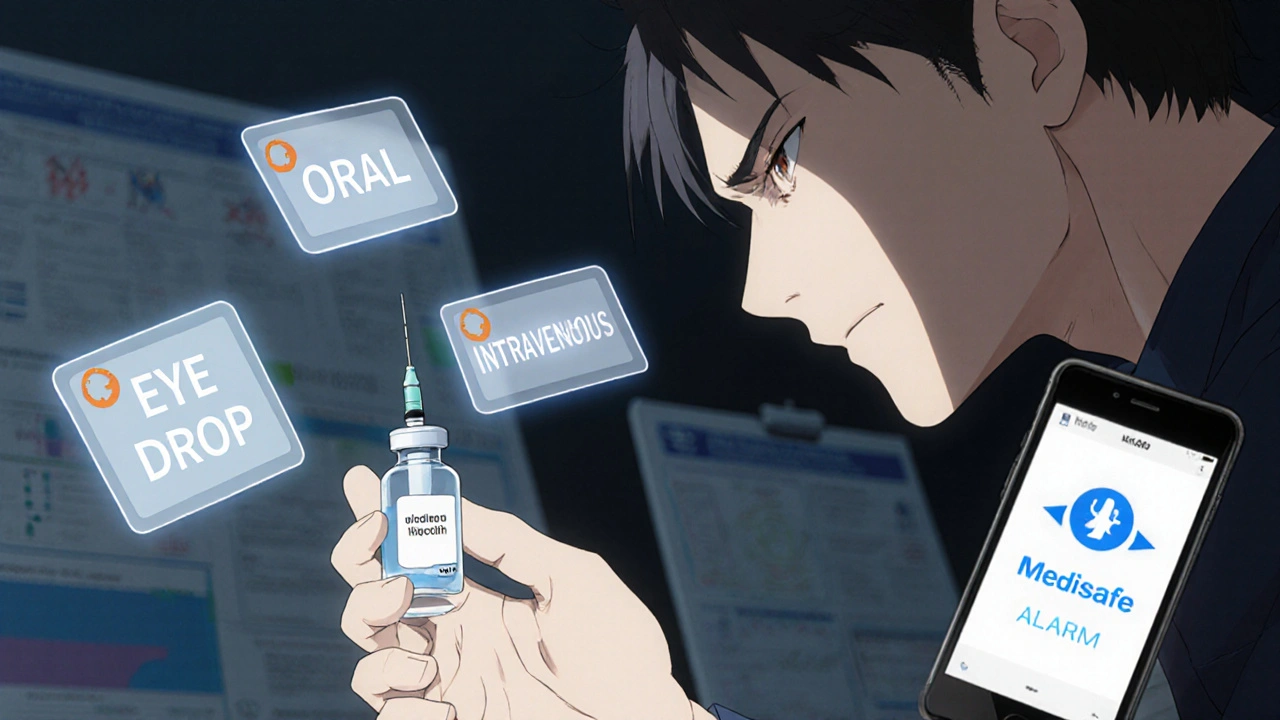
Taking a pill orally when it’s meant to be injected? That’s not just wrong-it’s life-threatening. And it happens. People confuse oral tablets with patches. They swallow liquid meant for the eye. They inject pills meant to be dissolved under the tongue.One in six medication errors involve the wrong route, according to the Agency for Healthcare Research and Quality. A man in his 70s took his wife’s eye drops by mouth because he didn’t read the label. He ended up with a dangerous drop in blood pressure.
Always check the instructions: Oral, Topical, Intravenous, Sublingual, Rectal. If you’re unsure, ask. Don’t guess. Even if you’ve taken the same drug before, the form might have changed. A pill you used to swallow might now be a liquid spray. The packaging might look different.
For injections, make sure you know how to use the device-pen, syringe, auto-injector. Practice with a trainer device if your clinic offers one. If you’re shaky or have trouble seeing, ask for help. There’s no shame in needing assistance.
Rule 5: Take It at the Right Time (The Right Time)
Timing matters more than you think. Some meds need to be taken on an empty stomach. Others must be spaced exactly 12 hours apart. Miss the window, and the drug loses effectiveness-or becomes toxic.For antibiotics, missing a dose can let bacteria survive and become resistant. For blood pressure meds, skipping even one day can spike your numbers. For seizure drugs, timing is everything. One delay can trigger a seizure.
Use a pill organizer with alarms. Or set phone reminders. There are free apps like Medisafe or MyTherapy that send alerts and track your history. If you travel across time zones, plan ahead. Don’t just guess. Call your pharmacist. They can tell you how to adjust your schedule.
Don’t skip doses because you feel fine. Don’t double up because you forgot. If you miss a dose, check the leaflet or call your doctor. Most guidelines say: if it’s close to the next dose, skip it. If it’s been less than a few hours, take it. But never guess.
Older adults are especially at risk. A 2022 Kaiser Family Foundation survey found that 61% of seniors over 65 have taken a medication at the wrong time. One woman skipped her heart medication for three days because she thought she was “feeling better.” She ended up in the ER with atrial fibrillation.
What’s Missing? The Other Four Rights
The classic Five Rights-right patient, drug, dose, route, time-are the foundation. But safety doesn’t stop there. Four more are just as important:- Right documentation: If you’re a caregiver, write down when you gave the medicine. No memory games.
- Right reason: Why are you taking this? Does it match your diagnosis? If your doctor changed your condition but didn’t update your meds, ask.
- Right response: Are you feeling better? Worse? Any new symptoms? Report them. Don’t wait.
- Right education: Do you understand how to use it? What side effects to watch for? If not, ask again. Until it’s clear.
One study found that when patients understood their meds, errors dropped by 56%. That’s not magic-that’s knowledge.
Real-World Tips That Work
- Use the brown bag method: Once a quarter, bring all your meds-pills, creams, supplements-to your doctor or pharmacist. They’ll spot duplicates, interactions, and expired drugs.
- Know your high-alert drugs: Insulin, warfarin, opioids, lithium. These need extra care. Keep them locked up. Use reminders.
- Check expiration dates: Expired meds can lose potency or become harmful. Toss them safely. Most pharmacies take back old pills.
- Don’t trust memory: Write it down. Even if you’ve been on the same meds for years.
- Use one pharmacy: That way, they can track all your drugs and warn you about interactions.
Technology helps. Barcode scanners in hospitals cut errors by 41%. At home, apps like Medisafe sync with your pharmacy. Smart pill dispensers open only when it’s time. They’re not expensive-some cost less than a monthly coffee habit.
When Something Goes Wrong
If you think you took the wrong medicine:- Don’t panic.
- Call your pharmacist immediately. They’re trained for this.
- If you feel unwell-dizziness, chest pain, trouble breathing-call emergency services.
- Keep the bottle. They’ll need to know what you took.
Medication errors are not your fault. The system is complicated. But you’re not powerless. You’re the last line of defense. And you’re the most important one.
What should I do if I accidentally take the wrong medication?
Don’t wait. Call your pharmacist right away-they can tell you if it’s dangerous and what to do next. If you feel sick, call emergency services. Keep the medication bottle handy so they can identify what you took. Never try to induce vomiting unless instructed by a professional.
Can I split my pills to save money?
Only if your doctor or pharmacist says it’s safe. Some pills are designed to release slowly over time. Cutting them can cause a dangerous spike in the drug’s effect. Others are coated to protect your stomach. Never split capsules or tablets with a score line unless you’ve confirmed it’s allowed.
Why do my pills look different now?
Generic drugs can change color, shape, or size between refills because different manufacturers make them. That’s normal. But always check the name, dose, and instructions on the label. If you’re unsure, ask your pharmacist. Don’t assume it’s the same just because it’s the same drug name.
How do I know if my medication is expired?
Check the expiration date on the bottle or box. For most pills, they’re safe for a year or two past that date, but potency drops. Liquid meds, insulin, and eye drops expire faster and can become harmful. If it looks cloudy, smells odd, or has changed color, throw it out. Most pharmacies offer free disposal bins for old meds.
Should I take my meds with food or on an empty stomach?
Always follow the label. Some meds need food to reduce stomach upset. Others won’t work if taken with food. Antibiotics like amoxicillin can be taken with food. Others like tetracycline must be taken on an empty stomach. If you’re not sure, ask your pharmacist. Don’t guess.
Can I mix my meds with alcohol?
Many medications react badly with alcohol. Painkillers like acetaminophen can cause liver damage. Antidepressants can increase drowsiness. Blood pressure meds can drop your pressure too low. Even one drink can be risky. If your prescription doesn’t say “avoid alcohol,” assume it’s unsafe unless your doctor says otherwise.
How often should I review my meds with a doctor?
At least once a year, or every time you see a new doctor. If you take five or more medications, aim for every three months. Many older adults are on drugs they no longer need. A simple review can cut your pill count, reduce side effects, and save money.
Final Thought: You’re the Guardian
Medication safety isn’t just about following rules. It’s about staying alert, asking questions, and trusting your gut. If something feels off-your pill looks wrong, the dose seems too high, you’re confused about when to take it-speak up. No one knows your body better than you. And no one else will check as carefully as you can.The system isn’t perfect. But you don’t have to wait for it to fix itself. Use the tools. Ask the questions. Keep the list. Set the alarms. Your life depends on it-not just your health, but your safety. And that’s worth every minute of attention you give it.
Katy Bell
November 22, 2025 AT 04:57I once took my mom’s blood pressure pill by accident because the bottles looked the same. I didn’t feel anything at first, then my vision went fuzzy and I had to call 911. Never assume. Always check the name. It’s not paranoia-it’s survival.
Ragini Sharma
November 23, 2025 AT 06:58lol i just realized i’ve been taking my thyroid med at night for 3 years bc the bottle said ‘take once daily’ and i thought ‘daily’ meant ‘whenever i remember’ 😅 my dr almost had a heart attack when i told her. now i have alarms on my phone and a sticker on my toothbrush. #medicationchaos
Vivian C Martinez
November 24, 2025 AT 20:26One pharmacy. Always. It’s the single most effective safety measure at home. Pharmacists see all your prescriptions and catch interactions you never knew existed.
Suzan Wanjiru
November 26, 2025 AT 13:13My grandma used to crush all her pills into applesauce because she said swallowing was hard. Turns out three of them were extended release. She ended up in the ER with a toxic level of her heart med. Never crush unless told to. Always ask. Always.
Jennifer Shannon
November 27, 2025 AT 00:42You know what’s wild? In India, people often get their meds from street vendors or unlicensed clinics-no labels, no instructions, just a plastic bag with pills inside. I’ve seen grandmas taking five different drugs for diabetes, heart, and arthritis, all mixed together in one cup, with no idea what’s what. The fact that this article even exists in the U.S. shows how far we’ve come… but also how much we still take for granted. I’m not saying this to sound superior-I’m saying it because if we don’t teach our kids to treat meds like dynamite, someone’s going to get hurt. And it won’t be the pharmacist’s fault.
Suresh Ramaiyan
November 27, 2025 AT 14:49My dad used to take his insulin at dinner because that’s when he felt the hungriest. He didn’t realize it was supposed to be before meals. One night, he passed out at the dinner table. We thought it was a stroke. Turns out, his blood sugar crashed. Now we have a color-coded chart on the fridge, and my sister calls him every day at 7 a.m. to remind him. It’s not control-it’s love. And it works.
Ross Ruprecht
November 28, 2025 AT 14:39Why are we making this so complicated? Just don’t take stuff you don’t recognize. Done. The system’s broken, but you don’t need 10 rules to not poison yourself.
Bryson Carroll
November 29, 2025 AT 22:49People treat meds like candy. You think you’re smart because you read the label once? Nah. You’re just lucky. I’ve seen people take blood thinners with grapefruit juice and wonder why they’re bleeding out. The real problem isn’t the meds-it’s the people who think they know better than science. And no, your cousin’s friend who ‘got better on herbs’ doesn’t count.
Linda Rosie
November 30, 2025 AT 14:10My pharmacist printed a photo of me on my prescription label. I cried. I’ve never felt so seen.
Lisa Lee
December 1, 2025 AT 09:52Why does this even need to be an article? In Canada, we don’t need five rules. We just trust our doctors. This is what happens when you let capitalism run healthcare. People are left to figure it out themselves because no one cares enough to fix the system.