
Fulminant Hepatic Failure from Medications: How to Recognize It in an Emergency
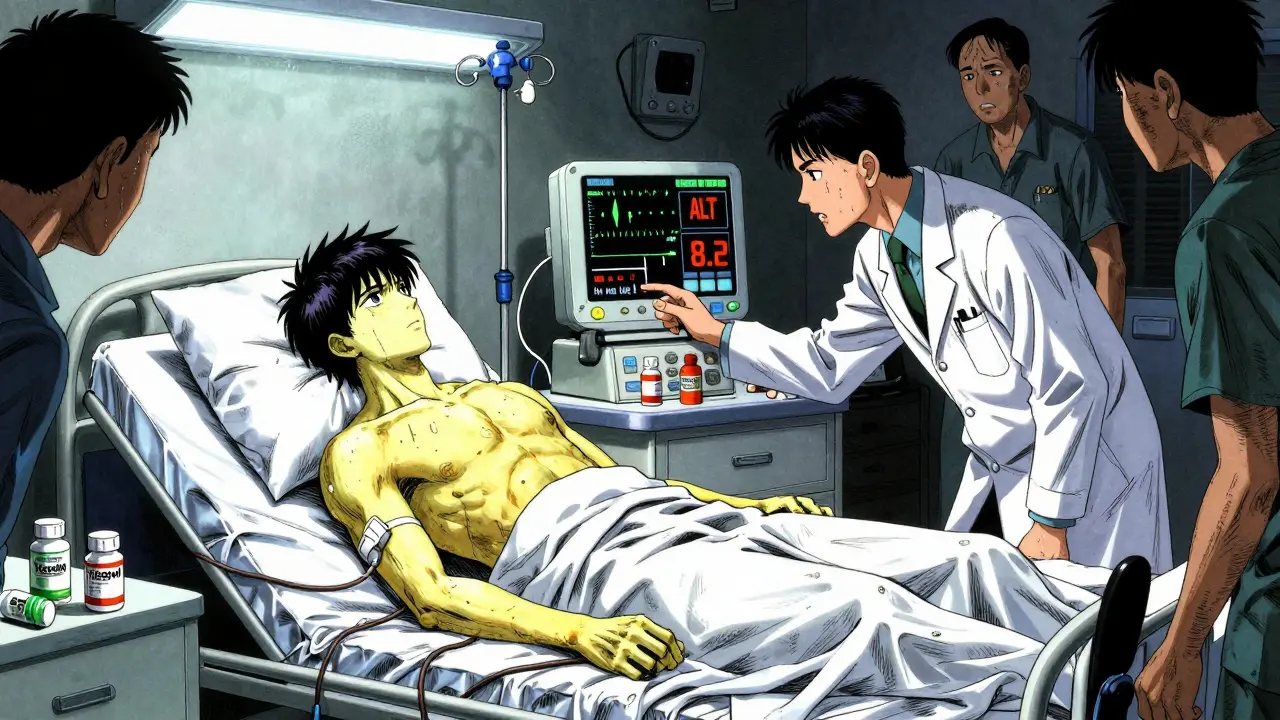 Dec, 18 2025
Acetaminophen Dose Calculator
Understand Your Risk
This tool helps you calculate your total daily acetaminophen intake from all sources. Remember: the maximum safe dose is 4,000 mg per day for most adults. But if you drink alcohol or have liver issues, limit to 3,000 mg.
Results
What this means
Every year, thousands of people end up in emergency rooms with something no one sees coming: their liver suddenly stops working. No history of alcohol abuse. No hepatitis. Just a medication they took for pain, sleep, or a cold - and now they’re confused, yellow, and bleeding. This is fulminant hepatic failure - a catastrophic, fast-moving collapse of liver function that can kill in days if missed. And the scariest part? In nearly half of all cases, it’s caused by something you can buy off the shelf.
What Exactly Is Fulminant Hepatic Failure?
Fulminant hepatic failure (FHF), also called acute liver failure, isn’t just a bad liver. It’s a system-wide crisis. The liver stops doing its job - detoxifying blood, making clotting factors, processing nutrients - and the body starts shutting down. Three things scream that it’s happening: yellow skin (jaundice), confusion or drowsiness (hepatic encephalopathy), and blood that won’t clot (INR ≥1.5). It happens in people who had a healthy liver just days before. The word "fulminant" comes from Latin for "lightning strike." That’s how fast it hits. In hyperacute cases, symptoms appear in under 7 days. In most drug-induced cases, it’s 1 to 8 weeks. But speed doesn’t mean it’s rare. In the U.S., about 2,000 people get this every year. And 46% of them didn’t have a pre-existing condition - they just took a pill.Acetaminophen: The Silent Killer in Your Medicine Cabinet
If you’ve ever taken Tylenol, Excedrin, or a prescription painkiller like Vicodin, you’ve taken acetaminophen. It’s in more than 600 products. And it’s the #1 cause of acute liver failure in the U.S. - responsible for nearly half of all cases. Most people think they’re safe if they follow the label. But here’s the trap: the "maximum daily dose" of 4,000 mg is easy to exceed without realizing it. Take two Tylenol (650 mg) for a headache. Later, take a cold medicine with acetaminophen. Then a prescription painkiller with acetaminophen. Suddenly, you’re at 5,000 mg - and your liver is in trouble. Toxicity kicks in at 7.5 to 10 grams in a single dose. But even daily doses over 4 grams for several days can cause damage. The liver can’t keep up. Toxic metabolites build up. Liver cells die. ALT levels spike - often above 1,000 IU/L, sometimes over 10,000. And here’s the red flag: the ALT-to-AST ratio is usually above 2:1. That’s a telltale sign of acetaminophen poisoning. The good news? If caught early, there’s a lifesaving antidote: N-acetylcysteine (NAC). But it only works well if given within 8 hours. After 24 hours, its effectiveness drops sharply. And here’s the brutal truth: 38% of people who overdose on acetaminophen don’t even admit to it when they get to the ER. That’s why emergency guidelines now say: test everyone with ALT over 500 IU/L - no matter what they say.Other Medications That Can Destroy Your Liver
Acetaminophen gets all the attention, but it’s not the only culprit. Many prescription and over-the-counter drugs can trigger this reaction - often in unpredictable ways. Antibiotics like amoxicillin-clavulanate (Augmentin) are a major offender. They don’t always cause fast damage. Instead, they creep up. Jaundice starts first. Days or weeks later, encephalopathy hits. You might think it’s a slow viral infection. But if your alkaline phosphatase is more than double the normal level and jaundice lasts over 18 days, it’s likely drug-induced. Antiseizure drugs like valproic acid cause a different pattern. They lead to microvesicular steatosis - tiny fat droplets inside liver cells. Ammonia levels rise before confusion even shows up. If someone on valproic acid starts acting strangely, check the ammonia. It’s a silent warning. Herbal supplements are the fastest-growing cause. Green tea extract - especially in concentrated doses over 800 mg per day - has been linked to over 40% of supplement-related liver failures. Kava, comfrey, and certain weight-loss teas have caused deaths. These aren’t "natural" in the safe sense. They’re potent chemicals with no safety testing. And they’re sold without warnings. Even NSAIDs like ibuprofen or naproxen - the kind you take for a sore back - can cause acute hepatitis. One Johns Hopkins study found 17 cases where patients were misdiagnosed with stomach flu. They were vomiting, nauseous, and in pain. But their real problem was a liver that was shutting down. The delay? An average of 5 days.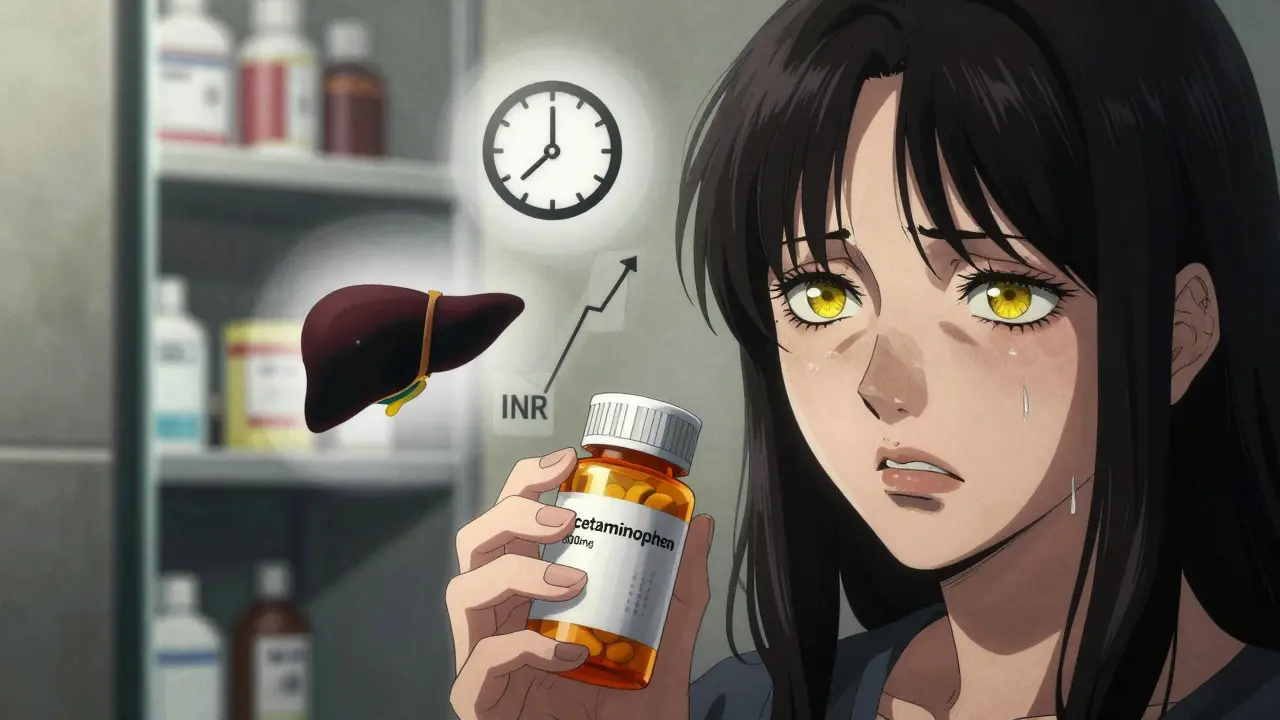
How Doctors Spot It - And Why You Should Know the Signs
Emergency teams don’t guess. They follow a 30-minute triage protocol when someone walks in with nausea, vomiting, and yellow eyes:- Check ALT, INR, and acetaminophen level - immediately.
- Ask about every pill, herb, and supplement taken in the last 90 days - including what’s in your medicine cabinet.
- Assess mental status every hour using the West Haven Criteria - subtle personality changes are early signs of encephalopathy.
- Repeat INR every 6 hours if it’s already above 1.5. Rising INR means the liver is failing faster.
Why Delay Is Deadly - And How to Avoid It
Survival rates tell the story. If you get treated within 8 hours of an acetaminophen overdose, your chance of survival without a transplant is 67%. If you wait more than 24 hours? That drops to 29%. For non-acetaminophen causes, survival without transplant is only 29% overall. Patients don’t always know they’re in trouble. The most common symptom before they seek help? Persistent nausea - but still able to eat. No fever. No diarrhea. Just a nagging feeling that something’s off. Family members often notice the subtle signs first: mood swings, slurred speech, forgetfulness, or confusion about time and place. These aren’t "just stress." They’re signs the brain is being poisoned by toxins the liver can’t clear. One nurse practitioner on a patient forum described a 45-year-old woman who took 4 grams of acetaminophen daily for back pain - exactly what the label said. She came in confused. Her INR was 8.2. She didn’t realize she was overdosing. She thought she was being careful. Another case: a man took 3,000 mg of kava daily for six months to help with anxiety. He never told his doctor. When he collapsed, his INR was 5.8. He was in grade IV encephalopathy. He survived only because his family insisted on a liver transplant.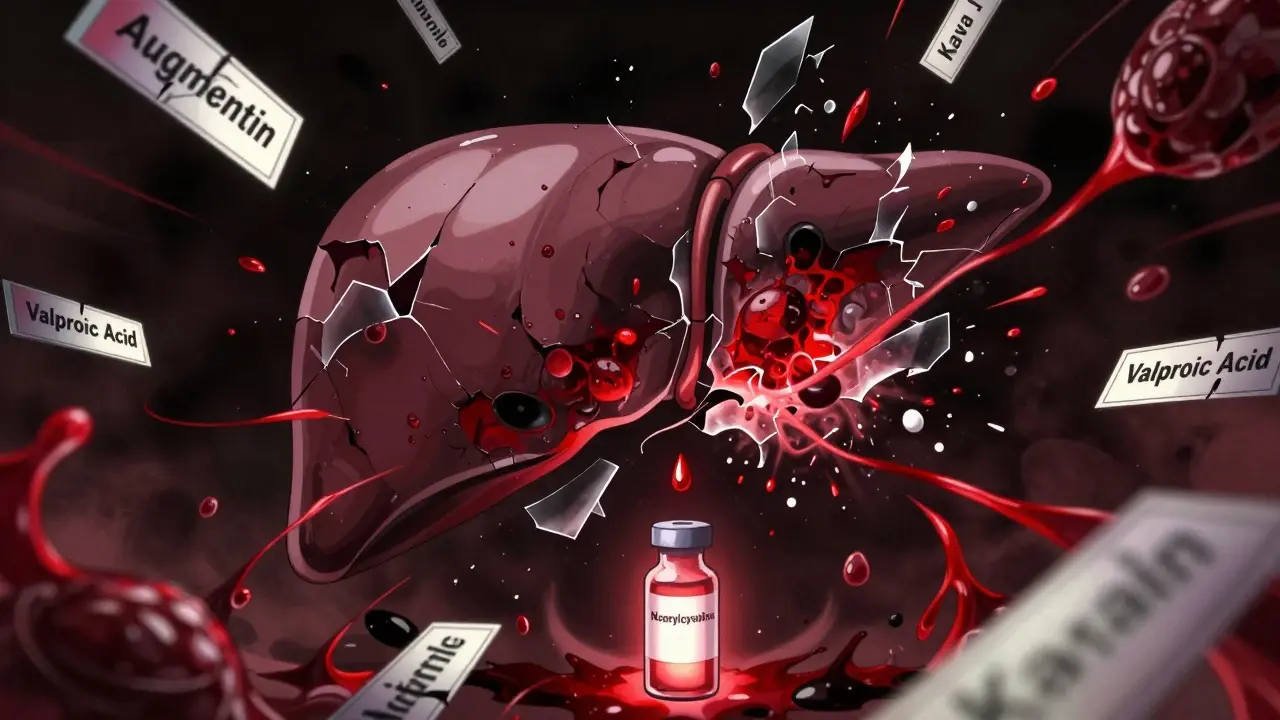
What You Can Do - Before It’s Too Late
You don’t need to be a doctor to save a life. Here’s what matters:- Know your medications. Check every bottle - OTC, prescription, and supplement - for acetaminophen. Add up the total. Don’t exceed 3,000 mg a day if you drink alcohol or have liver issues.
- Never assume "natural" means safe. Herbal supplements aren’t regulated. Green tea extract, kava, and black cohosh have killed people.
- If you’re taking more than one painkiller, check for hidden acetaminophen. Hydrocodone/acetaminophen (Vicodin) is a common combo. So is oxycodone/acetaminophen (Percocet).
- If you feel unusually tired, nauseous, or yellow, get tested. Don’t wait. Ask for ALT, INR, and acetaminophen level. If you’re over 500 IU/L, it’s an emergency.
- Keep a list of everything you take - including doses and how long you’ve been taking it. Bring it to the ER.
The Future: AI, Alerts, and Better Protection
New tools are coming. In 2023, the FDA cleared HepaPredict - an AI system that uses 17 clinical data points to predict liver failure with 89% accuracy within 24 hours. It’s already being tested in major hospitals. By mid-2024, a nationwide "FHF Alert System" will require ERs to report suspected cases within one hour. This will cut transplant delays by hours - and save lives. But technology won’t fix the root problem: we don’t take this seriously enough. The FDA now requires bold warnings on prescription acetaminophen products - but not on OTC bottles. That’s a gap. And the number of supplement-related liver failures is rising 42% a year. The cost of one case? Nearly $400,000. Most of that is for ICU care and transplant. But money isn’t the point. The point is: this is preventable. You can stop it.Can you survive fulminant hepatic failure without a liver transplant?
Yes - but only if caught early. For acetaminophen overdose, 67% of patients recover without transplant if treated within 8 hours using N-acetylcysteine. For other drug-induced cases, survival without transplant is around 29%. Once INR climbs above 6.5 and encephalopathy becomes severe, transplant is the only option.
Is acetaminophen the only medication that causes liver failure?
No. While acetaminophen causes nearly half of all cases, many other drugs can trigger it. Antibiotics like amoxicillin-clavulanate, antiseizure drugs like valproic acid, NSAIDs like ibuprofen, and herbal supplements like green tea extract and kava are all known causes. Some reactions are predictable; others happen randomly in susceptible people.
What should I do if I think I’ve taken too much acetaminophen?
Go to the ER immediately. Don’t wait for symptoms. Bring the pill bottle with you. Ask for an acetaminophen blood level and an INR test. If you’re within 8 hours of ingestion, N-acetylcysteine can prevent liver damage. Delaying even a few hours can mean the difference between recovery and needing a transplant.
Can herbal supplements really cause liver failure?
Absolutely. Between 2019 and 2022, 42% of supplement-related liver failure cases in the U.S. were linked to green tea extract. Kava, comfrey, and weight-loss teas have also caused deaths. These products aren’t tested for safety like prescription drugs. Many people assume "natural" equals safe - but that’s dangerously wrong.
Why do some people get liver failure from a drug while others don’t?
It’s often about genetics and metabolism. Some people’s livers process drugs differently - producing more toxic byproducts. Women are more likely to have reactions to certain drugs like antibiotics and antiepileptics. Age, alcohol use, and pre-existing liver conditions also increase risk. But in many cases, there’s no clear reason why one person gets hurt and another doesn’t.
How can I tell if my symptoms are just a virus or liver failure?
Viral hepatitis usually comes with fever, body aches, and dark urine. Drug-induced liver failure often starts with nausea, fatigue, and mild jaundice - but no fever. The biggest red flag is confusion or personality changes. If you feel off for more than a few days, especially after starting a new medication or supplement, get liver tests - ALT, INR, bilirubin. Don’t wait for yellow eyes.
Adrienne Dagg
December 20, 2025 AT 08:00Kinnaird Lynsey
December 21, 2025 AT 19:32shivam seo
December 23, 2025 AT 13:33benchidelle rivera
December 25, 2025 AT 05:06Andrew Kelly
December 26, 2025 AT 08:27Anna Sedervay
December 27, 2025 AT 05:18Matt Davies
December 27, 2025 AT 23:16anthony funes gomez
December 28, 2025 AT 10:46Nicole Rutherford
December 28, 2025 AT 11:14Kevin Motta Top
December 30, 2025 AT 02:53Janelle Moore
December 31, 2025 AT 02:44jessica .
December 31, 2025 AT 09:18Ryan van Leent
January 1, 2026 AT 16:40Ashley Bliss
January 2, 2026 AT 14:13