
Generic Drug Savings: Real Numbers and National Statistics Explained
 Mar, 30 2026
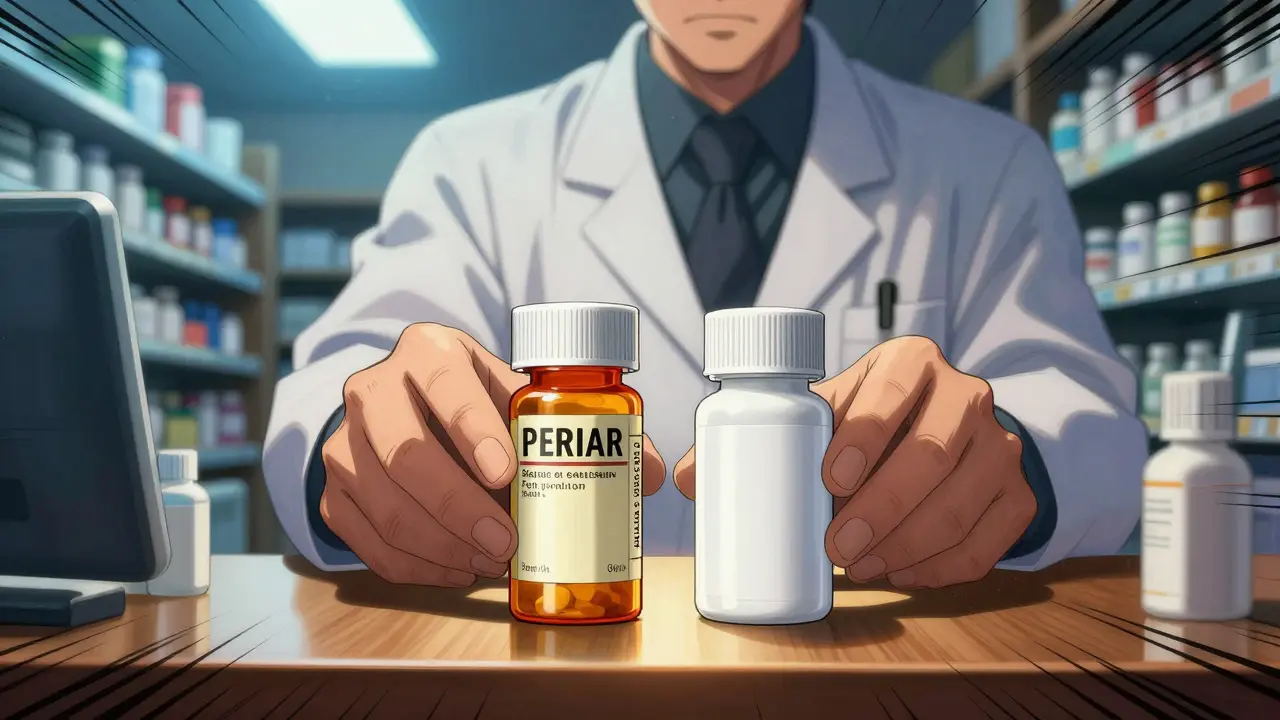
If you’ve ever filled a prescription, you’ve probably noticed two prices: one high sticker price for the name-brand version and a much lower number next to it for the alternative. That lower price isn't just saving your wallet; it’s saving the entire U.S. healthcare economy by hundreds of billions. In fact, Generic Drugs are medicines that contain the same active ingredients as brand-name drugs but are typically sold at a significantly lower price. According to the most recent data available for 2024, these medications contributed to a staggering $467 billion in savings. By early 2026, we can look back at those numbers and see exactly how this works.
The Scale of Savings in Plain English
You might hear people say that drug prices are always going up, which is true for some categories. However, the overall math tells a different story when you focus on generics. The Association for Accessible Medicines released a major report in early 2025 covering the previous year’s performance. They found that while generic medicines made up 90 percent of all prescriptions filled in the United States, they only accounted for 12 percent of the total money spent on drugs. Let that sink in for a moment. Nine out of ten pills taken were low-cost options, yet they consumed a tiny fraction of the budget.
In contrast, brand-name drugs took up just 10 percent of prescription volume but devoured 88 percent of the spending. This gap has held steady since about 2016. Even though doctors are writing more scripts than ever before-roughly 3.9 billion prescriptions filled-the reliance on the cheaper versions keeps the total bill manageable. Without this dynamic, the financial pressure on hospitals, insurance companies, and patients would be nearly insurmountable.
| Metric | Generics & Biosimilars | Brand-Name Drugs |
|---|---|---|
| Prescription Volume | 90% | 10% |
| Total Spending Share | 12% | 88% |
| Average Out-of-Pocket Cost | $6.95 | $28.69 |
Biosimilars: The Complex Cousins
When people talk about generics, they usually picture small pills or capsules. But there is another group called Biosimilars, which are biological products highly similar to already approved biological reference products. These aren’t just chemical copies; they treat serious conditions like cancer and autoimmune diseases. They work differently than standard generics because biological molecules are harder to manufacture, but they still save a fortune.
The numbers for these specific medicines have exploded recently. In 2024, biosimilars generated $20.2 billion in savings. That is nearly double what they saved the year before. Over the last decade, since they really started gaining traction, the total adds up to over $56 billion. The acceleration is noticeable: about 60 percent of those savings happened in just the last two years. For patients needing expensive treatments like infliximab or adalimumab, seeing these newer, cheaper versions come to market directly reduces their monthly bills.
The Deflation Paradox
Most things get more expensive over time due to inflation. A gallon of milk costs more today than it did ten years ago. But the generic pharmaceutical market is weirdly special. While the volume of generic pills increased by 15 percent from 2015 to 2024, the total amount spent actually dropped. Manufacturers produce more units, but the price per unit falls so fast that the total revenue shrinks. Since 2019, total spending on generic sales in the U.S. went down by $6.4 billion even though we bought more.
This is rare behavior for any industry. Usually, higher demand means higher prices, or at least stable ones. Here, competition among manufacturers drives the price down aggressively. An analysis from mid-2025 showed net generic drug deflation continuing through the summer months. Medicaid programs saw millions saved in deflation during May and June 2025 alone. This means the market acts as a brake on healthcare costs, countering the rising prices seen in other sectors.

Who Pays More?
If you have insurance, you see copay slots. Uninsured individuals feel the full impact. For someone buying meds with cash, the difference is stark. The average out-of-pocket cost for a generic prescription was $6.95 in 2024. Compare that to the $130.18 average for a brand-name drug for uninsured Americans in 2019 terms. While brand costs rose significantly over five years, generic costs actually went down slightly by $2.45. This highlights why access to these lower-cost options is critical for the most vulnerable populations who don't have safety nets to absorb the shock of brand pricing.
Specialty drugs represent a growing problem in this ecosystem. Projections suggest that specialty medications could account for 60 percent of total drug spending by 2025. Despite being a minority of prescriptions, they carry heavy price tags. Generics help offset this burden, representing only 1.2 percent of all healthcare spending. If we didn’t have the deflationary force of generics, the rise in specialty costs would likely bankrupt many regional health systems.
Risks to the Supply Chain
The system works well for consumers right now, but there is a hidden danger. When margins get too thin, factories stop making the product. Industry leaders warned in 2025 that extreme price deflation over thirty years creates unsustainable market conditions for manufacturers. If the profit margin disappears, companies shut down production lines. This leads to shortages. You might visit a pharmacy and find the shelf empty for a common blood pressure med not because of demand, but because nobody could afford to make it anymore.
Policymakers and advocates are discussing ways to balance this. We need to streamline FDA processes to bring new competition to the market faster, but also curb patent abuse. "Pay-for-delay" settlements, where big pharma pays smaller competitors to stay off the market, drive up costs by nearly $12 billion annually. Banning such practices could save $45 billion over a decade. The goal is to keep prices low without starving the supply chain.
Policy and Medicare Impact
Federal programs rely heavily on this savings mechanism. Medicare data shows that generics generated $142 billion in savings for the program in 2024. That translates to roughly $2,643 saved per beneficiary. With an aging population, every dollar saved here helps fund care for seniors. There are discussions about extending these models to broader federal policies, including Most-Favored-Nation pricing targets. These aims to drastically bring down U.S. drug prices, which often remain three to five times higher than prices abroad.
The interaction between patents and policy remains the biggest hurdle. The Congressional Budget Office estimates that limiting "patent thicketing"-where companies create complex webs of secondary patents to block competition-would yield $1.8 billion in savings. Similarly, ending "product hopping," where companies make slight changes to a drug to bypass generic entry, would increase government revenues by $1.1 billion over ten years. These legal tricks prevent competition, keeping prices artificially high until the final patents expire.
What Comes Next?
As we move deeper into 2026, the trend of increasing biosimilar adoption looks inevitable. The past two years set a record for how quickly savings can accumulate once acceptance is established. However, sustainability remains the watchword. We want the lowest possible price, but not at the cost of reliable availability. Monitoring the quarterly reports from the Department of Health and Human Services will show us if current strategies are maintaining supply levels while keeping costs down. For now, the math is undeniable: generic competition delivers massive economic relief to the nation, provided the underlying manufacturing base remains healthy enough to deliver those pills.
Frequently Asked Questions
Are generic drugs exactly the same as brand names?
Yes, they must contain the same active ingredients in the same strength and dosage form. They work the same way in the body and meet the same quality standards. Differences usually involve inactive ingredients like coloring or shape, which do not affect treatment.
Why do brand-name drugs cost so much more?
Brand-name manufacturers often recoup R&D costs through patents that grant exclusive selling rights for years. Once those patents expire, generic makers enter the market, driving prices down drastically due to competition.
What is the main benefit of biosimilars?
Biosimilars provide lower-cost alternatives for complex biological medicines used for conditions like cancer or diabetes. In 2024, they saved $20.2 billion, doubling their savings from the previous year.
Do generic drugs cause shortages?
Sometimes. If prices drop too low, manufacturers may find producing them unprofitable. This can lead to supply interruptions, which is why balancing price incentives with market stability is a key policy challenge.
How much does Medicare save on generics?
In 2024, generics generated $142 billion in savings for Medicare, equating to approximately $2,643 in savings per individual beneficiary covered by the program.
Victor Ortiz
April 1, 2026 AT 11:30The deflation paradox is a myth when you look at the regional disparities.
sanatan kaushik
April 1, 2026 AT 15:28Just take the pill that works and saves money.
Amber Armstrong
April 2, 2026 AT 08:26My mother used to complain about the price differences constantly back in the day. She would always choose the brand name even though the cheaper option worked exactly the same way. It really shows how important information is when making health decisions. We need to keep pushing for more transparency in this market space. The statistics regarding Medicare benefits are truly heartening to read. Knowing that seniors get saved thousands helps stabilize our whole community budget. There is still room for improvement regarding supply chain reliability issues though. I hope the new policies address the manufacturing risks mentioned near the end. We cannot ignore the warning signs about profit margins disappearing completely. If factories shut down then nobody wins regardless of the price point. It is a delicate balance that requires constant monitoring from everyone involved. Ultimately the goal is accessible care without breaking the bank entirely. This kind of economic relief is something we should all celebrate quietly. People often overlook the impact of biosimilar entry on specialized treatments. We must prioritize patient access over pure corporate profitability margins.
Beccy Smart
April 3, 2026 AT 01:15Healthcare is a human right 🛑🙅♀️💊.
Jonathan Alexander
April 4, 2026 AT 08:23It brings a strange sense of dread to think about the shortage risks looming ahead.
Debbie Fradin
April 4, 2026 AT 11:18Funny how inflation loves everything else but hates medicine prices specifically.
Charles Rogers
April 5, 2026 AT 16:16Paying full price for brand names is financial negligence at this point in time.
Adryan Brown
April 7, 2026 AT 14:23We have to remember that pharmaceutical innovation takes decades of research before patents expire. The system relies on incentives to develop new treatments for complex diseases. Without the high margins on brand names there would be less innovation in oncology. That said the current spending ratio is indeed heavily skewed toward luxury pricing. Patients often have no choice when insurance plans steer them away from generics initially. We need better education for doctors on switching therapies early in treatment cycles. The bioequivalence standards are actually quite rigorous for approval processes here. Safety margins remain consistent even when the packaging changes drastically between versions. It is unfortunate that stigma prevents some people from taking the effective alternative options. Community support groups can help bridge the gap in understanding for elderly patients. We should advocate for smoother transitions during hospital discharge planning procedures as well. Insurance formularies need to update their tier structures to reflect modern availability rates. Policy changes alone will not fix the underlying behavior patterns seen in clinics. Collaboration between providers and pharmacists is the key to sustainable outcomes here. Trust is built when patients realize their medication efficacy remains unchanged by cost.
Christopher Curcio
April 9, 2026 AT 06:53Biosimilar therapeutic equivalence metrics indicate significant cost containment potential within the biologics sector.
Angel Ahumada
April 10, 2026 AT 22:06most folks dont grasp the nuances of patent thicketing strategies employed by big pharma