How COVID-19 Caused Drug Shortages and Increased Overdose Risks
 Dec, 29 2025
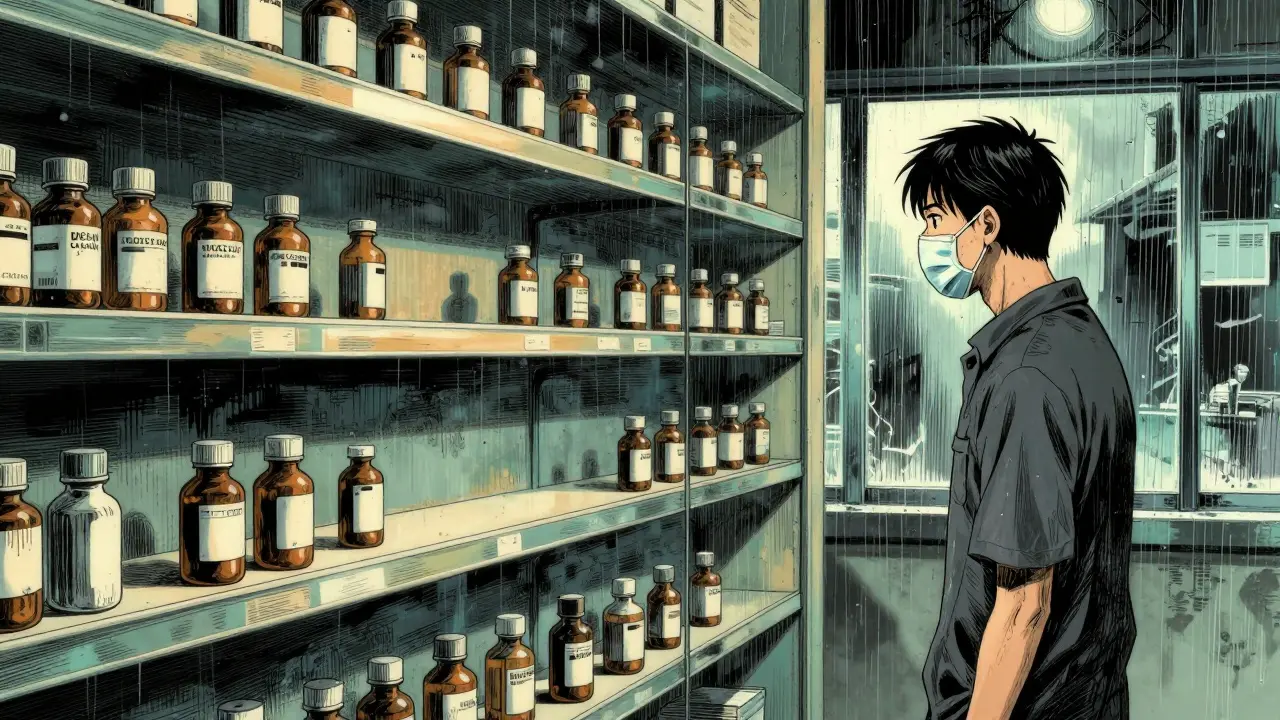
When the pandemic hit in early 2020, people didn’t just worry about ventilators and hospital beds-they started wondering if they’d be able to get their blood pressure pills, insulin, or antibiotics at all. For many, that fear became real. Drug shortages spiked overnight, not because factories shut down completely, but because the entire system that moves medicine from labs to pharmacies suddenly cracked under pressure.
Why Did Medications Disappear From Shelves?
It wasn’t one thing. It was a chain reaction. Most of the active ingredients in common drugs-like antibiotics, painkillers, and heart medications-come from just two countries: China and India. When lockdowns started there, factories slowed or stopped. Shipping containers piled up at ports. Truck drivers got sick. Suddenly, the raw materials needed to make a simple pill couldn’t get to U.S. plants. A study in JAMA Network Open found that between February and April 2020, nearly one in three drug supply reports turned into actual shortages. That’s a five-fold jump from normal. Insulin, heparin, propofol, and even basic antibiotics like amoxicillin vanished from pharmacies. Hospitals rationed doses. Patients called pharmacies every day, hoping their prescription was back in stock. By May 2020, things started to calm down. The FDA stepped in-pushing manufacturers to report issues earlier, fast-tracking inspections, and even allowing temporary imports from alternate suppliers. By summer, most shortages returned to pre-pandemic levels. But the damage was done. People had gone without meds. Some skipped doses. Others switched to less effective alternatives. And the system didn’t fix the root problem: it still relies on fragile global supply chains.The Hidden Crisis: Illicit Drugs Got Deadlier
While prescription drugs were hard to find, street drugs became more dangerous. As lockdowns cut off traditional drug networks, traffickers scrambled to keep selling. They didn’t make more product-they made it stronger. Fentanyl, a synthetic opioid 50 to 100 times more powerful than heroin, started showing up everywhere. Not as a replacement. As a cheap additive. People who used drugs didn’t know what they were buying anymore. A Reddit user in June 2020 wrote: “I used to take two pills and feel it. Now one knocks me out. Turns out it’s all laced.” That wasn’t rare. CDC data shows overdose deaths jumped from 77,000 in 2019 to nearly 98,000 by April 2021. In states like West Virginia and Kentucky, deaths rose over 50%. In some places, naloxone-the overdose reversal drug-was being handed out faster than ever. The reason? Disruption. When people lost access to their usual dealers, they turned to whatever was available. And what was available was often laced with fentanyl. Harm reduction workers in Philadelphia reported that drug purity became unpredictable. One program saw a 40% drop in service during lockdowns because their staff couldn’t reach clients safely.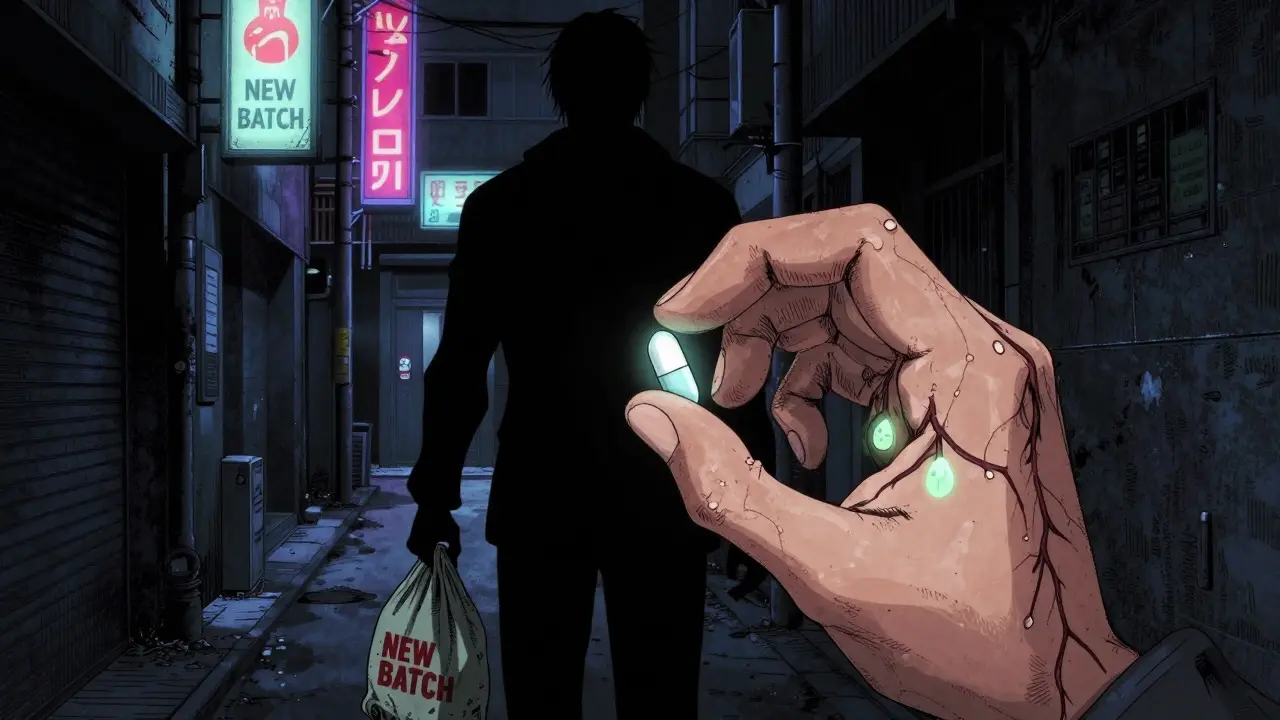
Telehealth Helped Some-But Left Others Behind
For people with opioid use disorder, the pandemic forced a sudden shift. In-person counseling and methadone clinics closed or cut hours. But the government acted fast: doctors could now prescribe buprenorphine over video calls, and patients could take home weeks of methadone instead of daily visits. By April 2020, 95% of buprenorphine prescriptions were done via telehealth-up from just 13% in February. That saved lives. One NIDA study found Medicare patients on telehealth treatment were less likely to die from overdose. But not everyone could use it. Older adults didn’t have smartphones. Rural residents had spotty internet. People without stable housing couldn’t find a quiet place for a Zoom call. A study from SAMHSA showed behavioral healthcare visits dropped 75% among those with private insurance in early 2020. The system adapted for those who could access it-but left behind the most vulnerable.Who Got Left Out?
The pandemic didn’t create new inequalities. It just made them worse. People of color, low-income communities, and those without insurance faced the worst of both crises: harder to get needed meds, and more likely to use street drugs with no safety net. Stigma played a role too. People afraid of being judged didn’t call 911 when someone overdosed. They didn’t get tested for COVID. They didn’t ask for help. One harm reduction worker in Ohio told a reporter: “We had people hiding in their cars to use drugs because they were scared to go inside.” Meanwhile, needle exchanges and supervised injection sites shut down or reduced hours. In Boston, naloxone distribution went up 30% in 2020-but that was because more people were dying, not because more help was available.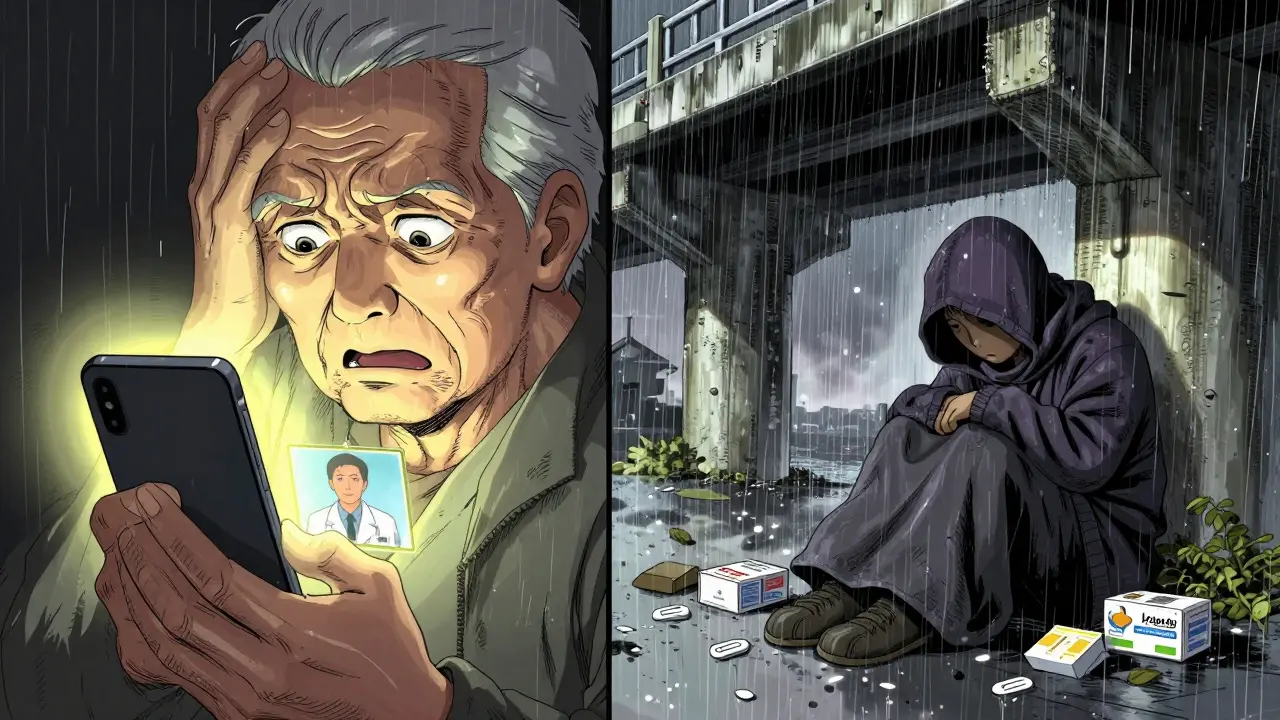
What’s Changed Since 2020?
Prescription drug shortages have mostly returned to normal. But the system is still vulnerable. The 2023 National Defense Authorization Act finally required more transparency in drug supply chains-something experts have been asking for since 2020. Manufacturers now have to report potential shortages earlier. The FDA still monitors closely. But overdose deaths? They’re still rising. In 2022, over 107,000 Americans died from drug overdoses-the highest number ever recorded. Fentanyl is still the main driver. And the pandemic’s mental health fallout hasn’t gone away. People who lost jobs, loved ones, or routines during lockdowns are still struggling. Some progress is being made. Apps now help connect people to treatment. States are expanding mobile clinics. But the biggest problem isn’t access to medicine-it’s access to care. People need stable housing, counseling, and community support-not just pills.What Can Be Done?
There are no easy fixes, but here’s what works:- Build domestic manufacturing capacity for critical drugs-not just for profit, but for safety.
- Keep telehealth options for addiction treatment, but fund tech support for older and rural users.
- Expand access to naloxone in all public spaces: libraries, schools, bus stations.
- Decriminalize drug use so people feel safe seeking help instead of hiding.
- Invest in harm reduction programs that meet people where they are-not where policymakers think they should be.
Lisa Dore
December 29, 2025 AT 22:51It’s wild how something like a pandemic can expose how fragile our healthcare system really is. I know people who skipped their blood pressure meds for weeks-no one talked about it, but they were terrified. We need to stop treating medicine like a commodity and start treating it like a human right. 💙
Sharleen Luciano
December 31, 2025 AT 12:51Let’s be honest-the real issue here is the failure of neoliberal supply chain ideology. The over-reliance on just-in-time manufacturing and offshore pharmaceutical production is a textbook case of systemic fragility. The FDA’s reactive measures are band-aids on a hemorrhaging artery. Structural relocalization isn’t optional-it’s existential.
Aliza Efraimov
January 1, 2026 AT 10:46I worked in a clinic during 2020. I watched people cry because they couldn’t get their insulin. One woman drove 90 miles three days in a row because every pharmacy said ‘out of stock.’ And then? The fentanyl-laced pills started showing up in the same neighborhoods. We didn’t have enough naloxone. We didn’t have enough staff. We didn’t have enough heart. This isn’t just policy-it’s a moral failure. And we’re still not fixing it.
Nisha Marwaha
January 2, 2026 AT 13:36The supply chain discontinuities induced by the pandemic exposed latent vulnerabilities in the global API procurement architecture. The confluence of geopolitical risk, logistics bottlenecks, and regulatory fragmentation created a perfect storm for therapeutic access inequity. Mitigation requires resilient, multi-sourced manufacturing ecosystems with real-time traceability protocols.
David Chase
January 3, 2026 AT 16:52CHINA AND INDIA DID THIS!!! 🇨🇳🇮🇳 We let them control our medicine??!! We’re a FIRST WORLD COUNTRY!! We should’ve built our own factories 20 years ago!! 🤬🇺🇸🔥 Where’s the patriotism?!?! My cousin’s dad died because he couldn’t get his heart med-ALL BECAUSE WE TRUSTED FOREIGNERS!!! 😡💀 #MakeMedicineAmericanAgain
Emma Duquemin
January 4, 2026 AT 12:56Y’all. I’m not even kidding. My aunt used to get her buprenorphine via telehealth during lockdown-she said it saved her life. But then her internet cut out for three weeks because the cable company ‘had a fiber issue.’ She didn’t call for help. She didn’t want to be judged. She just… disappeared for a bit. I found her sitting on her porch with a bag of crushed-up pills she thought were the same. That’s the real horror story. Not the stats. Not the reports. That’s the silence.
Joe Kwon
January 6, 2026 AT 02:51I think we need to stop framing this as ‘drug shortages’ and start calling it ‘care deserts.’ It’s not just about pills-it’s about access to dignity. Telehealth helped, but only if you had a phone, a quiet room, and someone who could help you navigate the app. The people who needed it most? They got ghosted by the system. We can do better. We just have to choose to.
Amy Cannon
January 6, 2026 AT 19:08It is quite remarkable, if one considers the broader socio-political implications, that the global pharmaceutical supply chain, which had previously been regarded as a paragon of efficiency, was, in fact, profoundly brittle under the pressure of a singular, unprecedented public health emergency. One might posit that the absence of redundancy, coupled with the prioritization of fiscal optimization over public resilience, constitutes a systemic failure of foresight. The consequences, as documented, were not merely logistical but profoundly human.
Himanshu Singh
January 7, 2026 AT 07:58My bro in Delhi said factories there still run at 60% but no one talks about it. We need more local production, not just in US but in india too. No one should miss their medicine because of border. 😊
Jasmine Yule
January 8, 2026 AT 00:10That comment about people hiding in their cars to use drugs? That broke me. 🫂 We act like addiction is a choice, but when you’re scared to walk into a clinic because you might get arrested-or judged-or ignored-you don’t choose. You survive. We need safe spaces, not slogans. And we need them now.
Greg Quinn
January 9, 2026 AT 09:29It’s funny how we panic over a shortage of pills but never ask why we need so many pills in the first place. The system doesn’t heal people-it manages symptoms until the next crisis. We treat medicine like a magic bullet instead of a piece of a much bigger puzzle: housing, community, purpose. Maybe the real shortage isn’t insulin. Maybe it’s hope.