
How the FDA Ensures Generic Drug Quality During Manufacturing
 Dec, 15 2025
When you pick up a generic pill at the pharmacy, you expect it to work just like the brand-name version. But how does the FDA make sure that’s true? It’s not just about matching the active ingredient. The real work happens behind the scenes-in factories, labs, and inspection rooms-where every step of manufacturing is watched, tested, and documented. The FDA doesn’t wait until the pills are done to check quality. It builds quality into the process from day one.
What the FDA Actually Checks
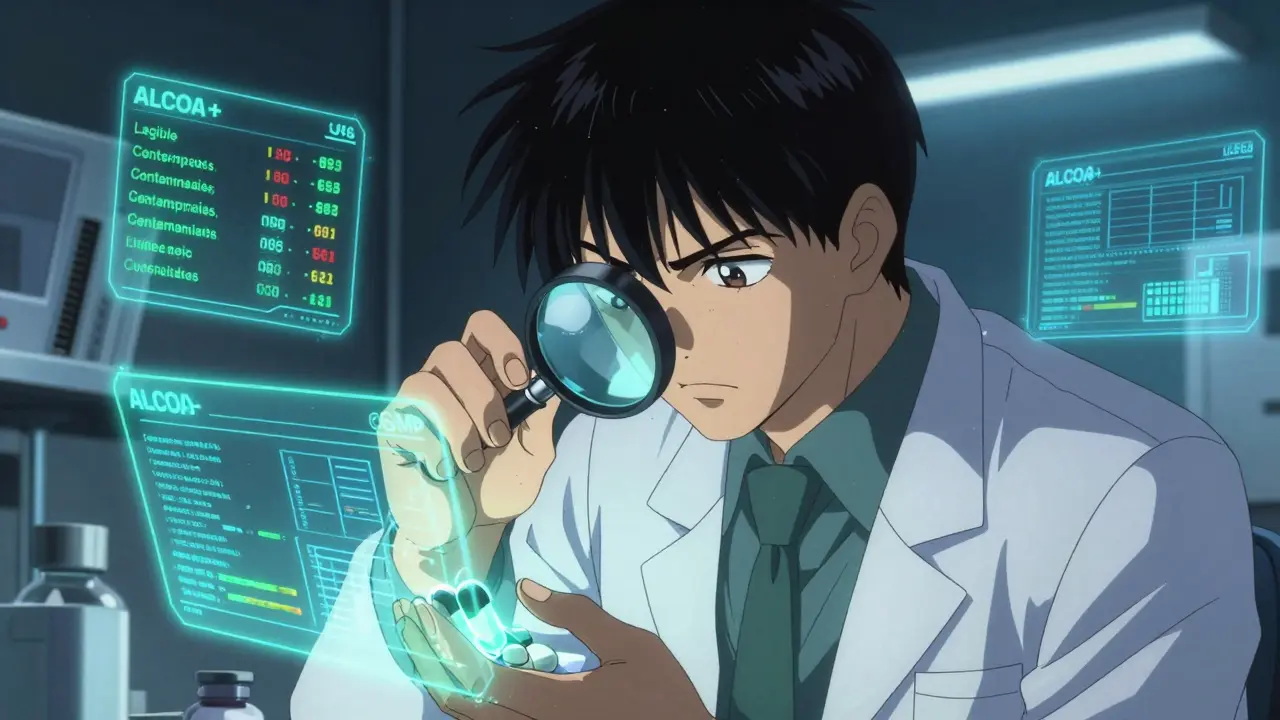
The FDA doesn’t rely on random spot checks. It uses a system called Current Good Manufacturing Practices (cGMP), written into federal law under Title 21 of the Code of Federal Regulations. These rules cover every single part of making a drug: where the ingredients come from, how they’re mixed, how machines are cleaned, how batches are tested, and even how the final pills are packed and shipped. It’s not optional. If a factory doesn’t follow cGMP, the FDA won’t approve its drugs. There are five key areas the FDA watches closely. First: Control of Materials. Every raw ingredient-down to the powder that makes the active drug-must be tested before it’s used. Suppliers are audited. Labels are checked. Records show exactly where each batch came from. If a batch of raw material doesn’t meet specs, it’s thrown out. No exceptions. Second: Production and Process Controls. Every step in making the drug has a written procedure. Not just a rough guide-exact, step-by-step instructions. If a machine runs too hot or a mixer spins too slow, the system flags it. Operators can’t just guess what to do. They follow the plan. If something goes wrong, they document it immediately and fix it before moving forward. Third: Quality Control and Lab Testing. The lab doesn’t just test the final pills. It tests the powder before mixing, the granules halfway through, and the finished product. Every test uses validated methods-proven to be accurate and repeatable. And the data? It must follow the ALCOA+ standard: attributable (who did it), legible (can you read it), contemporaneously recorded (written at the time), original or true copy, accurate, and also complete, consistent, enduring, and available. If a lab technician writes a number on a sticky note, it’s invalid. Everything goes into a digital system with audit trails. Fourth: Packaging and Labeling. A pill that’s perfect inside means nothing if the label says the wrong dose. The FDA checks that every bottle, blister pack, and box matches the approved design. Barcodes are scanned. Lot numbers are tracked. Foreign language labels? They’re reviewed too. Even the ink on the capsule has to be safe for human contact. Fifth: Documentation and Record Keeping. This might sound boring, but it’s the backbone of everything. Every batch has a master record. Every test result is saved. Every equipment calibration is logged. These records can be pulled up years later if there’s a problem. The FDA doesn’t just ask for them-they show up unannounced and ask for the last six months of data. If records are missing, incomplete, or altered, the facility gets flagged.How the FDA Inspects Factories
The FDA doesn’t call ahead. Inspectors show up without warning, often staying for days. They don’t just walk through the plant-they dig into the data. They pull up computer logs. They interview workers. They check if the cleaning schedule matches what’s written in the manual. They even check if the air filters are changed on time. In 2023, the FDA conducted about 1,200 inspections of generic drug factories worldwide. About 1,700 facilities make generic drugs for the U.S. market-half are in the U.S., the rest are overseas, mostly in India and China. Foreign facilities had a higher rate of violations: 17% compared to 8% in the U.S. That’s partly because some countries don’t have the same infrastructure, but it’s also because the FDA holds them to the same standard. One inspection might look at how a company handles a change in its supplier. Did they test the new batch? Did they revalidate the process? Did they notify the FDA? If they didn’t, the FDA can halt shipments until they fix it. That’s not a threat-it’s routine.How Generic Drugs Are Approved
Before a generic drug can be sold, the manufacturer files an Abbreviated New Drug Application (ANDA). It doesn’t need to repeat all the clinical trials the brand-name drug went through. But it must prove it’s bioequivalent-meaning your body absorbs it the same way. That’s done with blood tests in healthy volunteers. But here’s the catch: the ANDA doesn’t just include the final product. The manufacturer must submit three separate batches of the intermediate mix. One batch is used to make the lowest dose, one for the highest, and one for everything in between. This ensures that every strength of the drug behaves the same way. If the 10mg tablet and the 50mg tablet don’t dissolve at the same rate, the drug gets rejected. The review process takes months-sometimes over a year. The FDA’s Office of Generic Drugs reviews the science. The Office of Pharmaceutical Quality reviews the manufacturing. They work together. If one team finds a problem, the whole application is paused until it’s fixed.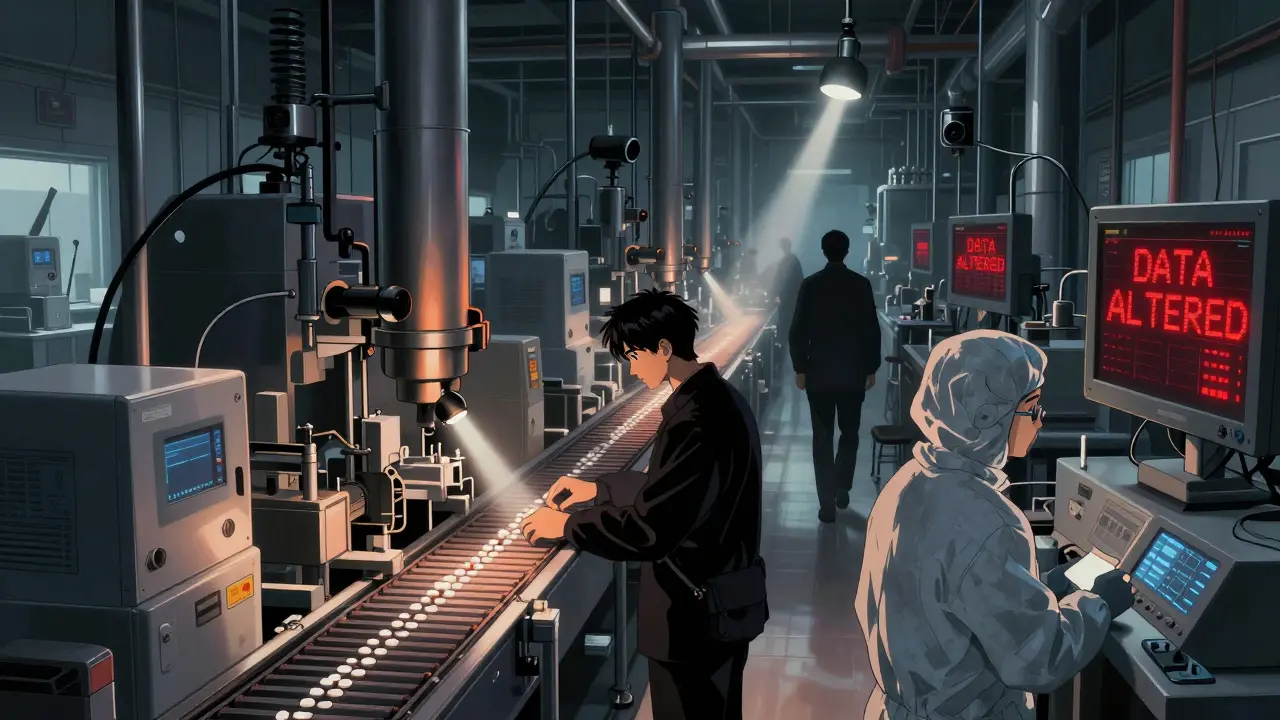
Why This System Works
Generic drugs make up 90% of all prescriptions filled in the U.S. That’s 6.8 billion pills a year. And they cost 80-85% less than brand-name drugs. But low cost doesn’t mean low quality. The FDA’s system keeps them safe. A 2021 GAO report found that 98-99% of generic drugs are therapeutically equivalent to their brand-name counterparts. That’s not luck. It’s because of the cGMP system. When a company changes a machine, a supplier, or even the color of the pill, they have to notify the FDA. The agency reviews the change before it’s made-not after. That’s called risk-based oversight. It stops problems before they happen. During the pandemic, this system helped prevent shortages. When a factory in India had a supply issue, the FDA didn’t wait for complaints. It worked with the company to find alternative sources, retested batches, and kept critical medications flowing.Challenges and Criticisms
It’s not perfect. Smaller manufacturers say the paperwork is overwhelming. One company told Pharmaceutical Technology that 30-40% of their development time goes to documentation. That’s a barrier for new players. The FDA also struggles with resources. In 2022, over 40% of inspection findings were about data integrity-missing records, backdated entries, deleted files. That’s a red flag. It means someone tried to hide something. Some experts argue the system relies too much on companies reporting their own problems. But the FDA has tools to catch that. Their market surveillance team monitors adverse event reports, pharmacy complaints, and lab test results from independent sources. If a batch of metformin keeps failing dissolution tests, they track it back to the factory-even if the company didn’t report it.
What’s Next
The FDA is moving toward smarter manufacturing. The Pharmaceutical Quality for the 21st Century initiative is testing new tech like continuous manufacturing-where drugs are made in one long, uninterrupted process instead of in batches. Real-time testing is also being piloted. Instead of waiting hours to test a pill, sensors can check its quality as it’s made. The Generic Drug User Fee Amendments (GDUFA) III, which started in 2022, gave the FDA $650 million over five years to hire more inspectors and upgrade labs. That’s a big deal. It means more inspections, faster reviews, and better data systems. By 2025, new rules will require manufacturers to show exactly where their active ingredients come from-from the mine or lab where the chemical is made, all the way to the final pill. That’s supply chain transparency. It’s not just about quality. It’s about security.What You Can Trust
You don’t need to be a scientist to know your generic drug is safe. The FDA’s system isn’t perfect, but it’s the most thorough in the world. It doesn’t assume companies are telling the truth. It proves it. Every batch, every line, every record is checked. That’s why 98-99% of generic drugs work exactly as they should. The next time you fill a prescription, remember: the pill you’re holding passed through a system designed to catch mistakes before they reach you. That’s not magic. That’s science. And it’s working.Are generic drugs as safe as brand-name drugs?
Yes. The FDA requires generic drugs to have the same active ingredient, strength, dosage form, and route of administration as the brand-name version. They must also be bioequivalent-meaning your body absorbs them at the same rate and extent. Every generic drug must meet the same cGMP standards as brand-name drugs, and they’re subject to the same inspections and testing.
Does the FDA inspect foreign drug factories?
Yes. The FDA inspects about half of the 1,700 facilities worldwide that make generic drugs for the U.S. market. Foreign facilities are held to the same standards as U.S. ones. In 2023, the FDA conducted over 600 inspections overseas. Many of these are unannounced, and inspectors stay as long as needed to verify compliance. Facilities that fail inspections can be blocked from exporting to the U.S.
How often does the FDA inspect generic drug plants?
The FDA inspects about 1,200 drug manufacturing facilities each year. High-risk facilities-like those with past violations or that make critical medications-are inspected every two years. Lower-risk sites are inspected every four years. But inspections can happen more often if there’s a complaint, a shortage, or a change in manufacturing. Many inspections are unannounced to catch real-world conditions.
Why do generic drugs cost so much less than brand-name drugs?
Generic drugs cost 80-85% less because manufacturers don’t need to repeat expensive clinical trials. The FDA allows them to rely on the brand-name drug’s safety and efficacy data. However, they still must prove bioequivalence and follow strict manufacturing rules. The savings come from reduced R&D costs, not lower quality. Regulatory compliance still costs 15-20% of total development expenses.
Can the FDA recall a generic drug after it’s on the market?
Yes. The FDA has the authority to recall any drug-brand or generic-if it’s found to be unsafe, ineffective, or mislabeled. Recalls happen when testing shows contamination, potency issues, or labeling errors. The agency also monitors adverse event reports from patients and pharmacists. If a pattern emerges, the FDA can demand a recall or halt production immediately.
What is ALCOA+ and why does it matter?
ALCOA+ stands for Attributable, Legible, Contemporaneously recorded, Original or true copy, Accurate, and adds Complete, Consistent, Enduring, and Available. It’s the standard for data integrity in pharmaceutical manufacturing. If a lab result isn’t written down at the time, or if records are deleted, it’s a violation. The FDA considers data integrity one of the biggest risks in drug quality. Over 40% of inspection findings in 2022 were about ALCOA+ violations.
Do all generic drug makers follow the same rules?
Yes. Whether it’s a small startup or a giant like Teva or Sandoz, every manufacturer must meet the same cGMP standards. The FDA doesn’t give special treatment based on size or reputation. All facilities are inspected using the same checklist. Even companies that make both brand and generic drugs in the same building must keep their processes separate to avoid cross-contamination.
How long does it take to get a generic drug approved?
The approval process for a generic drug (ANDA) typically takes 12 to 24 months, with multiple review cycles. Each cycle can last several months. Delays often happen when the FDA requests more data, especially on manufacturing changes or stability testing. The FDA now uses Controlled Correspondence to help companies get feedback before submitting, which can speed things up.
Dylan Smith
December 15, 2025 AT 20:17The FDA doesn't mess around and I respect that
People think generic means cheap but the system is insane
Every batch tracked every label checked every machine logged
No room for error and that's why I trust my meds
Souhardya Paul
December 17, 2025 AT 11:03This is actually one of the most reassuring things about our healthcare system
Most people don't realize how much goes into making a generic pill
It's not just copying a formula - it's engineering control at every level
From the raw powder to the ink on the capsule
They test the dissolution rate of every strength, not just the main one
And the ALCOA+ standard? That's not bureaucracy - that's damage control
I work in QA and I can tell you most industries would kill for this level of rigor
The fact that 99% of generics work as well as brand names isn't luck
It's because someone, somewhere, double-checked the logbook at 3am
And if a lab tech wrote something on a sticky note, it got thrown out
That's the difference between a system that works and one that just hopes for the best
People complain about costs but this is what keeps us alive
Next time you pick up a $4 prescription, remember - it passed through a fortress
Kitty Price
December 17, 2025 AT 11:56Wow 😮 I had no idea they checked the INK on the capsules
That’s wild
Also the fact that inspections are unannounced??
Respect.
Generic drugs are the real MVPs of healthcare
Colleen Bigelow
December 19, 2025 AT 11:13They say it's about safety but let's be real - this is all about control
Why do they need to inspect every single batch from India and China?
Why not just let the market decide?
They're using ALCOA+ to justify endless paperwork
Meanwhile, real people are dying waiting for insulin
And who benefits? Big Pharma and the FDA bureaucrats
They're not protecting us - they're protecting their power
And don't get me started on how they block cheaper imports
This isn't science - it's a monopoly dressed up in lab coats
Billy Poling
December 20, 2025 AT 03:43It is imperative to underscore the foundational significance of Current Good Manufacturing Practices, as codified under Title 21 of the Code of Federal Regulations, as the indispensable regulatory framework governing pharmaceutical production in the United States; without such stringent adherence to standardized protocols, the integrity of the entire pharmacological supply chain would be catastrophically compromised, leading to potentially fatal inconsistencies in therapeutic outcomes across millions of patients who rely on both branded and generic pharmaceuticals daily, and while the process may appear excessive to the layperson, it is, in fact, the only mechanism capable of ensuring bioequivalence, batch-to-batch consistency, and the absence of contamination or adulteration - all of which are non-negotiable in the context of human health, particularly when considering that approximately 90 percent of prescriptions filled in the U.S. are for generic medications, meaning that the margin for error is not merely small - it is nonexistent, and therefore, any suggestion that these procedures are overregulation is not only misguided but dangerously naive, as the consequences of failure are not abstract - they are measured in lives lost, hospitalizations incurred, and public trust eroded
SHAMSHEER SHAIKH
December 21, 2025 AT 12:50As an Indian manufacturer, I can say this system is brutal - but fair.
When we first tried exporting to the U.S., we failed three inspections.
Not because our pills were bad - but because our records weren't perfect.
We had to hire a whole team just to document every screw turned.
But now? We're one of the top suppliers.
The FDA doesn't care if you're big or small.
They care if your data is clean.
And that's why U.S. patients get safe medicine - even if it's made in Hyderabad.
Respect to the inspectors - they don't take shortcuts.
And neither should we.
Dave Alponvyr
December 22, 2025 AT 14:21So you're telling me the government spends millions to make sure my $4 blood pressure pill isn't made by someone who forgot to wash their hands?
Wow.
What a country.
Cassandra Collins
December 24, 2025 AT 09:19ok but what if the fda is in on it??
like what if they just fake the reports and the labs are all owned by the same corp??
i heard the inspectors get free trips to hawaii and then they say everything is fine
and the real bad stuff is in the back rooms
and the alcoa+ thing? totally made up to scare small biz
they dont even check half the stuff
my cousin works at a factory and he says they just copy paste the logs
and the fda only shows up when they want to look good for congress
why dont they test the pills in real people??
they just test in lab rats and call it a day
so yeah i dont trust any generic pills
and dont even get me started on the ink