
How to Use Text Message Reminders for Medication Schedules: A Practical Guide
 Jul, 3 2026
Forgetfulness is the silent enemy of health. You know you need to take your blood pressure pill at 8 AM, but between a rushed morning coffee and a sudden work email, that moment slips away. This isn't just an inconvenience; it's a global crisis. Non-adherence to medication costs healthcare systems billions annually and leads to preventable hospitalizations. But there is a simple, low-tech solution hiding in your pocket: text message reminders. These automated notifications are more than just buzzes on your phone-they are proven tools that can transform how you manage chronic conditions.
The Power of Simple Alerts
It sounds almost too easy to be true, right? Just a text saying 'Time to take your meds.' Yet, the data backs this up. A landmark study published in JMIR mHealth found that patients receiving text message reminders showed a 14.2 percentage point improvement in self-reported medication adherence compared to those who didn't. That means nearly everyone in the reminder group stuck to their schedule, while only 80% of the control group did.
Why does this work? It removes the mental load. You don't have to remember to remember. The technology acts as an external cue, bridging the gap between intention and action. For conditions like HIV, diabetes, and epilepsy, where missing a dose can have immediate consequences, these daily nudges have doubled the odds of full adherence in multiple randomized studies. It’s not magic; it’s behavioral psychology meeting mobile connectivity.
Setting Up Your Reminder System
Getting started doesn't require a degree in computer science. Most people fall into one of two camps: using a dedicated app or setting up manual SMS alerts. Here is how to choose and configure the right method for you.
- Choose Your Platform: Apps like Medisafe or MyTherapy are popular because they sync with calendars and offer multi-medication support. Alternatively, many smartphone operating systems (iOS and Android) allow you to set recurring calendar events with SMS-like push notifications.
- Define the Schedule: Input your exact medication times. If you take a pill every 12 hours, set alerts for 7 AM and 7 PM. Consistency is key. Avoid vague times like 'morning' or 'night'; use specific clock times.
- Personalize the Content: Generic messages often get ignored. Instead of 'Take medicine,' try 'Take your Lisinopril with water.' Including the drug name reduces confusion, especially if you take multiple medications.
- Test the Timing: Send yourself a test alert. Does it arrive when you are likely to be near your pills? Studies show effectiveness drops by 35% if the reminder arrives more than two hours before or after the intended time. Adjust accordingly.
If you are part of a healthcare system, ask your provider if they offer integrated SMS services. Some clinics now automatically identify refill gaps in your electronic health record and send behavioral nudge messages directly from their system. This seamless integration ensures you never miss a renewal.
Making Reminders Stick: Personalization Tips
A generic 'Be healthy!' text is noise. To make text message reminders effective, they must feel relevant to your daily life. Research indicates that personalized messages produce significantly greater effects than generic ones. Here is how to tailor them:
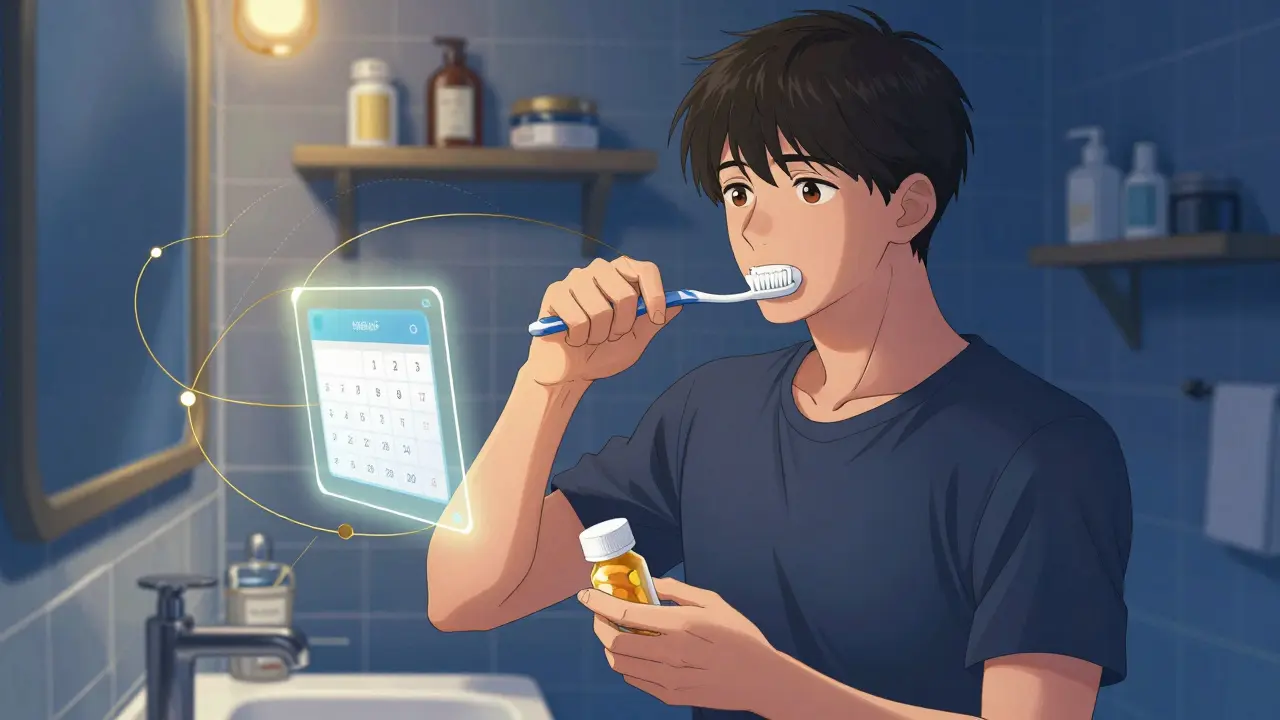
- Match Your Routine: Link the reminder to an existing habit. If you brush your teeth at 8 PM, set the reminder for 7:55 PM. This creates a 'habit stack,' making the new behavior easier to adopt.
- Add Contextual Nudges: Include brief instructions. For example, 'Take Vitamin D with food for better absorption.' This adds value beyond just timing, reinforcing why you are taking the medication.
- Use Two-Way Communication: Some advanced systems allow you to reply 'Taken' to confirm ingestion. While basic SMS doesn't always support this, apps do. Confirming intake helps track patterns and identifies when you might need additional support.
Remember, the goal is to reduce friction. If the process of acknowledging the reminder feels cumbersome, you will stop doing it. Keep interactions simple and quick.
When Texts Fall Short: Limitations and Fatigue
Let’s be honest: no tool works forever without adjustment. One of the biggest challenges with text message reminders is 'message fatigue.' After three to six months, many users start ignoring alerts. A large-scale 2023 study in JAMA involving over 9,500 patients found that while initial engagement was high, long-term adherence benefits faded for some chronic conditions like cardiovascular disease.
Why does this happen? Because humans adapt. What starts as a helpful nudge becomes background noise. To combat this, vary your approach. Change the wording of your messages monthly. Switch from SMS to push notifications if you haven't already. Or, combine texts with other strategies, such as weekly check-ins with a pharmacist or family member.
Also, consider the condition. Text reminders are highly effective for infectious diseases like tuberculosis and HIV, where adherence is critical and time-sensitive. However, for complex chronic conditions requiring lifestyle changes alongside medication, texts alone may not be enough. They are a tool, not a cure-all.
Privacy and Security Considerations
Your health data is sensitive. When using third-party apps or clinic-provided SMS services, privacy matters. In the US, HIPAA regulations protect patient information, but standard SMS texts are not always encrypted end-to-end.
Here is what you should check:
- Data Storage: Does the app store your medication list on secure servers? Look for mentions of encryption and compliance with healthcare standards.
- Sharing Policies: Read the privacy policy. Will your data be sold to advertisers? Reputable health apps explicitly state they do not share personal health information.
- Access Control: Use strong passwords or biometric locks (fingerprint/FaceID) to access your medication app. Prevent unauthorized users from seeing your prescription details.
If you are concerned about security, stick to major, well-reviewed platforms or ask your healthcare provider for a vetted solution. The convenience of a reminder shouldn't come at the cost of your privacy.
Troubleshooting Common Issues
Even the best systems encounter glitches. Here is how to handle common problems:
| Issue | Possible Cause | Solution |
|---|---|---|
| Missed Alerts | Phone on silent/Do Not Disturb | Create a custom notification category for health apps and exempt it from DND mode. |
| Wrong Time | Time zone mismatch | Check your device settings and ensure the app uses local time, not UTC. |
| Message Fatigue | Boring/repetitive content | Edit message templates monthly. Add encouraging phrases or varied emojis. |
| App Crashes | Outdated software | Update the app regularly. Clear cache if performance lags. |
If you consistently miss doses despite reminders, it might be time to reassess your regimen. Perhaps the dosage is too complex, or the side effects are discouraging you. Talk to your doctor. Technology supports adherence, but it doesn't replace clinical judgment.
The Future of Digital Adherence
We are moving beyond simple texts. The next wave of digital health includes AI-driven systems that predict non-adherence risk based on refill patterns and behavior. Imagine a system that notices you’ve skipped doses twice this week and automatically suggests a call with your nurse. By 2027, experts predict that 65% of health systems will incorporate these predictive tools.
For now, however, the humble text message remains a powerful ally. It is accessible, affordable, and effective when used correctly. Start small, personalize your alerts, and stay consistent. Your future self will thank you for showing up today.
Are text message reminders covered by insurance?
Coverage varies widely. Some health plans cover digital health tools if prescribed by a doctor, especially for chronic conditions like diabetes or hypertension. Check with your insurer or ask your provider if they offer free SMS reminder services as part of their care program.
Can I use text reminders for over-the-counter medications?
Absolutely. Any medication taken on a schedule-whether prescription or OTC like ibuprofen for chronic pain or vitamins-benefits from consistency. Setting reminders for supplements ensures you maintain steady levels in your body.
What if I don't have a smartphone?
Basic feature phones can receive SMS texts. Many healthcare providers still use standard SMS rather than app-based notifications to ensure accessibility for all patients. Ask your clinic if they offer plain-text reminders compatible with any mobile device.
How soon should I expect to see results from using reminders?
Most users notice improved adherence within the first few weeks. Studies show significant improvements in the first 3-6 months. However, long-term success requires ongoing engagement and occasional adjustments to avoid fatigue.
Is it safe to share my medication list with an app?
Reputable health apps use encryption and comply with privacy laws like HIPAA. Always read the privacy policy to understand how your data is stored and shared. Avoid obscure apps with unclear security practices. When in doubt, use solutions recommended by your healthcare provider.