
HPV Infections: How Vaccination, Screening, and Prevention Stop Cervical Cancer
 Feb, 9 2026
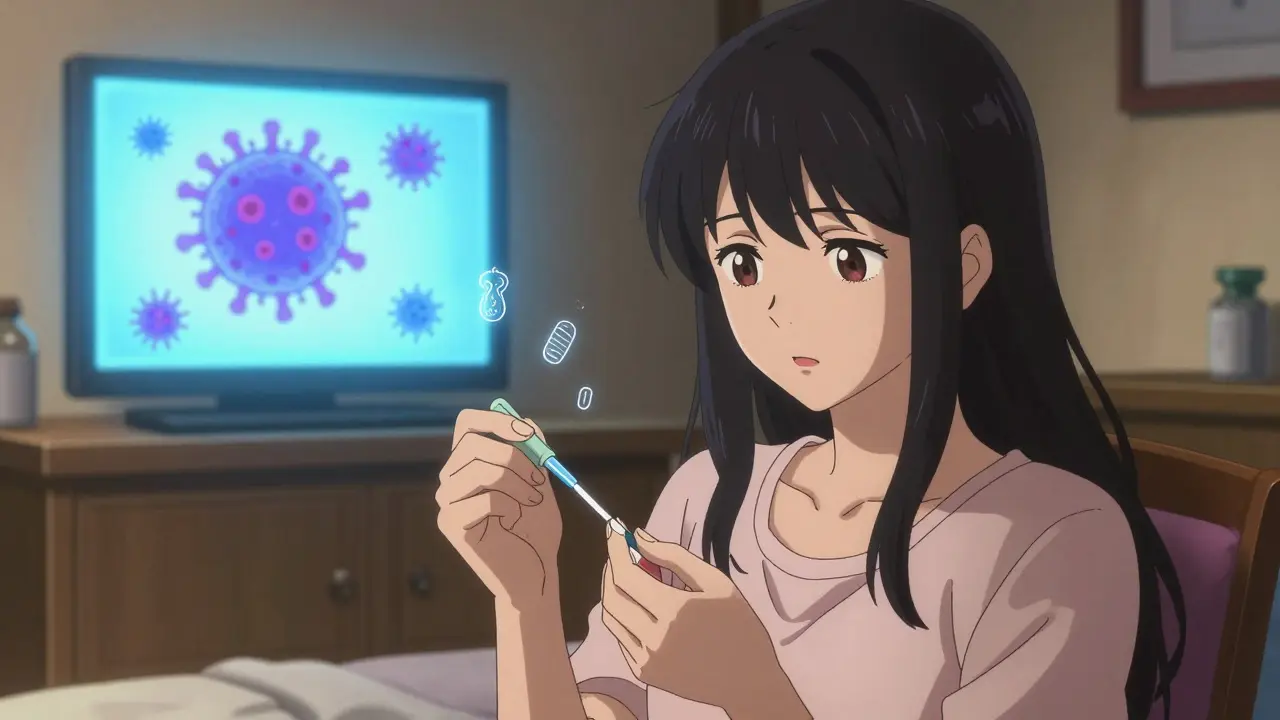
Human papillomavirus, or HPV, isn’t just another STD. It’s the leading cause of cervical cancer - and yet, it’s one of the most preventable cancers we have. Nearly all cervical cancer cases - 99% - are caused by persistent infection with high-risk HPV types, especially HPV 16 and 18. But here’s the thing: HPV infections don’t have to lead to cancer. With the right combination of vaccination, regular screening, and smart follow-up care, cervical cancer can be stopped before it starts.
How HPV Leads to Cancer - And Why It Takes Years
HPV is common. About 80% of sexually active people will get at least one type in their lifetime. Most infections clear on their own within one or two years. But for a small number of people, the virus sticks around. That’s when trouble begins.
High-risk HPV types damage the cells of the cervix. These changes don’t happen overnight. It can take 10 to 20 years for abnormal cells to turn into invasive cancer. That long window is our biggest advantage. It means we have time to catch and treat the problem before it becomes life-threatening.
That’s why screening isn’t about checking for cancer - it’s about finding those early cell changes. And that’s where HPV testing has changed everything.
The Shift from Pap Tests to HPV Testing
For decades, the Pap test was the gold standard. It looked at cervical cells under a microscope to spot abnormalities. But it wasn’t perfect. A 2018 study in JAMA showed Pap tests missed more than 44% of precancerous lesions. They were like trying to find a needle in a haystack using only your eyes.
Now, we have a better tool: HPV testing. Instead of looking at cells, it looks for the virus itself. The two FDA-approved tests - the cobas HPV Test from Roche Molecular Systems, which detects HPV 16 and 18 separately and groups the other 12 high-risk types and the Aptima HPV Assay from Hologic, which detects E6/E7 mRNA from 14 high-risk types - are far more sensitive. They catch 94.6% of lesions that could become cancer, compared to just 55.4% for Pap tests alone.
Because HPV testing is so accurate, we can space out screenings. The American Cancer Society now recommends primary HPV testing every five years for people aged 25 to 65. That’s a big shift from the old three-year Pap test schedule. And it’s safer. A 2023 study in the Journal of the National Cancer Institute found that people with a negative HPV test had a 0.23% risk of developing serious cervical disease over five years - lower than the 0.51% risk after a negative Pap test.
Who Gets Screened - And When
Guidelines vary slightly by organization, but here’s what most experts agree on as of 2026:
- Ages 21-29: Pap test every 3 years. HPV testing isn’t recommended as a first step here because infections are common and usually clear on their own.
- Ages 25-65: Primary HPV testing every 5 years is the preferred method. This is now the top recommendation from the American Cancer Society.
- Ages 30-65: You have three options: HPV test every 5 years, Pap test every 3 years, or both tests together (cotesting) every 5 years. HPV-only testing is slightly better at catching problems.
- Over 65: If you’ve had regular screenings with normal results, you likely don’t need more.
Even if you’ve been vaccinated, you still need screening. The vaccine doesn’t protect against all cancer-causing HPV types. And if you’ve had an abnormal result in the past, your doctor may recommend more frequent checks.
The Game-Changer: Self-Collected HPV Tests
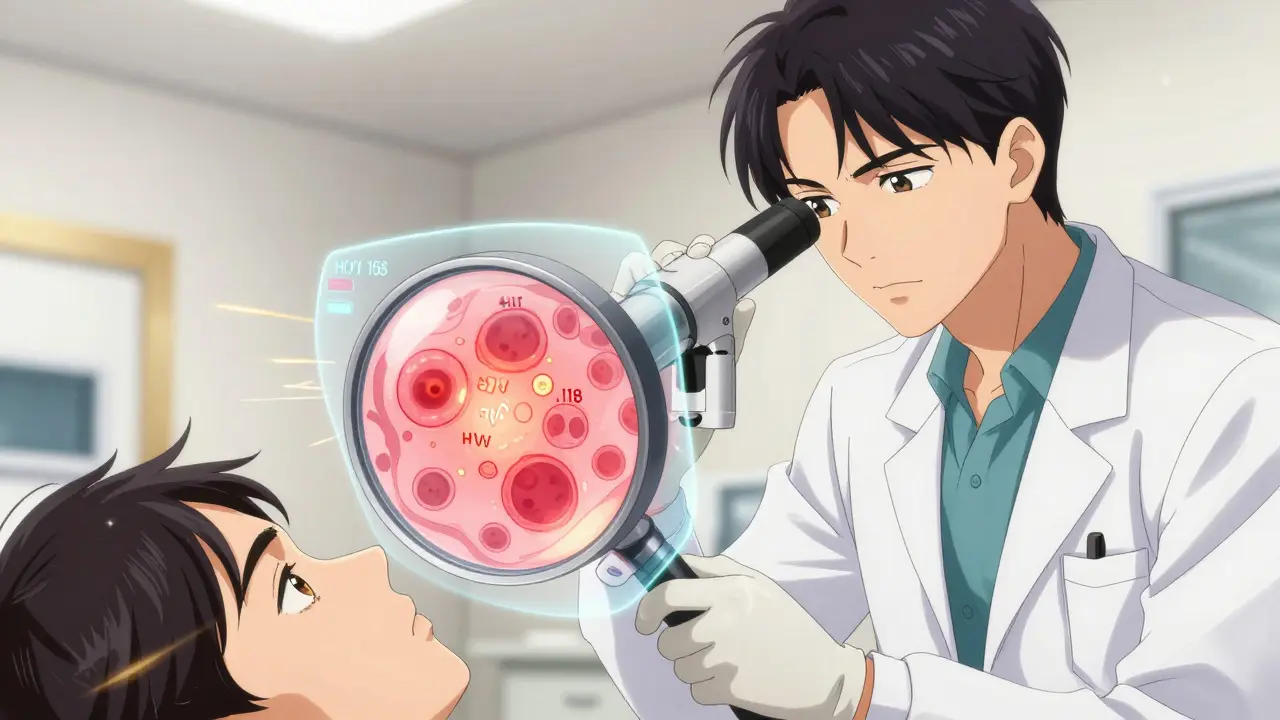
One of the biggest barriers to screening? The pelvic exam. Many people avoid it because it’s uncomfortable, embarrassing, or they can’t access a clinic. That’s why self-collected HPV testing is a breakthrough.
In January 2024, Kaiser Permanente officially added self-collected HPV tests to its guidelines. You use a simple swab at home - no speculum, no doctor’s office. Studies show it’s almost as accurate as a clinician-collected sample: 84.4% sensitivity and 90.7% specificity. That’s close enough to trust.
Real-world data from Australia and the Netherlands show self-collection boosts screening rates by 30-40% among people who’ve never been screened. In the U.S., 30% of cervical cancers occur in women who’ve never had a Pap test. Self-testing could cut that number dramatically.
It’s not everywhere yet - only 40% of U.S. labs were ready for HPV testing in 2022 - but the tide is turning. More insurers are covering it. More clinics are offering kits. And with the WHO pushing for global access, it’s only a matter of time before this becomes standard.
Vaccination: The Best First Line of Defense
The HPV vaccine is one of the most effective cancer prevention tools ever developed. The first vaccine, Gardasil, was approved in 2006. Today’s versions - Gardasil 9 - protect against nine HPV types, including the two most dangerous (16 and 18) and five others that cause 90% of cervical cancers.
It works best when given before exposure. That’s why the CDC recommends routine vaccination for all kids at age 11 or 12. But it’s still effective up to age 45. Even if you’re older and sexually active, the vaccine can protect against types you haven’t caught yet.
Two doses are enough for kids under 15. Three doses are needed if you start after age 15. The vaccine doesn’t treat existing infections - but it stops new ones. And it doesn’t just prevent cervical cancer. It also protects against cancers of the anus, throat, penis, and vagina.
Global efforts are accelerating. The WHO’s 90-70-90 targets aim for 90% of girls vaccinated by age 15, 70% of women screened by 35 and 45, and 90% of abnormal cases treated. If we hit those goals, we could prevent 62 to 77 million cervical cancer cases over the next century.

What Happens If Your Test Is Positive?
A positive HPV test doesn’t mean you have cancer. It means the virus is there. Most of the time, your immune system clears it. But if it’s still there after a year, or if you test positive for HPV 16 or 18, your doctor will likely recommend a follow-up.
Here’s how triage usually works:
- If you test positive for HPV 16 or 18: You’ll get a colposcopy - a closer look at the cervix with a magnifying tool - even if your Pap test looks normal.
- If you test positive for other high-risk types: You’ll get a Pap test as a follow-up. If that’s abnormal, you’ll move to colposcopy.
- If both tests are normal: You’ll wait five years for your next HPV test.
These steps prevent over-treatment. Not every HPV infection needs intervention. The goal is to catch only the ones that are likely to become cancer.
Why Disparities Still Exist
Despite all this progress, cervical cancer isn’t equally preventable for everyone. Black women in the U.S. are 70% more likely to die from cervical cancer than White women. In low-income countries, only 19% of women have ever been screened - compared to 80% in high-income nations.
Access is the problem. Cost. Transportation. Fear. Lack of providers. Self-testing helps, but it’s not enough. We need clinics in rural areas. Mobile units. Community outreach. Insurance coverage without copays. And education that reaches people who’ve never heard of HPV.
The good news? We have the tools. We just need to deliver them.
What’s Next? AI, Longer Intervals, and Global Equity
The future of cervical cancer prevention is here. In January 2023, the FDA approved Paige.AI - an AI system that analyzes Pap smears faster and more accurately than human pathologists. It’s already being used in some hospitals.
Research also suggests we might be able to stretch screening intervals even longer. A 2023 study found that after two negative HPV tests six years apart, the risk of serious disease was so low, it might be safe to wait 10 years for the next screen.
And globally, the push for equity is gaining momentum. Countries like Rwanda have vaccinated over 90% of eligible girls. Australia is on track to eliminate cervical cancer by 2035. The U.S. has cut cervical cancer rates by half since the 1970s - but we’re not done.
The goal isn’t just to reduce cancer. It’s to erase it. And with the right combination of vaccination, screening, and access, we can.
Do I still need a Pap test if I got the HPV vaccine?
Yes. The HPV vaccine protects against the most common cancer-causing types, but not all of them. You still need regular screening. Vaccination and screening work together - one prevents infection, the other catches what slips through.
Can I get HPV testing if I’m not sexually active?
HPV is spread through skin-to-skin contact, not just sex. Even if you haven’t had penetrative sex, you may have been exposed. Screening is recommended starting at age 25 regardless of sexual history. Talk to your provider about your risk.
Is HPV testing painful?
Clinician-collected testing involves a pelvic exam, which can feel uncomfortable but isn’t usually painful. Self-collected testing is done at home with a swab - no exam needed. Many people find this much easier and less stressful.
Can men be tested for HPV?
There’s no routine HPV test for men. The virus often causes no symptoms, and there’s no approved screening method for the penis or anus. But men can still benefit from the HPV vaccine - it prevents cancers of the throat, anus, and penis, and reduces transmission to partners.
What if I missed the HPV vaccine as a teen?
It’s not too late. The vaccine is approved up to age 45. Even if you’ve had sex, you likely haven’t been exposed to all nine types the vaccine covers. Getting vaccinated now still reduces your cancer risk. Talk to your doctor - it’s a simple two- or three-shot series.
Joseph Charles Colin
February 11, 2026 AT 04:01Primary HPV testing every five years is the new standard for 25-65, and it's backed by robust sensitivity data: 94.6% detection rate for precancerous lesions versus 55.4% for Pap alone. The cobas and Aptima assays detect viral DNA and E6/E7 mRNA respectively-both are clinically validated for triage. This isn't just incremental improvement; it's a paradigm shift from cytology to virology.
Self-collected samples now show 84.4% sensitivity and 90.7% specificity-comparable to clinician-collected. That’s huge for access disparities. The WHO’s 90-70-90 targets are achievable, but only if we integrate molecular diagnostics into primary care, not just tertiary centers.
AI-assisted Pap analysis (like Paige.AI) reduces inter-observer variability. Studies show it matches pathologist accuracy with 2x throughput. We’re entering an era where algorithmic triage complements clinical judgment, not replaces it.
Screening intervals may extend to 10 years after two consecutive negative HPV tests. The risk drops below 0.1% in that cohort. We’re moving from reactive surveillance to predictive prevention.
Don’t confuse vaccine efficacy with screening necessity. Gardasil-9 covers 90% of oncogenic types, but not all. Persistent infection with non-vaccine types still occurs. Screening remains non-negotiable.
John Sonnenberg
February 11, 2026 AT 19:21Let me be absolutely clear: this is not a suggestion, not a recommendation, not even a guideline-it’s a biological imperative. HPV causes 99% of cervical cancers, and we have the tools to eradicate it, yet millions still avoid screening because of discomfort, stigma, or ignorance. This isn’t a medical issue-it’s a moral failure.
Self-collection is not optional. It’s essential. Every woman who skips a Pap because she’s too embarrassed to undress is one step closer to dying from a preventable cancer. We have the technology. We have the data. We have the funding. What we lack is the collective will to act.
And don’t get me started on the fact that Black women are 70% more likely to die from this. That’s not a statistic. That’s a crime.
Joshua Smith
February 13, 2026 AT 05:27I’ve been reading up on this since my last gyno visit, and I’m really impressed by how much has changed. I used to think Pap smears were the gold standard, but learning about HPV testing being more sensitive really shifted my perspective.
I’m curious-how do you think we can better educate younger people about this? Like, I know my niece is 13 and just got her first vaccine, but I don’t think she even knows why it matters.
Also, the self-collection data is fascinating. I wonder if we’ll see home test kits become as common as pregnancy tests in the next decade.
Jessica Klaar
February 13, 2026 AT 20:51As someone who grew up in a community where talking about reproductive health was taboo, I can’t tell you how much this means to me. My mom never got screened because she didn’t know what HPV was. She passed away from cervical cancer at 52.
Self-collection isn’t just convenient-it’s revolutionary for people who’ve been traumatized by medical systems. I know women who avoided clinics for decades because of past abuse. A swab at home? That’s dignity.
And the global equity angle? We can’t celebrate advances in the U.S. while 80% of women in low-income countries have never been screened. This isn’t just science-it’s justice.
I’ve shared this with my book club. We’re organizing a fundraiser for WHO’s cervical cancer elimination initiative. Small actions add up.
John Watts
February 15, 2026 AT 15:54Look, if you’re over 25 and you haven’t had an HPV test yet, you’re playing Russian roulette with your life. This isn’t fear-mongering-it’s fact. We have a 90% effective vaccine and a test that catches 95% of precancer before it turns deadly.
And yet, 30% of cervical cancers happen in women who’ve never been screened. That’s not bad luck. That’s systemic neglect.
Self-testing is the game-changer. It’s not ‘alternative.’ It’s the future. And if your provider won’t offer it, ask for it. Demand it. Because your life is worth more than outdated protocols.
Get vaccinated. Get tested. Don’t wait for symptoms. There won’t be any until it’s too late.
Ritteka Goyal
February 15, 2026 AT 16:06So in USA they have all these fancy tests and AI and self collection but in India we still struggle to get even basic Pap tests in rural areas. Why? Because of colonial mindset? Because WHO is controlled by Western powers? I mean, why don't they send mobile vans with trained female staff to villages? Why do they think a swab at home will work when most women here dont even have clean water? This is just tech-washing while real people suffer.
And vaccinating girls at 11? In India we have child marriage until 18! How is that relevant? You people think you can solve global health with apps and gadgets? It's not about technology, its about dignity, education, and equity.
Stop celebrating your shiny tools while we die in silence. We need doctors, not drones.
Andrew Jackson
February 16, 2026 AT 09:58It is an undeniable fact, grounded in empirical evidence and clinical observation, that the modern paradigm of cervical cancer prevention-centered on molecular virology and algorithmic diagnostics-represents a profound departure from the foundational principles of medical ethics, namely, the primacy of the physician-patient relationship and the sanctity of the clinical encounter.
The normalization of self-collected specimens, while statistically efficacious, constitutes a dehumanizing commodification of bodily autonomy. One is not merely a data point in a sensitivity curve. One is a person.
Moreover, the reduction of screening intervals to five, and potentially ten, years under the banner of ‘risk stratification’ risks creating a false sense of security, wherein individuals, lulled by algorithmic reassurance, neglect holistic health monitoring.
The vaccine, while beneficial, is not a panacea. It is, at best, a partial shield. To rely upon it as a substitute for vigilance is to court catastrophe.
Let us not mistake efficiency for excellence. Let us not confuse accessibility with integrity.
Tori Thenazi
February 17, 2026 AT 07:30Did you know that the HPV vaccine was developed by Big Pharma to make women dependent on lifelong testing? I mean, think about it-why would they push a vaccine that only covers 90% of strains if they didn’t want you to keep getting tested forever? And the self-collection kits? They’re tracking your DNA. The government is using this to build a biometric database. I heard a nurse say they’re implanting microchips through the swabs. It’s all connected. The WHO, the CDC, the labs-they’re all part of the same network.
My cousin got her HPV test and then her phone started glitching. Coincidence? I think not.
Elan Ricarte
February 18, 2026 AT 14:22Let’s cut the bullshit. We’ve got a vaccine that works, a test that’s 95% accurate, and a system that still lets 30% of women slip through the cracks because they’re too scared, too poor, or too tired to show up.
And instead of fixing that, we’re throwing AI at the problem like it’s a magic wand. Cool. But what about the woman in rural Alabama who has to drive 90 miles to the nearest clinic? Or the trans guy who gets misgendered every time he walks in?
Self-testing? Yeah, it’s a step. But it’s not enough. We need free kits mailed to doorsteps. We need community health workers knocking on doors. We need to stop treating this like a spreadsheet and start treating it like a human crisis.
And yeah-I’m calling out the system. It’s broken. And we’re all complicit if we just nod and say, ‘Well, at least we’ve got the tech.’
Angie Datuin
February 19, 2026 AT 16:28Thanks for sharing this. I didn’t realize HPV testing was so much more accurate than Pap smears. I’ve been getting Pap tests every 3 years since I turned 21, but now I’ll talk to my doctor about switching.
Camille Hall
February 21, 2026 AT 04:58This is such a clear breakdown. I’m a nurse in a community clinic, and I’ve seen firsthand how fear keeps people from screening. The self-collection kits we started offering last year? We’ve had a 40% increase in uptake. Women who hadn’t been in since their teens are now coming back.
It’s not about the tech. It’s about trust. And when you give people control over their own bodies? That’s when change happens.
Marie Fontaine
February 21, 2026 AT 05:37Just got my first HPV test last week-self-collected. Best. Experience. Ever. No speculum. No awkwardness. Just a swab and a box. I wish I’d known about this 10 years ago. Seriously, if you’ve been avoiding screening because of the exam? This is your sign. Do it. You’ll thank yourself later. 😊
Tatiana Barbosa
February 21, 2026 AT 07:49The shift from Pap to HPV testing is a watershed moment in preventive oncology. The sensitivity gap-94.6% versus 55.4%-isn’t just statistically significant; it’s life-saving. And the data on 10-year intervals after dual negatives? That’s not speculation-it’s validated by longitudinal cohort studies in Scandinavia and Australia.
Self-collection isn’t a compromise. It’s an evolution. It’s the difference between a woman dying because she couldn’t access care… and her living because she could swab herself in her bathroom.
And yes-vaccination doesn’t replace screening. But together? They’re a one-two punch that could erase cervical cancer in our lifetime. We’re not just talking about prevention anymore. We’re talking about eradication.
Susan Kwan
February 21, 2026 AT 15:18Wow. So we’re now replacing doctors with swabs and algorithms? Next thing you know, we’ll be doing mammograms via TikTok tutorial. How is this progress? It’s just outsourcing fear to a box.
And let’s not pretend self-collection solves equity. It just hides the problem behind a veneer of ‘choice.’ Meanwhile, the women who need real support-housing, childcare, transportation-are still being told to ‘just test at home.’
Real progress means funding clinics, not gadgets.