
Hyperparathyroidism: Understanding High Calcium, Bone Loss, and Surgery
 Aug, 10 2026
You might feel exhausted, forgetful, or achy without knowing why. For many people, these vague symptoms are actually signs of hyperparathyroidism, a condition where your parathyroid glands produce too much hormone, leading to dangerously high calcium levels in the blood. It is often called a "silent thief" because it steals strength from your bones and clarity from your mind before anyone notices. If you have been told your calcium is high, understanding what happens next-and whether you need surgery-is crucial for your long-term health.
What Is Hyperparathyroidism?
Your body has four tiny glands located in your neck, right behind your thyroid. These are the parathyroid glands, which release parathyroid hormone (PTH) to keep your blood calcium levels stable. When one or more of these glands malfunction, they pump out excess PTH. This hormone tells your bones to release calcium into your bloodstream. While this sounds helpful, having too much calcium circulating causes serious problems.
There are three main types of this disorder, but primary hyperparathyroidism is by far the most common, accounting for 80-85% of cases. In primary hyperparathyroidism, the problem starts in the gland itself-usually due to a benign growth called an adenoma. Secondary hyperparathyroidism happens when your kidneys aren't working well, forcing the glands to overwork to compensate. Tertiary hyperparathyroidism is rare and usually occurs after kidney transplantation. Today, we focus on primary hyperparathyroidism because it requires specific monitoring and often surgical intervention.
The Danger of High Calcium (Hypercalcemia)
When PTH runs unchecked, your blood calcium rises. Normal calcium levels sit between 8.5 and 10.2 mg/dL. In hyperparathyroidism, levels often creep above 10.5 mg/dL. You might not feel anything at first, but as levels climb, the effects become undeniable.
High calcium affects almost every system in your body:
- Kidneys: Excess calcium forms stones. About 30-40% of patients develop kidney stones, which can be excruciating and lead to infections.
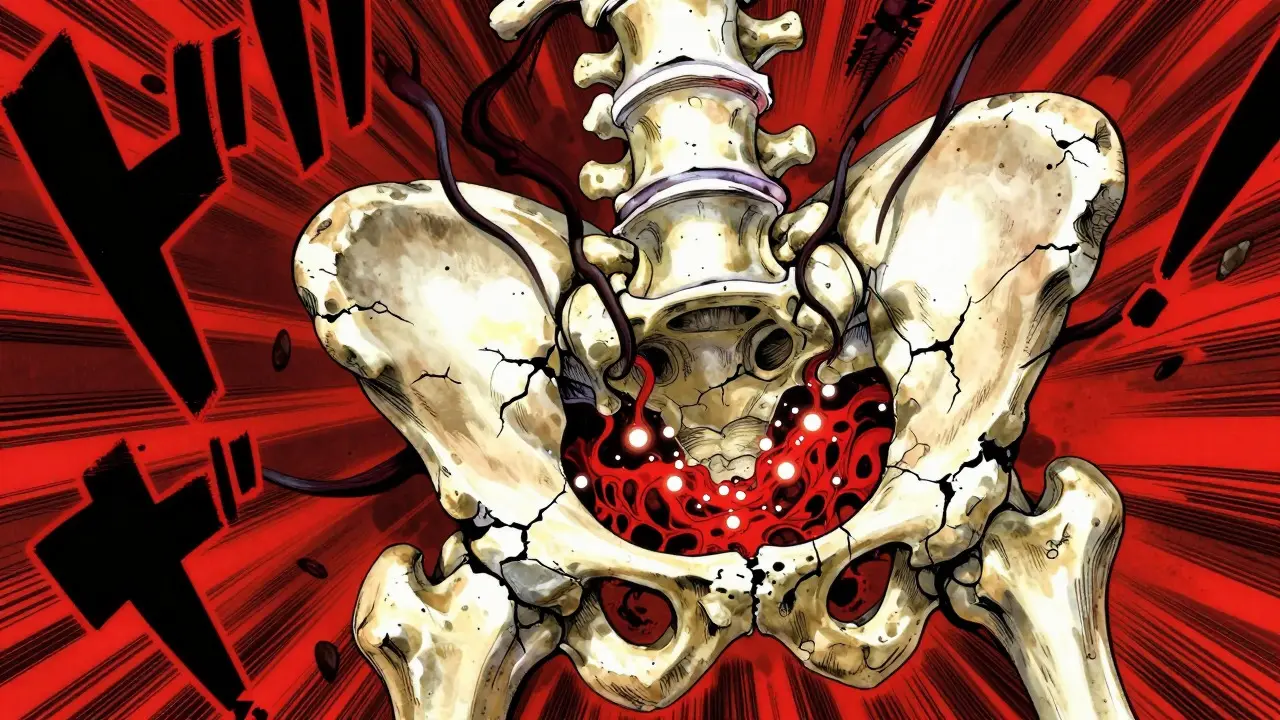
- Bones: Calcium is stripped from your skeleton, weakening them. This leads to osteoporosis and a significantly higher risk of fractures.
- Mind: Patients frequently report "brain fog," depression, anxiety, and memory issues. Many are misdiagnosed with mental health disorders for years.
- Digestion: You may experience nausea, vomiting, constipation, or loss of appetite.
If calcium levels spike above 14 mg/dL, it becomes a medical emergency known as a parathyroid crisis, requiring immediate hospitalization.
Bone Loss: The Silent Damage
One of the most damaging consequences of untreated hyperparathyroidism is bone loss. Your bones act as a storage bank for calcium. When PTH is high, it withdraws too much from that bank. Studies show that patients can lose 2-4% of their bone mineral density annually at critical sites like the hip and spine.
This isn't just about getting older; it's about accelerated deterioration. A dual-energy X-ray absorptiometry (DXA) scan is the gold standard for measuring this damage. If your T-score drops below -2.5, you have osteoporosis. Even if you don't have full-blown osteoporosis, your fracture risk jumps by 30-50% compared to someone your age without the condition. The good news? This process is reversible once the source of excess PTH is removed.
Diagnosis: Connecting the Dots
Doctors diagnose hyperparathyroidism through blood tests. They look for two things simultaneously: elevated calcium and inappropriately normal or high PTH levels. If your calcium is high but your PTH is low, the cause is likely something else, like cancer or vitamin D toxicity. But if both are high, or if PTH is "normal" despite high calcium, the diagnosis points strongly to hyperparathyroidism.
Once diagnosed, the next step is localization. Doctors need to find which gland is causing the trouble. Most cases (about 85%) involve a single enlarged gland (adenoma). Imaging tools like a technetium-99m sestamibi scan or high-resolution ultrasound help surgeons pinpoint the location. Finding the exact spot allows for minimally invasive surgery, which means smaller incisions and faster recovery.
Is Surgery Necessary?
Surgery, specifically a parathyroidectomy, is the only cure for primary hyperparathyroidism. However, not everyone needs it immediately. The decision depends on your symptoms, age, and test results.
| Criterion | Surgery Recommended | Watchful Waiting May Be Appropriate |
|---|---|---|
| Calcium Level | >1 mg/dL above normal limit | Mildly elevated (<1 mg/dL above) |
| Age | Under 50 years old | Over 50 years old |
| Bone Density (T-Score) | ≤-2.5 (Osteoporosis) or vertebral fracture | Osteopenia or normal bone density |
| Kidney Function | Creatinine clearance <60 mL/min or kidney stones | Normal kidney function, no stones |
| Symptoms | Severe fatigue, cognitive changes, pain | Asymptomatic or mild symptoms |
If you meet any of the criteria in the "Surgery Recommended" column, guidelines strongly suggest operating. Why? Because leaving it untreated increases your risk of permanent bone damage, kidney failure, and cardiovascular issues. For those who don't meet these criteria, doctors may choose "watchful waiting," involving regular blood tests and DXA scans every six to twelve months.

The Surgery: What to Expect
Modern parathyroid surgery is highly effective. In experienced hands, success rates reach 95-98%. The procedure typically takes one to two hours. Surgeons use minimally invasive techniques, making a small incision on the side of the neck. They remove only the abnormal gland(s), leaving healthy tissue intact.
Intraoperative PTH monitoring is a game-changer. During surgery, the surgeon draws blood samples to check PTH levels. If levels drop by more than 50% within ten minutes of removing the suspected gland, it confirms the surgery was successful. This reduces the chance of needing a second operation.
Recovery is surprisingly quick. Most patients go home the same day or stay overnight. You might feel soreness in your neck for a few days, but most people return to normal activities within a week. There is a small risk (less than 1%) of voice changes due to nerve irritation, but this is usually temporary.
Life After Surgery
After the abnormal gland is removed, your body needs time to adjust. Some patients experience "hungry bone syndrome," where their bones rapidly soak up calcium from the blood, causing temporary low calcium levels (hypocalcemia). Symptoms include tingling in the fingers or toes and muscle cramps. Doctors manage this with calcium and vitamin D supplements, which you taper off as your remaining glands wake up and start regulating calcium again.
Long-term outcomes are excellent. Bone density typically improves by 3-5% in the first year post-surgery. Kidney stone risk drops dramatically. Many patients report feeling like a weight has been lifted, with mental clarity returning and energy levels soaring. However, about 15-20% of patients may still have some residual fatigue or cognitive issues, especially if they had severe hypercalcemia for many years before treatment.
Managing Without Surgery
If you are not a candidate for surgery, or if you choose to wait, medical management focuses on protecting your bones and kidneys. Bisphosphonates, such as alendronate, can help maintain bone density. Cinacalcet is a medication that lowers PTH and calcium levels, though it doesn't cure the underlying gland issue. Staying hydrated helps prevent kidney stones, and avoiding thiazide diuretics (which raise calcium) is important. Regular monitoring remains essential to catch any worsening conditions early.
Can hyperparathyroidism go away on its own?
Primary hyperparathyroidism rarely resolves spontaneously. While secondary hyperparathyroidism can improve if kidney function is restored, primary cases usually require surgery for a definitive cure. Without intervention, the condition tends to progress slowly over years.
How long does it take to recover from parathyroid surgery?
Most patients recover quickly. You can expect to go home the same day or after one night in the hospital. Neck soreness lasts a few days, but most people return to work and daily activities within 3 to 7 days. Full biochemical normalization may take several weeks as your remaining glands adjust.
What are the risks of parathyroidectomy?
The surgery is very safe. Risks include temporary or permanent low calcium levels (hypocalcemia), injury to the recurrent laryngeal nerve (causing hoarseness), bleeding, or infection. In experienced centers, serious complications occur in less than 1-2% of cases. Temporary hypocalcemia is common but manageable with supplements.
Will my bone density improve after surgery?
Yes, significantly. Studies show that bone mineral density at the spine and hip improves by 3-5% within the first year after successful parathyroidectomy. This reverses the annual bone loss caused by high PTH levels and reduces future fracture risk.
Do I need to change my diet if I have hyperparathyroidism?
You do not need to restrict calcium intake unless advised otherwise by your doctor. In fact, adequate calcium (around 1200 mg/day) and vitamin D are important to support bone health. Avoid excessive caffeine and alcohol, and stay well-hydrated to protect your kidneys from stones. Always consult your endocrinologist for personalized dietary advice.