
IBS Diet Guide: FODMAP, Low-Residue, and Elimination Plans That Actually Work
 Mar, 10 2026
If you live with irritable bowel syndrome (IBS), you’ve probably tried every diet under the sun. Gluten-free? Dairy-free? Keto? Maybe it helped a little-but then your stomach started acting up again. The truth is, not all diets are made equal when it comes to IBS. Three approaches stand out because they’re backed by real science: the low-FODMAP diet, the low-residue diet, and general elimination plans. But here’s the catch: they’re not interchangeable. Choosing the wrong one could make your symptoms worse-or leave you stuck eating the same bland foods for years.
What Is the Low-FODMAP Diet, and Why Is It the Gold Standard?
The low-FODMAP diet isn’t just another buzzword. It was developed at Monash University in Australia after decades of research into how certain carbohydrates trigger IBS symptoms. FODMAP stands for Fermentable Oligosaccharides, Disaccharides, Monosaccharides, and Polyols. These are types of sugars that some people’s guts can’t absorb well. When they reach the colon, bacteria ferment them, causing gas, bloating, pain, and diarrhea.
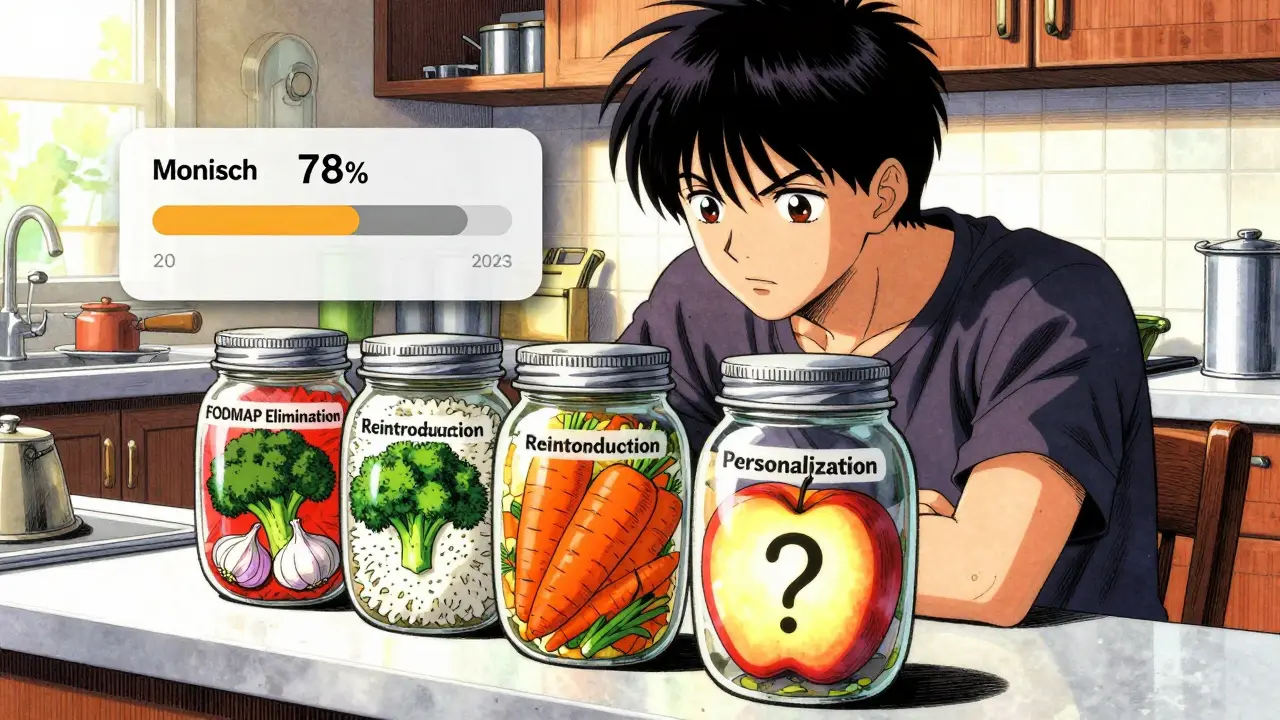
Unlike vague advice like “avoid junk food,” the low-FODMAP diet is a precise, three-phase system:
- Elimination (2-6 weeks): You cut out all high-FODMAP foods. That means no garlic, onions, wheat, apples, milk, honey, or artificial sweeteners like sorbitol. Even small portions matter-1 teaspoon of garlic can trigger symptoms. Only foods with less than 0.5g of FODMAPs per serving are allowed.
- Reintroduction (8-12 weeks): This is where most people fail. You slowly add back one FODMAP group at a time: fructans, galacto-oligosaccharides (GOS), lactose, excess fructose, or polyols. Each challenge uses a standardized dose (like 3g of fructans) to test your tolerance. No guessing. No random eating.
- Personalization (long-term): Most people end up tolerating 50-80% of the foods they eliminated. You don’t have to live on chicken and rice forever. You just learn what *you* can handle.
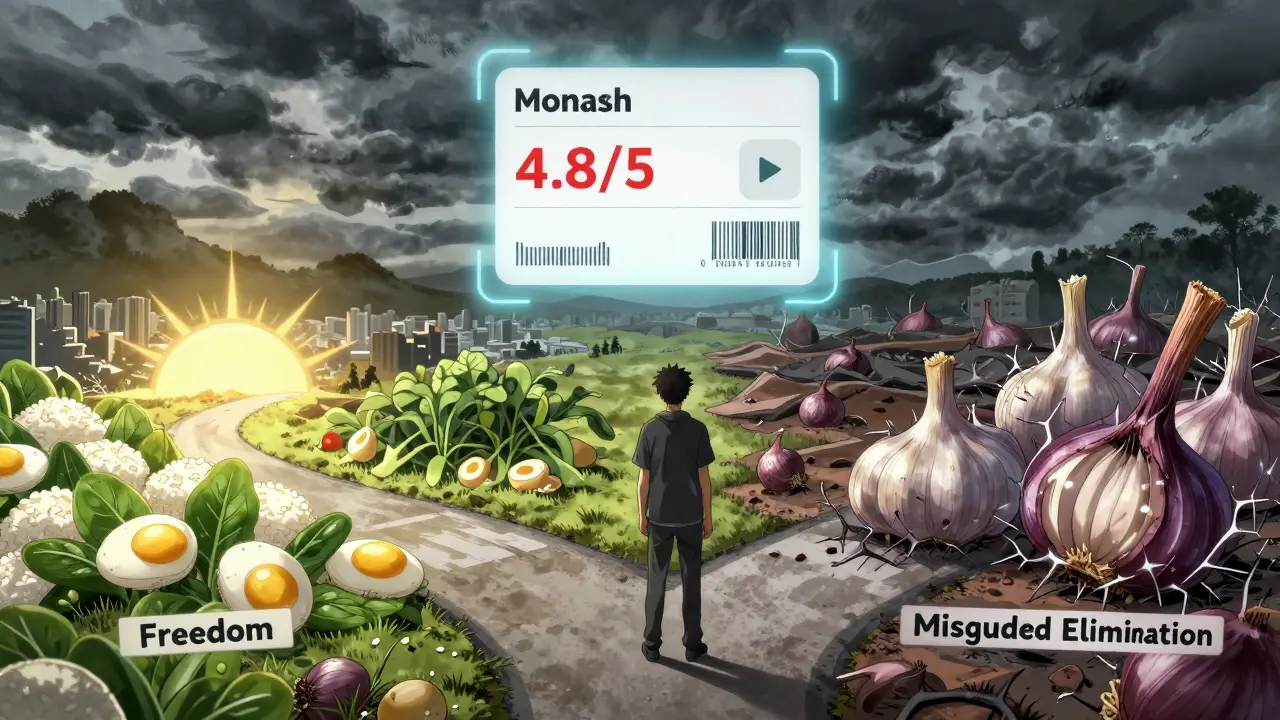
Studies show 75-80% of IBS patients see major improvement in pain, bloating, and bowel habits. A 2021 meta-analysis of 23 trials involving over 1,800 people confirmed it’s the most effective dietary intervention available. The Monash FODMAP app, with its barcode scanner and portion guides, is used by over 28,500 people and rated 4.8/5 on the App Store. People report life-changing results: “After 15 years of daily diarrhea, it vanished in three weeks.”
Low-Residue Diet: When Less Fiber Actually Helps
The low-residue diet is older and simpler. It’s been around since the 1940s and was originally designed for people with Crohn’s disease or before bowel surgery. The idea? Reduce the amount of undigested material in your gut to cut down on stool volume and frequency.
This diet limits fiber to 10-15 grams per day (compared to the recommended 25-38g). You avoid:
- All raw fruits and vegetables
- Nuts, seeds, and whole grains
- Legumes and beans
- High-fiber cereals
- Dairy unless it’s lactose-free
Instead, you eat white bread, refined pasta, lean meats, eggs, cooked carrots, and canned fruits without skin. It’s not meant for long-term use. In fact, it can cause nutrient gaps. Folate intake drops by 35%, calcium by 25% after just a few months, according to the Canadian Digestive Health Foundation. That’s why it’s not recommended for constipation-predominant IBS-restricting fiber makes it worse.
For people with diarrhea-predominant IBS (IBS-D), low-residue diets can help reduce bowel movements. One study found 45% improvement in stool frequency, compared to 75% with low-FODMAP. But for bloating and abdominal pain? Not so much. The low-FODMAP diet beats it by a wide margin. The low-residue diet is a short-term tool, not a solution.
General Elimination Diets: The Wild West of IBS Eating
Many people start with a general elimination diet: cut out gluten, dairy, caffeine, spicy foods, and alcohol for 2-4 weeks. Then slowly add them back. Sounds simple, right? It’s not.
The problem? There’s no standard. One person cuts out gluten because they heard it causes inflammation. Another avoids dairy because their cousin swore it helped. But IBS isn’t always about gluten or lactose. In fact, studies show only 30% of people using general elimination diets correctly identify their real triggers without professional help.
Unlike the low-FODMAP diet, there’s no science behind the doses. You don’t know if you’re testing 10g of lactose or 1g. You don’t know if your bloating came from wheat or apples. And because there’s no structured reintroduction phase, people often end up eliminating too much-and staying on restrictive diets longer than needed.
That said, it’s not useless. If you’re in a place where you can’t access a dietitian or the Monash app, a general elimination diet is better than doing nothing. Just don’t confuse it with a proven plan. It’s a starting point, not the finish line.

Comparing the Three Diets Side by Side
| Feature | Low-FODMAP Diet | Low-Residue Diet | General Elimination Diet |
|---|---|---|---|
| Primary Goal | Identify fermentable carb triggers | Reduce stool volume | Find food sensitivities |
| Duration | 3-6 months (with phases) | 2-4 weeks max | 2-4 weeks |
| Effectiveness for Bloating | 75-80% improvement | 45% improvement | 40-50% improvement |
| Effectiveness for Diarrhea | 75% improvement | 45% improvement | 40% improvement |
| Effectiveness for Constipation | 40-50% improvement | Not recommended | Variable |
| Long-Term Sustainability | High (personalized) | Low (nutrient risks) | Medium (if guided) |
| Requires Professional Guidance? | Highly recommended | Not required, but advised | Strongly recommended |
| Tools Needed | Monash app, food scale, journal | Food list, basic grocery guide | Food diary, trial and error |
Who Should Use Which Diet?
It’s not one-size-fits-all. Here’s how to choose:
- Use the low-FODMAP diet if: You have bloating, gas, pain, or mixed IBS symptoms. You’re willing to track your food, use an app, and work with a dietitian. You want long-term freedom, not just short-term relief.
- Use the low-residue diet if: You’re experiencing severe diarrhea and need quick relief-maybe before a trip or medical procedure. You’re not constipated. You’ll follow it for less than a month.
- Use a general elimination diet if: You’re on a tight budget, can’t access a specialist, or want to test if dairy or gluten is a problem. But don’t stop there. If it doesn’t help, move to FODMAP.
And here’s what not to do: Don’t start with low-residue if you’re constipated. Don’t skip the reintroduction phase of FODMAP-that’s where the magic happens. Don’t assume gluten-free means IBS-friendly. Many gluten-free foods are loaded with FODMAPs like inulin or honey.
Real Challenges and How to Overcome Them
People who succeed with the low-FODMAP diet don’t just follow a list-they adapt. Here’s what actually trips people up:
- Hidden FODMAPs: 60% of “healthy” packaged foods contain inulin, chicory root, or high-fructose corn syrup. Read labels like a detective.
- Social pressure: 72% of users say eating out is hard during phase 1. Carry a Monash FODMAP restaurant card. Ask for plain grilled chicken, steamed veggies, and rice.
- Symptom flare-ups during reintroduction: It’s normal. If you get bloated after testing fructans, wait 3 days before trying the next group. Don’t quit.
- Feeling overwhelmed: Start with meal prepping 4 days at a time. Use the Monash app’s meal planner. You don’t need to be perfect-85% compliance is enough.
And if you have an eating disorder? The low-FODMAP diet is not for you. The VA Whole Health Library warns it can worsen food anxiety in 15% of IBS cases. Talk to a therapist first.
What’s Next for IBS Diets?
The field is evolving fast. Monash University just released version 5.2 of their app with 1,200 new foods and AI meal planning. In 2023, researchers launched a study to predict who will respond to FODMAP using gut bacteria patterns. By 2026, experts expect FODMAP tracking to be built into electronic health records.
But here’s the bottom line: You don’t need to be a nutrition expert to manage IBS. You just need the right plan. The low-FODMAP diet isn’t perfect, but it’s the only one that gives you back control-not just temporary relief.
Can I do the low-FODMAP diet without a dietitian?
Yes, but it’s harder. Studies show only 45% of people who try it alone achieve good results. With a dietitian, compliance jumps to 85%. If you can’t afford one, use the Monash FODMAP app, follow their phase guide exactly, and track symptoms daily. Don’t skip reintroduction-that’s where you learn what you can eat.
Is the low-FODMAP diet permanent?
No. It’s designed to be temporary. Most people can reintroduce 50-80% of high-FODMAP foods after testing. The goal isn’t lifelong restriction-it’s finding your personal tolerance level. You’ll likely end up eating more variety than before.
Does the low-FODMAP diet heal the gut?
It doesn’t cure IBS or “heal” the gut lining. IBS is a functional disorder, not a structural one. The diet reduces symptoms by limiting foods that irritate your gut, not by fixing damage. Think of it like turning down the volume on a speaker-you’re not repairing the speaker, you’re just making the noise quieter.
Why do some people still have symptoms on low-FODMAP?
About 25% of people don’t respond. Reasons include: not following the diet strictly, skipping reintroduction, having another condition (like SIBO or celiac), or stress playing a bigger role than food. If you’ve done everything right and still feel bad, talk to your doctor about other options.
Can I use the low-FODMAP diet if I have IBS-C (constipation-predominant)?
Yes, but it’s less effective. Studies show 40-50% improvement in pain and bloating, but little change in constipation. You may need to pair it with other strategies: more fluids, gentle movement, and possibly a fiber supplement like psyllium husk (low-FODMAP variety). Always check with your doctor before adding fiber.
Are there any foods that are always safe on low-FODMAP?
Yes. Safe staples include: eggs, plain meats, fish, tofu, lactose-free dairy, rice, oats, quinoa, spinach, zucchini, carrots, strawberries, oranges, and maple syrup (in small amounts). These form the base of most low-FODMAP meals. Keep them on hand so you always have safe options.
Next Steps: What to Do Today
Stop Googling random diets. Here’s your action plan:
- Download the Monash FODMAP app (free trial available).
- Start a food and symptom journal for 3 days. Write down everything you eat and how you feel 2 hours later.
- If you’re overwhelmed, book a consultation with a registered dietitian who specializes in IBS. Look for Monash-certified providers.
- Don’t try to do everything at once. Pick one diet to start with-most people begin with low-FODMAP elimination.
- Remember: this isn’t about perfection. It’s about learning what works for you.
IBS doesn’t have to rule your life. With the right plan, you can eat without fear, enjoy meals with friends, and finally feel like yourself again.
Chris Bird
March 10, 2026 AT 17:41Shourya Tanay
March 11, 2026 AT 13:26David L. Thomas
March 12, 2026 AT 08:57Bridgette Pulliam
March 12, 2026 AT 15:27Mike Winter
March 13, 2026 AT 04:58Randall Walker
March 13, 2026 AT 06:12Miranda Varn-Harper
March 13, 2026 AT 06:18Alexander Erb
March 14, 2026 AT 11:35Donnie DeMarco
March 15, 2026 AT 11:40Tom Bolt
March 16, 2026 AT 23:11LiV Beau
March 17, 2026 AT 09:45Adam Kleinberg
March 18, 2026 AT 13:49