
Lab Monitoring Calendars: Staying Ahead of Side Effects
 Jun, 1 2026
Lab Monitoring Schedule Generator
| Date | Test Required | Timing Notes | Status |
|---|---|---|---|
| Select options and click Generate to view your schedule. | |||
Imagine taking a powerful medication that saves your life but carries risks that can’t be seen until it’s too late. That is the reality for millions of people managing chronic conditions with drugs like lithium, clozapine, or warfarin. The difference between a manageable side effect and a medical emergency often comes down to timing-and specifically, when you get your blood work done. This is where lab monitoring calendars become your most critical health tool. They are not just simple appointment reminders; they are structured systems designed to catch adverse drug reactions before they cause harm.
In June 2026, we have moved far beyond paper diaries. While printable templates still exist, the standard of care now involves digital ecosystems that sync with electronic health records (EHRs) and even wearable biometrics. Yet, the core principle remains unchanged: systematic surveillance prevents toxicity. Whether you are dealing with the narrow therapeutic window of mood stabilizers or the hematological demands of cancer therapy, understanding how to build and use these calendars is essential for patient safety.
Why Your Body Needs a Schedule, Not Just Guesswork
Medications do not affect everyone the same way, and their impact changes over time. A drug that was safe last month might become toxic today due to interactions with food, other medications, or natural shifts in your metabolism. Lab monitoring calendars bridge the gap between prescription and physiological reality. They ensure that laboratory tests align with the pharmacokinetics-the way your body absorbs, distributes, and eliminates drugs-of the specific medication you are taking.
Consider lithium, a common mood stabilizer. Its therapeutic range is incredibly tight. If levels drop slightly, it stops working; if they rise slightly, you risk toxicity. Guidelines require serum level checks five to seven days after starting treatment, then weekly until stable, and eventually every six months. Without a calendar, patients often miss the "weekly until stable" phase, leading to erratic dosing. Similarly, anticoagulants like warfarin require monthly INR monitoring, which must increase in frequency during any dosage change. Missing one draw can lead to dangerous bleeding or clotting events. These tools transform abstract medical advice into concrete, actionable steps.
Digital vs. Analog: Choosing Your Tracking System
The landscape of monitoring tools has diversified significantly. You generally have three options, each with distinct advantages depending on your tech comfort and clinical needs.
| Tool Type | Best For | Key Limitation | Example |
|---|---|---|---|
| Digital Health Apps | Real-time correlation of symptoms, diet, and labs | Requires smartphone access and data privacy trust | Blood Cancer United's Health Manager |
| EHR-Integrated Systems | Seamless sharing with healthcare providers | Limited patient-side customization | Hospital-specific portals |
| Printable Templates | Visual clarity and low-tech reliability | No automatic alerts or trend analysis | CBH Philly PDF guides |
Digital apps like Blood Cancer United's Health Manager offer dynamic insights. They allow you to log side effects alongside lab results, helping you spot patterns-for instance, noticing that fatigue spikes two days after a specific chemotherapy dose. However, static templates remain popular for their simplicity. A printed grid on the fridge ensures visibility without battery anxiety. The choice depends on whether you need passive reminders or active data analysis.

High-Risk Medications Requiring Strict Surveillance
Not all drugs demand the same level of scrutiny. Certain classes of medications have established "red lines" that trigger immediate intervention if crossed. Understanding these protocols helps you prioritize your calendar entries.
Clozapine, an antipsychotic used for treatment-resistant schizophrenia, requires lifelong monitoring of Absolute Neutrophil Count (ANC). Why? Because it can cause agranulocytosis, a severe drop in white blood cells that leaves you vulnerable to fatal infections. Current guidelines mandate weekly ANC checks for the first four weeks once counts reach 1500/μL. If levels drop below 500/μL, the drug must be stopped immediately. Even after years of stability, this surveillance never ends. Your calendar must reflect this non-negotiable rhythm.
Systemic Corticosteroids present a different challenge. When taken for more than two consecutive weeks, they can suppress adrenal function. Upon withdrawal, your body may not produce enough cortisol to handle stress. Monitoring here isn't about daily blood draws but about scheduled morning cortisol tests under specific withdrawal protocols. Missing these assessments can lead to adrenal crisis, a life-threatening condition characterized by low blood pressure and shock.
Oncology Therapies like LONSURF (trifluridine/tipiracil) require dose-specific tracking of hematological parameters and gastrointestinal side effects. Pharmaceutical companies like Taiho Oncology provide condition-specific tools, such as the LONSURF treatment calendar, which outputs sheets for tracking temperature, missed doses, and side effects. These specialized calendars recognize that cancer treatments often involve complex regimens where a single missed test can delay life-saving therapy.
Building Your Personalized Calendar: Step-by-Step
Creating an effective lab monitoring calendar is not a one-size-fits-all task. It requires collaboration with your provider and attention to detail. Here is how to structure it for maximum effectiveness:
- Identify Critical Parameters: List every lab test required by your current medications. For lithium, this is serum levels. For warfarin, it is INR. For clozapine, it is ANC. Do not omit anything, even if it seems minor.
- Map Frequencies Accurately: Note the exact interval for each test. Is it weekly, monthly, or only after dosage changes? Highlight transition periods, such as the first month of a new drug, where testing is most frequent.
- Synchronize with Draw Times: Some tests require strict timing relative to your dose. Lithium levels, for example, must be drawn exactly 12 hours after your last dose. Mark this window clearly on your calendar to avoid invalid results.
- Add Symptom Logging Fields: Include space to record subjective experiences. Did you feel dizzy after your last dose? Were you dehydrated? Correlating these notes with lab trends provides your doctor with crucial context.
- Set Redundant Reminders: Use both digital alerts and physical markers. Set a phone notification for the day before the test, and mark the date on a wall calendar. Human memory is fallible; systems are not.
Tools like Ulta Lab Tests’ recommendation engine can help generate personalized lists of necessary tests, though they lack scheduling functionality. Combine these resources with a dedicated app or template to create a robust system.
Troubleshooting Common Pitfalls
Even the best-laid plans encounter obstacles. Here is how to handle real-world disruptions without compromising safety.
Missed Appointments: If you miss a lab draw, do not wait until the next scheduled date. Contact your provider immediately. For high-risk drugs like clozapine, delays can have serious consequences. Some clinics offer make-up slots within 48 hours; others may require temporary suspension of medication. Know your clinic’s policy beforehand.
Travel and Holidays: Lab access varies globally. If you are traveling, identify accredited facilities near your destination. For medications requiring frequent monitoring, consider adjusting your schedule with your doctor’s approval, or arrange for local coverage. Never skip a test because it is inconvenient.
Data Overload: Digital apps can sometimes overwhelm users with notifications. Customize alert settings to focus on critical actions only. Disable non-essential pings to prevent "alert fatigue," which can lead to ignoring important warnings.
Provider Communication Gaps: Ensure your calendar is shared with your care team. Many EHR-integrated systems allow direct data export. If using a personal app, bring screenshots or printed logs to every visit. Your provider cannot manage what they cannot see.
The Future of Pharmacovigilance
We are standing at the edge of a new era in medication safety. Emerging trends point toward AI-driven risk prediction models that analyze historical lab-trend data to forecast potential adverse events before they occur. Imagine an app that warns you, "Based on your declining kidney function and recent lithium levels, your next dose should be adjusted," before you even step into the lab.
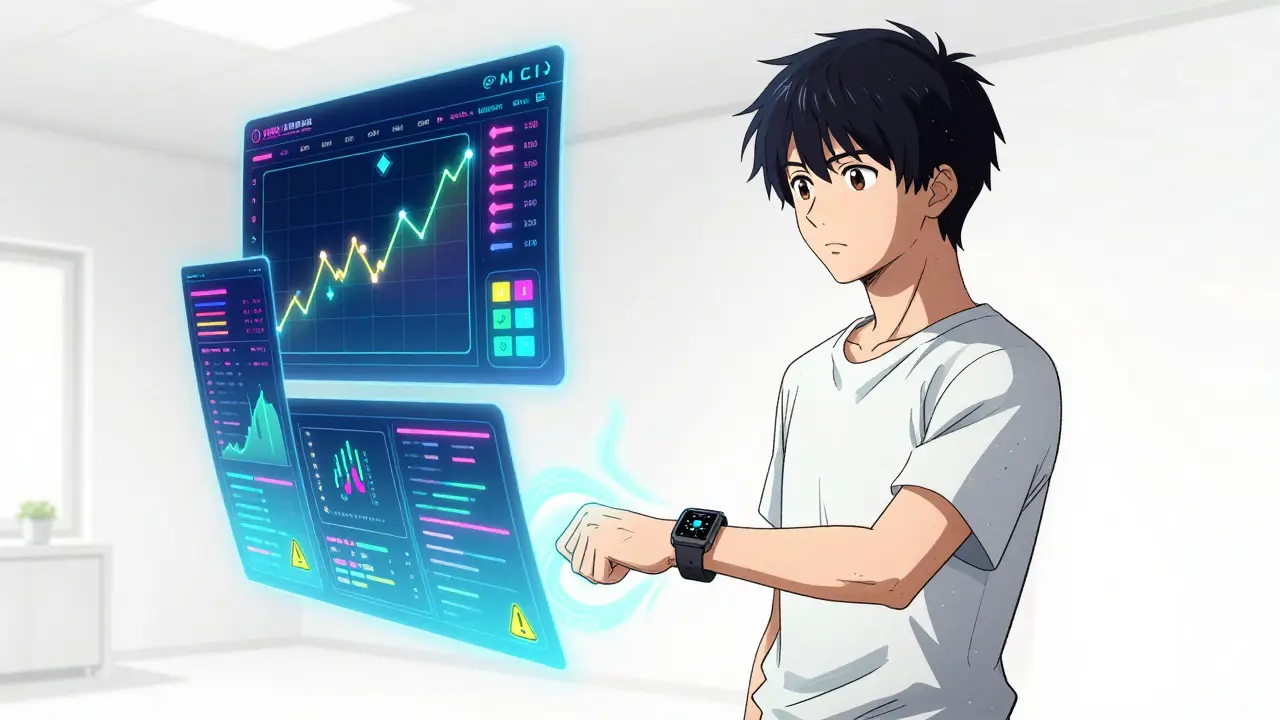
Integration with wearable biometrics is already underway. Smartwatches that monitor heart rate variability and hydration status could soon feed data directly into your lab monitoring calendar, providing a holistic view of your physiological state. However, while technology advances, evidence-based protocols remain foundational. The human element-the decision to act on data-cannot be automated.
As we move through 2026, the balance between customization and standardization continues to evolve. Condition-specific tools like LONSURF’s calendar coexist with generalized frameworks from organizations like the NIH. The goal is clear: empower patients with precise, actionable information while reducing the burden of complexity. Your lab monitoring calendar is not just a schedule; it is your partnership with science, ensuring that the benefits of your medication outweigh the risks.
How often should I update my lab monitoring calendar?
You should update your calendar whenever there is a change in your medication regimen, dosage, or health status. Additionally, review it at least monthly to ensure upcoming appointments are confirmed and to adjust for any lifestyle changes like travel. For medications with variable monitoring frequencies, such as clozapine, updates are needed immediately upon receiving new lab results that alter the testing schedule.
Can I use a generic planner instead of a specialized app?
Yes, a generic planner works well for visual tracking and basic reminders. However, specialized apps offer advantages like automatic alerts, trend analysis, and secure data storage. If you prefer a planner, ensure it includes sections for logging symptoms and side effects, and set manual reminders on your phone for critical dates. The key is consistency, not the tool itself.
What happens if I miss a lab test for a high-risk medication?
Missing a test for high-risk medications like clozapine or lithium can be dangerous. For clozapine, missing an ANC check may result in being blocked from refilling your prescription due to REMS program requirements. For lithium, missing a level check increases the risk of toxicity or ineffective treatment. Contact your provider immediately to reschedule and follow their instructions regarding medication intake until the test is completed.
Do lab monitoring calendars replace regular doctor visits?
No, lab monitoring calendars complement but do not replace regular doctor visits. While labs provide objective data, clinical assessments involve evaluating your overall health, mental state, and response to therapy. Doctors interpret lab results in the context of your broader health picture. Always attend scheduled appointments to discuss your calendar data and adjust treatment plans as needed.
Is my data safe if I use a digital health app?
Reputable health apps comply with data protection regulations like HIPAA in the US or GDPR in Europe. Look for apps that explicitly state their privacy policies and use encryption. Avoid sharing sensitive health data on unverified platforms. If concerned, ask your healthcare provider for recommended apps that integrate securely with your electronic health record system.