
Language Barriers and Medication Safety: How to Get Help
 May, 25 2026
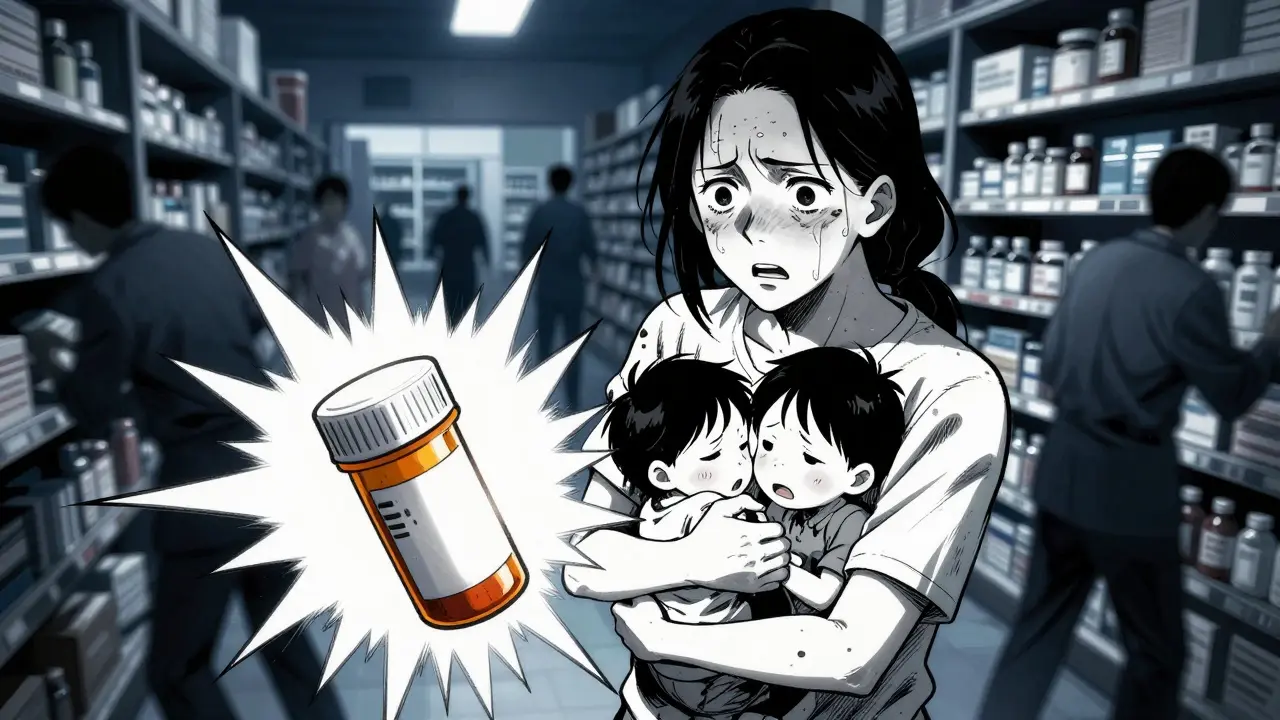
Imagine picking up a new prescription for your child. The label says "take one dropperful twice daily." But you don’t speak English well, and the pharmacist rushed through the instructions in broken phrases. You go home, guess the dose, and by evening, your child is in the emergency room with an overdose. This isn’t a hypothetical nightmare-it’s a documented reality for thousands of families.
Communication gaps between healthcare providers and patients with Limited English Proficiency (LEP) are not just inconvenient; they are dangerous. Studies show that medication errors occur at twice the rate for children whose families have limited English proficiency compared to those who speak English fluently. In fact, research from the Children's Hospital of Philadelphia found that 17.7% of LEP children experienced adverse drug events, compared to only 9.6% of their English-proficient peers. These aren't minor mistakes. They lead to hospitalizations, permanent harm, and even death.
The Hidden Cost of Miscommunication
We often think of medical errors as technical failures-a wrong pill dispensed or a typo in a chart. But a huge chunk of these errors stems from simple miscommunication. When a patient cannot understand dosage instructions, side effects, or timing, the treatment plan fails. A 2017 analysis of over 7,000 medical error cases revealed that communication failures cost the healthcare system $1.7 billion in losses due to irreparable patient harm. Language barriers are a primary driver here.
Consider the pharmacy counter. It’s a high-pressure environment. Pharmacists are busy, and patients are anxious. If a pharmacy cannot provide prescription labels in the patient’s native language, the risk skyrockets. A study in the Bronx, New York, found that 31% of pharmacies could not provide Spanish-language labels despite serving a largely Spanish-speaking population. Another study in Milwaukee showed that half of all pharmacies rarely or never prepare non-English information packets. When you can’t read the bottle, how are you supposed to take the medicine correctly?
The problem extends beyond pills. Insulin pens, inhalers, and topical creams all require precise usage instructions. Without clear communication, patients may under-dose themselves, leading to uncontrolled conditions like diabetes or asthma, or over-dose, causing toxicity. The financial and human toll is staggering, yet it remains one of the most overlooked aspects of patient safety.
Why Family Interpreters Are Not Enough
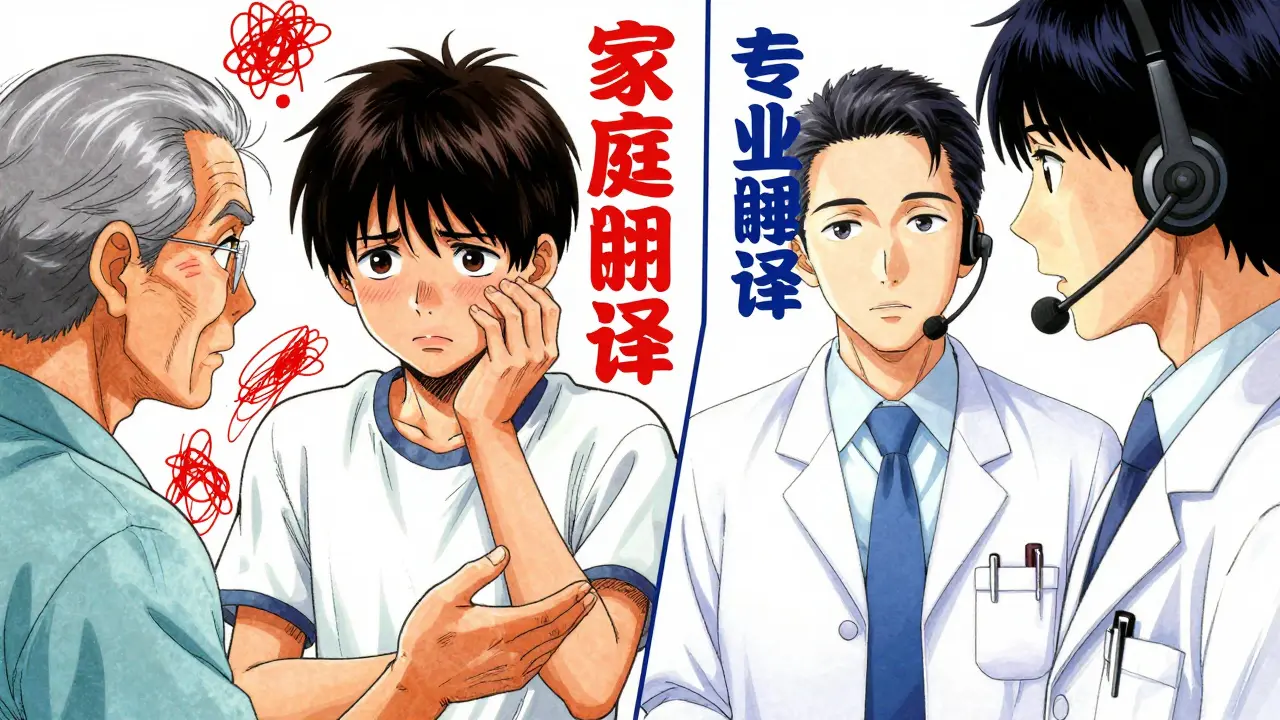
When faced with a language barrier, many patients turn to family members or friends to interpret. It feels natural. It’s free. And it’s incredibly risky. Research indicates that up to 25% of interpretations provided by untrained family members contain critical errors. Why? Because medical terminology is complex. A layperson might translate "hypertension" as "high blood pressure," but they might miss the nuance of "titrate" or "contraindicated." Worse, family members may omit embarrassing details or soften bad news to protect feelings, leaving the provider with incomplete information.
In pediatric settings, this is especially common. Parents often use their own children to interpret for them. This reverses roles, adds emotional stress, and compromises privacy. A teenager interpreting for a parent about a sensitive diagnosis or a complex medication regimen is simply not equipped to handle the clinical precision required. Professional interpreters, on the other hand, are trained in medical vocabulary, cultural nuances, and ethical standards. They act as a bridge, ensuring that every word carries its intended weight.
Data supports this clearly. Facilities that implement professional interpretation services see a reduction in medical error rates by up to 50%. That’s not a marginal improvement; it’s a life-saving difference. Yet, many hospitals still rely on ad-hoc solutions due to cost concerns or lack of awareness. This short-term saving leads to long-term liability and, more importantly, preventable harm.
Tools and Strategies for Safer Communication
If you or someone you know faces language barriers in healthcare, there are concrete steps to improve safety. First, demand professional interpretation. Under Title VI of the Civil Rights Act of 1964, any healthcare organization receiving federal funds must provide language assistance services. This is not a favor; it is your legal right. Whether it’s an in-person interpreter, a telephone service like LanguageLine Solutions a leading provider of remote interpretation services, or video remote interpretation, these tools are designed to ensure accuracy.
Second, utilize the "teach-back" method. This is a simple but powerful technique where the provider asks you to repeat the instructions in your own words. If you’re using an interpreter, ask them to facilitate this process. For example, after explaining how to use an inhaler, the nurse should ask, "Can you show me how you will use this at home?" This confirms understanding rather than just assuming it. A 2017 study in the Journal of General Internal Medicine highlighted that directly observed dosing-where patients demonstrate administration under supervision-significantly enhances safety, even when language barriers exist.
Third, leverage technology wisely. Many electronic health record (EHR) systems now include language preference fields. Make sure your preferred language is noted in your file. Some apps and platforms offer translated medication guides. However, be cautious with automated translation tools like Google Translate for medical advice. While useful for basic navigation, they often fail with medical jargon. One Reddit user shared a harrowing story where their mother received incorrect insulin dosing instructions because a pharmacy relied on Google Translate, resulting in hospitalization. Always verify digital translations with a professional if possible.
What Patients Can Do Today
You don’t have to navigate this alone. Here is a practical checklist for your next healthcare visit:
- Identify Your Needs Early: When scheduling appointments, state clearly that you require an interpreter. Ask if the clinic has a specific protocol for LEP patients.
- Bring Written Information: If possible, bring a list of your current medications in your native language. This helps pharmacists cross-reference dosages and avoid interactions.
- Ask for Visual Aids: Request diagrams, pictures, or multilingual pamphlets. Visual cues can transcend language barriers, especially for devices like nebulizers or injection pens.
- Use Video Interpretation: If an in-person interpreter isn’t available, ask for video remote interpretation. Seeing facial expressions and gestures can aid understanding significantly compared to phone-only services.
- Confirm Labeling: Before leaving the pharmacy, check if the label can be printed in your language. If not, ask the pharmacist to write out the instructions in large, clear letters or use universal symbols.
It’s also helpful to know your rights. The Office for Civil Rights enforces language access laws, and penalties for non-compliance can reach $100,000 per violation. If you feel your needs are being ignored, document the incident and report it to the facility’s patient advocacy office or the relevant civil rights agency.
The Role of Healthcare Providers
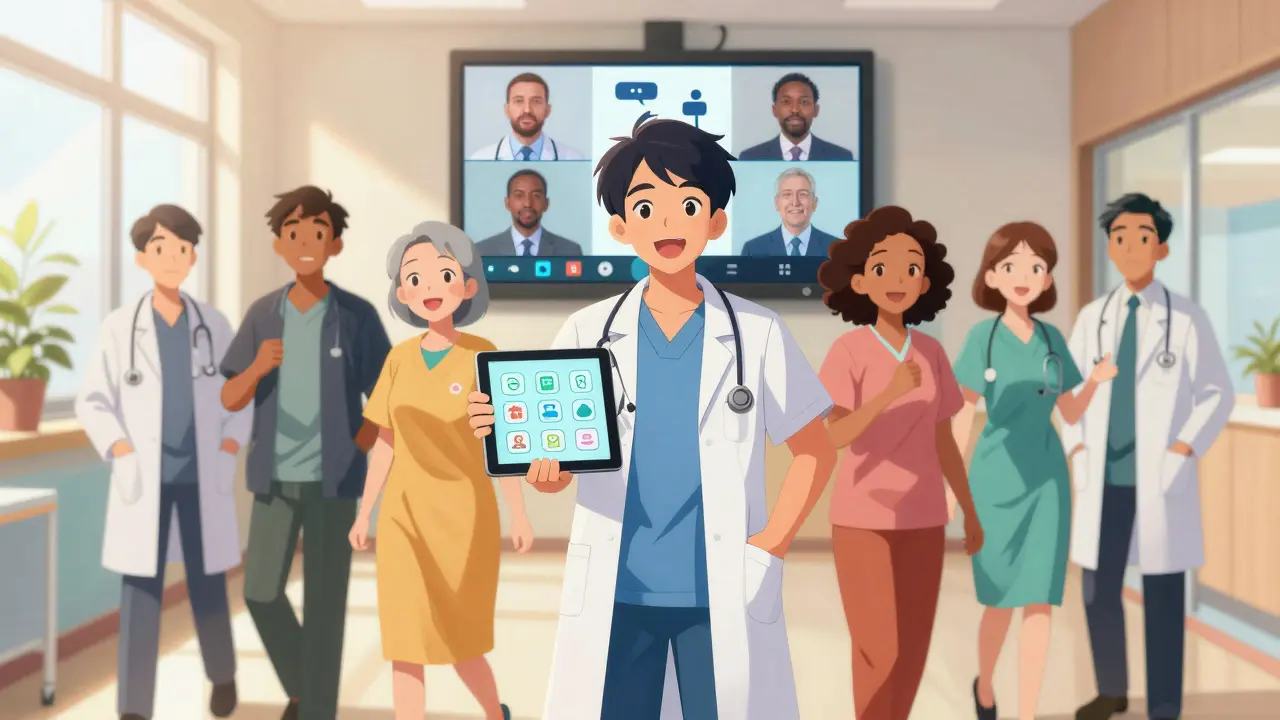
Providers play a crucial role in closing this gap. It starts with universal language identification at intake. Every patient touchpoint-from registration to discharge-should assess language needs. The Joint Commission standards mandate this, yet implementation varies wildly. Hospitals that invest in cultural competency training for staff see better outcomes. Training typically takes 4-8 hours initially, followed by ongoing reinforcement. It teaches staff not just how to use interpretation technology, but how to communicate with humility and patience.
Pharmacists are particularly vital. As gatekeepers of medication distribution, they have the opportunity to catch errors before they leave the store. A bilingual pharmacist or a pharmacist skilled in using interpretation services can prevent mishaps. The Patient Safety Network notes that pharmacists can play a critical role in overcoming adverse clinical consequences by ensuring that every instruction is understood. This means taking the extra two minutes to confirm comprehension, rather than rushing to the next customer.
Hospitals are also integrating language services into their EHR systems. Epic and Cerner, two major EHR providers, have launched enhanced language preference modules in recent years. These systems can automatically flag LEP patients and prompt staff to order interpretation services. This reduces reliance on memory and ensures consistency across shifts and departments.
Future Trends and Digital Health
The landscape is evolving. With the rise of telehealth, language barriers have shifted from physical clinics to digital platforms. A 2023 study by University of Michigan Medicine found that while in-person language barriers have decreased, they persist significantly in digital health spaces. Twenty-nine percent of hospitals still don’t offer online language services, leaving patients stranded during virtual visits.
However, innovation is accelerating. The National Institutes of Health announced a 2023 initiative to develop AI-powered translation tools specifically for medication instructions. These tools aim to provide real-time, context-aware translations that understand medical nuance better than generic algorithms. Additionally, the FDA is planning updated guidance on multilingual prescription labeling, which could standardize how drug information is presented across languages.
Demographic trends underscore the urgency. The U.S. Census Bureau projects that by 2030, 25% of the U.S. population will speak a language other than English at home. The demand for language access is not a niche issue; it is a mainstream necessity. Healthcare systems that adapt now will be better positioned to serve diverse populations safely and effectively.
Is it illegal for a hospital to refuse an interpreter?
Yes, for most hospitals. Under Title VI of the Civil Rights Act of 1964, any healthcare organization receiving federal funding (which includes almost all hospitals via Medicare/Medicaid) must provide free language assistance services to patients with Limited English Proficiency. Refusing to do so can result in significant fines and loss of federal funding.
Are professional interpreters really necessary for simple prescriptions?
Absolutely. Even simple instructions like "take with food" or "avoid sunlight" can have serious implications if misunderstood. Professional interpreters ensure that nuances regarding timing, dosage forms, and contraindications are accurately conveyed. Studies show they reduce error rates by up to 50%, making them essential for safety, not just convenience.
Can I use my child as an interpreter for my medical appointments?
It is strongly discouraged. Children lack the medical vocabulary and emotional maturity to interpret complex health information accurately. Using them can also violate privacy laws (HIPAA) and place undue stress on the child. Professional interpreters are trained to handle sensitive information with confidentiality and precision.
How much does professional interpretation cost?
For patients, it is usually free if provided by a hospital or clinic receiving federal funds. For facilities, costs vary: in-person interpreters may cost $50-$100 per hour, while telephone services range from $3.50-$5.00 per minute. Despite these costs, the prevention of medical errors saves the system billions annually.
What should I do if my pharmacy cannot print labels in my language?
Ask the pharmacist to write out the instructions clearly in English and then use a professional interpreter to explain them to you. You can also request visual aids or diagrams. If this is a recurring issue, consider switching to a pharmacy that offers multilingual labeling services or works closely with interpretation agencies.