
Nausea from Opioids: How to Manage Antiemetics, Timing, and Diet Adjustments
 Dec, 31 2025
Opioid Nausea Management Calculator
Personalize Your Nausea Management Plan
Answer these questions to get tailored recommendations for your opioid nausea.
How It Works
Based on your inputs, this tool recommends:
- Optimal antiemetic
- Best timing for antiemetic
- Dietary suggestions
- Important safety considerations
When you start taking opioids for pain, nausea isn’t just an inconvenience-it can make you quit the medication entirely. About 30-40% of people new to opioids experience nausea or vomiting, and for many, it’s the main reason they stop taking them. This isn’t rare. It’s predictable. And it’s manageable-if you know how.
Why Opioids Make You Nauseous
Opioids don’t just block pain signals. They also bind to receptors in a part of your brain called the chemoreceptor trigger zone. This area doesn’t care if you’re in pain-it just reacts to chemicals in your blood. When opioids activate it, your body thinks something’s toxic and tries to expel it. That’s why you feel sick, even if you haven’t eaten anything bad. This reaction hits hardest in the first 24 to 48 hours after starting an opioid like morphine, oxycodone, or hydrocodone. Most people get used to it within 3 to 7 days. But if you’re older, have cancer, or take other medications, your body might not adapt as quickly. And if nausea sticks around, it can wreck your appetite, sleep, and will to keep taking the pain medicine you need.Which Antiemetics Actually Work?
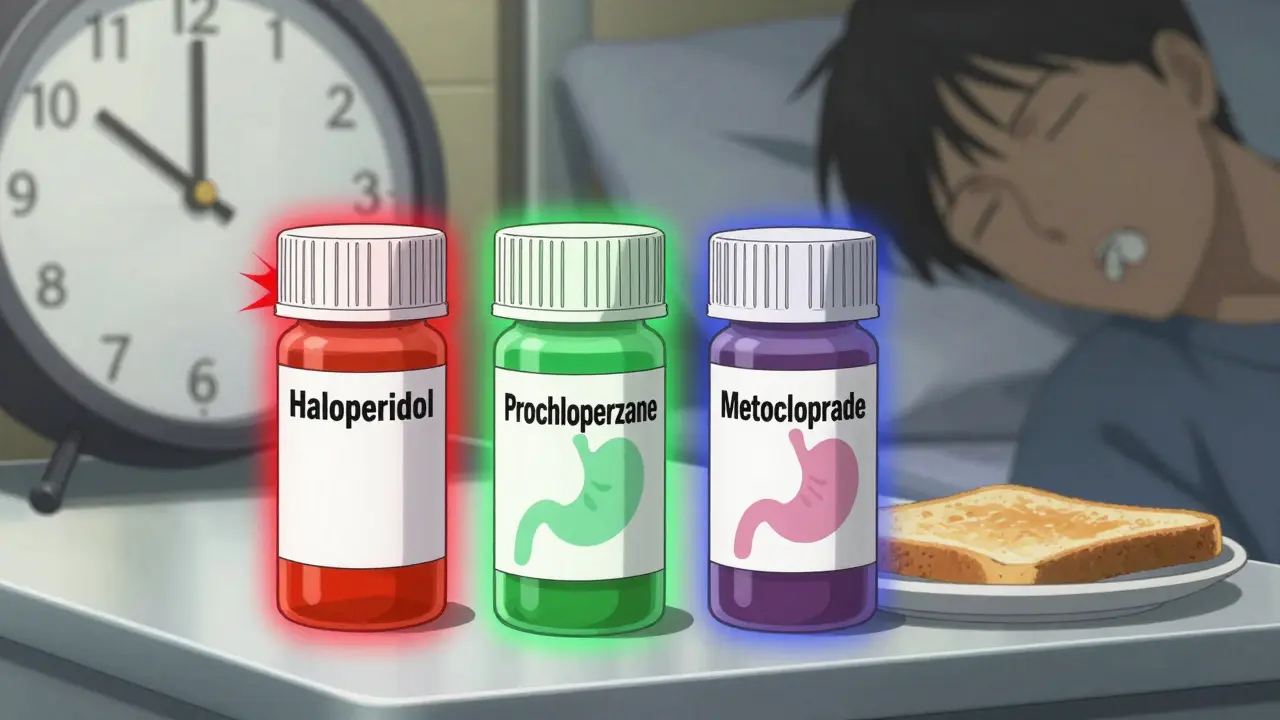
Not all anti-nausea drugs are created equal when it comes to opioid-induced nausea. Here’s what works-and what doesn’t-based on real patient data and clinical reviews.- Haloperidol (0.5-2 mg daily): A low-dose antipsychotic that blocks dopamine in the brain’s nausea center. It’s cheap-about $0.05 per pill-and works for 70-75% of patients. But it can cause stiffness or tremors in older adults, especially over 65.
- Prochlorperazine (5-10 mg every 6-8 hours): A phenothiazine that’s gentler than haloperidol. Often the first choice for cancer patients. Works well if nausea is tied to brain signaling, not stomach delay.
- Metoclopramide (5-10 mg every 6-8 hours): The only prokinetic drug available in the U.S. for this use. It speeds up your stomach emptying, which helps if nausea happens after eating. But it’s less effective if your nausea comes from brain receptors. Risk of muscle spasms: 10-15% at higher doses.
- Ondansetron (4-8 mg every 8 hours): Blocks serotonin, which helps with chemo nausea. But for opioid-induced nausea? Only moderate help. It’s expensive-up to $3.50 per tablet-and often not worth the cost unless other options fail.
- Dexamethasone (4-8 mg IV or oral): Used in hospitals. Works for about half of patients, but no one’s sure exactly how. Usually reserved for severe cases or when other drugs don’t work.
Here’s the catch: prophylactic antiemetics-taking them before nausea starts-don’t reliably prevent it. A 2019 review of 619 patients found dopamine blockers like haloperidol didn’t stop nausea from happening at all when given upfront. That means don’t just hand out antiemetics like candy. Use them when symptoms appear.
Timing Matters: When to Take Your Antiemetic
Taking your anti-nausea pill at the wrong time is like locking the barn after the horse is gone. Opioids peak in your bloodstream about 60-90 minutes after you swallow them. That’s when nausea hits hardest. So if you take your antiemetic at the same time as your opioid, you’re too late. The trick? Take your antiemetic 30 to 60 minutes before your opioid dose. That way, it’s already in your system when the opioid hits your brain. For example:- Take metoclopramide at 8:00 a.m., then your oxycodone at 9:00 a.m.
- Take prochlorperazine at 2:00 p.m., then your morphine at 3:00 p.m.
This small timing shift can cut nausea severity by half. It’s simple. It’s free. And most doctors never mention it.
Can Diet Help with Opioid Nausea?
Yes-but not in the way you might think. There’s no magic food that cancels out opioids. But what you eat-and when-can make a big difference.- Eat small, dry meals. Heavy, greasy, or sweet foods slow stomach emptying and make nausea worse. Stick to crackers, toast, rice, or plain pasta. Bland doesn’t mean boring-it means bearable.
- Avoid eating right before opioid doses. If you eat a big meal and then take your pain pill, your stomach is already full. That doubles the chance of vomiting. Wait at least 90 minutes after eating before taking your opioid.
- Stay upright after eating. Lying down slows digestion and increases reflux. Sit up for at least 30 minutes after meals. If you’re bedridden, prop yourself up with pillows.
- Hydrate slowly. Sipping water, ginger tea, or electrolyte drinks helps. Chugging fluids can trigger vomiting. Try a few sips every 15 minutes.
- Try ginger. While not a replacement for meds, ginger supplements (1 gram daily) or ginger tea have shown mild benefit in small studies. It’s safe, cheap, and worth a try.
One overlooked point: constipation from opioids can make nausea worse. If your bowels are backed up, your stomach feels full even if you haven’t eaten. That’s why metoclopramide helps-it moves things along. But if you’re constipated, talk to your doctor about stool softeners or laxatives. Fixing that can reduce nausea without adding another drug.
When to Switch Opioids
Sometimes, the problem isn’t the dose-it’s the drug. Not all opioids cause the same level of nausea. If you’re stuck with persistent vomiting despite antiemetics and timing, switching might help.- Morphine to oxycodone: Some patients feel less nausea switching. Evidence is weak, but it’s low-risk to try.
- Morphine or oxycodone to methadone: This is the most effective switch-if done right. Methadone doesn’t trigger the same brain receptors as much. But converting doses is complex and requires a specialist. Never do this yourself.
- Morphine to hydromorphone: Recent data from oncology centers shows a 40-50% reduction in nausea with this switch. It’s becoming a go-to option in palliative care.
Don’t switch just because you’re nauseous. Try antiemetics and timing first. But if you’ve tried everything for 7-10 days and still can’t tolerate the drug, ask your doctor about rotation. It’s not failure-it’s smart pain management.

Lowering the Dose Can Help Too
Here’s something most people don’t realize: you might not need the full opioid dose to control your pain. Studies show that if you’re getting good pain relief but still have nausea, lowering your dose by 25-33% often keeps pain under control while eliminating nausea-in about 60% of cases. Why? Because nausea is dose-dependent. Pain relief isn’t always. Your body can still feel comfortable with less opioid if it’s dosed correctly. Talk to your doctor about titrating down. You might be surprised how little you need to feel better.What Doesn’t Work
There’s a lot of noise out there. Here’s what to ignore:- Acupuncture for opioid nausea: No strong evidence. Might help stress, but not the nausea itself.
- Over-the-counter motion sickness pills (like dimenhydrinate): These target inner ear balance, not brainstem triggers. Usually ineffective.
- Waiting it out without any intervention: Nausea may fade-but many patients quit opioids before that happens. Don’t risk losing pain control.
What to Do Next
If you’re on opioids and feeling sick:- Don’t stop your pain medicine. Talk to your doctor.
- Start with prochlorperazine or metoclopramide, taken 30-60 minutes before your opioid.
- Eat small, dry meals. Avoid eating right before your dose.
- Wait 7 days. If nausea hasn’t improved, ask about switching opioids.
- If you’re still struggling after two weeks, request a pain specialist referral.
There’s no one-size-fits-all fix. But there are proven steps. You don’t have to suffer through nausea just because you need pain relief. The tools exist. You just need to use them right.
How long does opioid-induced nausea last?
For most people, opioid-induced nausea lasts 3 to 7 days after starting the medication. It usually peaks in the first 24 to 48 hours and fades as your body adjusts. If it lasts longer than 10 days, you likely need a different approach-like switching the opioid or adjusting your antiemetic.
Can I take ginger with my opioid and antiemetic?
Yes. Ginger is safe to use alongside opioids and antiemetics like metoclopramide or prochlorperazine. Studies show 1 gram of ginger daily-either as tea, capsules, or chewable tablets-can mildly reduce nausea. It’s not a replacement for prescribed meds, but it’s a helpful, low-risk addition.
Why isn’t ondansetron the first choice for opioid nausea?
Ondansetron blocks serotonin, which helps with chemo or post-surgery nausea. But opioid nausea is mostly caused by dopamine activity in the brainstem, not serotonin. Dopamine blockers like haloperidol or prochlorperazine target the real source. Ondansetron works for some, but it’s less effective overall-and much more expensive.
Is it safe to take antiemetics long-term with opioids?
Short-term use (up to 2 weeks) is generally safe. Long-term use of dopamine blockers like haloperidol carries risks-especially for older adults-like movement disorders. If nausea persists beyond 10-14 days, don’t just keep taking the antiemetic. Re-evaluate the opioid, consider a switch, or consult a pain specialist.
Can I avoid nausea by taking opioids with food?
No. Taking opioids with food doesn’t prevent nausea-it can make it worse. Food slows stomach emptying, which increases the chance of vomiting. It’s better to take opioids on an empty stomach, or at least 90 minutes after eating. Stick to small, bland snacks if you need something in your stomach.
Lee M
January 1, 2026 AT 00:50Let’s be real-this whole system is designed to keep people dependent. Opioids don’t cure pain, they just mute it while the pharmaceutical industry rakes in billions. They don’t tell you that nausea is just the tip of the iceberg. Long-term use rewires your brain’s reward system. You think you’re managing pain? You’re just managing withdrawal. And now they want you to take more drugs to fix the drugs they sold you. Classic capitalism.
Kristen Russell
January 2, 2026 AT 21:33This is actually super helpful. I’ve been through this with my dad after his surgery. Took him 5 days to stop puking, but once we timed the prochlorperazine right? Total game-changer. He’s finally sleeping again. 🙏
Bryan Anderson
January 4, 2026 AT 05:36Thank you for this comprehensive breakdown. The timing advice-taking antiemetics 30–60 minutes prior-is something I’ve never seen emphasized in clinical guidelines. It’s a simple, cost-effective intervention that deserves far more attention. I’ll be sharing this with my pain management team.
Matthew Hekmatniaz
January 4, 2026 AT 14:04I’ve seen this play out in hospice care across cultures. In some communities, patients avoid opioids entirely because they fear the nausea. But once you explain it’s temporary, and show them the ginger tea and cracker routine? They relax. It’s not just medicine-it’s trust. This post helps build that.
Liam George
January 5, 2026 AT 10:18They’re lying about the 3–7 day window. That’s the official lie. The real truth? Your dopamine receptors get permanently altered after 14 days. The nausea might fade, but your body’s now addicted to the antiemetics just to function. And they don’t tell you that haloperidol? It’s a psychiatric drug repackaged as a nausea fix. Welcome to the pharmaceutical prison-industrial complex. Wake up.
sharad vyas
January 5, 2026 AT 11:56Very useful. In India, many people avoid opioids because of fear of vomiting. This guide could save many from unnecessary suffering. Thank you for writing it clearly.
Dusty Weeks
January 5, 2026 AT 14:14OMG YES. I took my oxycodone after pizza and almost died. 🤮 Now I eat crackers at 8am, pill at 9am. Life changed. Also ginger tea is my new BFF. 🌿❤️
Bill Medley
January 7, 2026 AT 04:54While the practical advice provided is sound, I must emphasize that any modification of pharmacological regimens should be undertaken only under the direct supervision of a licensed physician. Patient autonomy is important, but self-adjustment carries significant risk.
Phoebe McKenzie
January 8, 2026 AT 00:52Of course you’re telling people to take more drugs. That’s what Big Pharma wants. They don’t care if you’re nauseous-they care if you keep buying. Ginger? Please. That’s the placebo they hand you while they bill your insurance for $300 pills. You’re being manipulated.
gerard najera
January 9, 2026 AT 05:22Timing is everything. I’ve seen it work. Not magic. Just biology.
Stephen Gikuma
January 10, 2026 AT 11:02Why are we letting foreign drug companies dictate how we treat pain? This whole system is built on imported chemicals and corporate patents. We need real American solutions. Not more pills from Zurich.
Bobby Collins
January 10, 2026 AT 11:08Wait… so you’re saying the doctors are just not telling people this stuff? Like on purpose? That’s wild. I thought they were trying to help. Now I’m scared to go back to my GP.