
NSAIDs and Kidney Disease: How to Prevent Acute Kidney Injury
 Apr, 25 2026
NSAID Kidney Risk Assessment Tool
Check your risk factors below. This tool is for educational purposes and does not replace professional medical advice.
Risk Assessment Result
Recommended Action:
You probably have a bottle of ibuprofen or naproxen in your medicine cabinet right now. For most of us, these pills are the go-to for a stubborn headache or a sore muscle. But for people with kidney issues, or even those who are just dehydrated, these common drugs can be surprisingly dangerous. The scary part? You might not even know your kidneys are struggling until the damage is already done. Understanding how NSAIDs and kidney disease interact is not just for doctors; it is a vital part of staying healthy if you use these medications regularly.
What exactly are NSAIDs?
First, let's clear up the terminology. NSAIDs is an abbreviation for Nonsteroidal Anti-Inflammatory Drugs. These are medications designed to reduce pain, lower fevers, and bring down inflammation. You'll find them both in prescription form and over-the-counter (OTC) in almost every pharmacy globally. Common examples include Ibuprofen (Advil, Motrin) and Naproxen (Aleve).
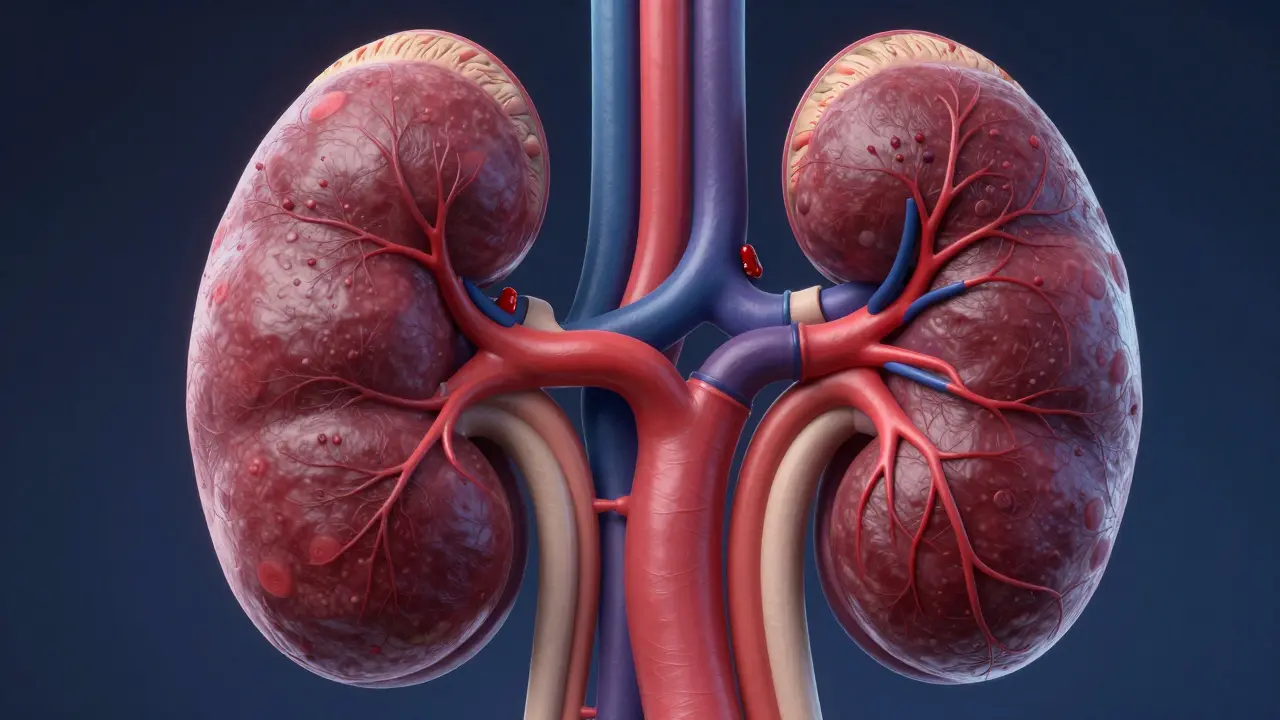
While they are incredibly effective, they work by blocking enzymes called COX-1 and COX-2. This process stops the production of prostaglandins, which are chemicals that cause pain. However, your kidneys actually rely on those same prostaglandins to keep blood flowing properly. When you block them, you essentially tell your kidneys to tighten their blood vessels, which can starve the organ of oxygen and lead to a sudden crash known as Acute Kidney Injury (or AKI), a sudden episode of kidney failure or kidney damage that happens within a few hours or a few days.
The two ways NSAIDs damage your kidneys
It is not a one-size-fits-all situation. NSAIDs generally hurt the kidneys through two very different biological paths. Most of the time, it is a plumbing problem; sometimes, it is an immune system mistake.
The Hemodynamic Pathway (Blood Flow)
This accounts for about 70-80% of NSAID-related kidney problems. Think of your kidneys like a filter that needs a constant, steady stream of blood to work. Prostaglandins act like the "open" sign for the blood vessels leading into the kidney. When NSAIDs block those prostaglandins, the blood vessels constrict. If you are already dehydrated or have low blood pressure, your kidneys can't compensate, and the glomerular filtration rate (GFR)-the speed at which your kidneys clean your blood-can drop by 20-40% in just 24 hours.
Acute Interstitial Nephritis (The Immune Response)
In about 5-15% of cases, the damage isn't about blood flow, but an allergic-like reaction. Acute Interstitial Nephritis (AIN) is an immune-mediated inflammation of the kidney's tubules. This is less common but often more dramatic, appearing as fever, rashes, or protein leaking into the urine.
| Drug Type | Typical Examples | Kidney Risk Level | Key Trade-off |
|---|---|---|---|
| Non-selective NSAIDs | Ibuprofen, Naproxen | High | Strong anti-inflammatory, higher AKI risk |
| Selective COX-2 Inhibitors | Celecoxib | Moderate | Slightly safer for kidneys, higher heart risk |
| Acetaminophen | Tylenol | Low | Safe for kidneys, no anti-inflammatory effect |
| Opioids | Morphine, Oxycodone | Low | Low direct renal toxicity, high addiction risk |
The "Triple Whammy": A Dangerous Combination
If you are taking medication for high blood pressure or heart failure, you need to be extremely careful. There is a phenomenon doctors call the "triple whammy." This happens when you combine three specific types of drugs:
- An ACE Inhibitor or ARB (like Lisinopril or Losartan)
- A Diuretic (water pills like Hydrochlorothiazide or Furosemide)
- An NSAID (like Ibuprofen)
Individually, these drugs are helpful. Together, they attack the kidney's ability to regulate pressure from three different angles. The ACE inhibitor relaxes the exit vessel of the kidney, the diuretic lowers the overall blood volume, and the NSAID constricts the entry vessel. This creates a perfect storm that can spike your risk of acute kidney injury by over 30%, especially in the first month of using the combination.
Who is most at risk?
Not everyone who takes an aspirin or ibuprofen will end up in the hospital. However, certain people are in the "danger zone." If you fall into these categories, you should talk to your doctor before taking any OTC pain reliever.
- The Elderly: Aging kidneys are naturally less efficient, making them more sensitive to blood flow changes.
- People with Pre-existing CKD: If your eGFR is already below 60, your risk of progression increases significantly. For those with an eGFR below 30, the American College of Rheumatology generally advises avoiding NSAIDs entirely.
- The Dehydrated: This includes people with stomach flus, heatstroke, or those who don't drink enough water during the day.
- Athletes: Running a marathon while taking NSAIDs is a risky move. Combining intense exercise, dehydration, and these drugs can slash renal blood flow by 30-50% beyond the normal exercise drop.

How to spot the warning signs
One of the biggest problems with NSAID-induced kidney injury is that it's a "silent" process. You might feel fine while your creatinine levels are climbing. However, there are a few red flags to watch for:
- Decreased Urine Output: You notice you're visiting the bathroom much less often than usual.
- Pedal Edema: Swelling in your ankles or feet, usually caused by the body holding onto fluid because the kidneys can't flush it out.
- Unexplained Fatigue: A sudden feeling of exhaustion that doesn't go away with rest.
If you experience these symptoms while taking pain meds, stop the medication and get a blood test immediately. A simple serum creatinine test can tell your doctor how your kidneys are handling the load.
Prevention strategies and safer alternatives
You don't have to live in pain, but you do need a smarter strategy for managing it. Here is how to protect your kidneys while staying comfortable.
The 4-Step Safety Approach
Following the KDIGO 2023 guidelines, you can minimize risk by:
- Getting a Baseline: Before starting any chronic pain regimen, have your doctor check your eGFR and urine albumin-to-creatinine ratio.
- Avoiding the "Triple Whammy": Never mix diuretics and ACE inhibitors with NSAIDs without strict medical supervision.
- Limiting Duration: Use NSAIDs for a maximum of 7-10 days. If the pain persists, seek a different treatment rather than continuing the pills.
- Regular Monitoring: If you must use these drugs long-term, get weekly or monthly renal panels to catch issues early.
Better Alternatives
If you need pain relief but are worried about your kidneys, consider these options:
- Topical NSAIDs: Creams and gels (like Diclofenac gel) have 70-80% lower systemic absorption than pills, which means significantly less stress on the kidneys.
- Acetaminophen: While it doesn't fight inflammation as well as ibuprofen, it is much gentler on the renal system.
- Hydration: If you are exercising, aim for 0.4-0.8 liters of water per hour. Staying hydrated can reduce the risk of NSAID-related injury by up to 60%.
Can a single dose of ibuprofen cause kidney failure?
For a healthy person with normal hydration, a single dose is rarely an issue. However, for people with pre-existing kidney disease or severe dehydration, even one dose can trigger an acute kidney injury (AKI). This is why personalized risk assessment is so important.
Is Celebrex safer for the kidneys than Advil?
Generally, yes. Selective COX-2 inhibitors like Celecoxib show a 20-30% lower risk of AKI compared to non-selective NSAIDs. However, this advantage disappears if your eGFR is already below 60 mL/min, and they may carry higher cardiovascular risks.
What is the "triple whammy" in kidney health?
The "triple whammy" refers to the combined use of an ACE inhibitor (or ARB), a diuretic, and an NSAID. This combination severely disrupts the kidney's autoregulation of blood pressure, significantly increasing the risk of sudden kidney failure.
How do I know if my NSAIDs are affecting my kidneys?
Watch for decreased urination, swelling in the ankles (edema), and unexplained fatigue. Because these symptoms can be subtle, the only definitive way to know is through blood tests measuring serum creatinine and calculating your eGFR.
Are topical NSAID creams safe for kidney patients?
Yes, topical NSAIDs are significantly safer. They are absorbed through the skin in much smaller amounts, which reduces the systemic concentration of the drug in the bloodstream and lowers the risk of AKI by 40-50% compared to oral tablets.
Nikita Shabanov
April 26, 2026 AT 13:36The mention of the triple whammy is a critical point here. In clinical practice, we often see patients who are unknowingly combining these medications, leading to rapid deterioration of renal function. It is always worth double-checking your current prescriptions with a pharmacist if you start taking OTC painkillers.
Daniel Runion
April 27, 2026 AT 06:42Wow!!! Just wow!!! As if the pharmaceutical industry doesn't already have enough blood on its hands!!! Everyone just blindly follows these 'guidelines' without questioning the systemic failure of the medical establishment!!! It is absolutely absurd that we are only hearing about this now!!!
Edwin Perez
April 27, 2026 AT 18:00Funny how they tell us to take these pills for everything but hide the fact that they wreck your organs. Probably just another way to keep us dependent on the healthcare system for dialysis later on. Typical.
Carol Yang
April 27, 2026 AT 18:53Good to know about the gels. I've used them before and they seem to work just as well for my knee pain without making me feel sluggish.
Vijay AGarwal
April 28, 2026 AT 00:14Absolute catastrophe if you ignore this! I have seen cases where a simple case of dehydration turned into full-blown renal failure because someone thought a couple of ibuprofen tablets would fix their muscle ache! It is a nightmare scenario that is completely avoidable with a bit of common sense and medical awareness!
Nila Sawyer
April 28, 2026 AT 05:53This is such an eye-opening piece of information and I really think we should all share it with our older relatives who might not be aware of how their blood pressure meds interact with these common painkillers 🌟 it is so important to stay proactive about our health and keep each other safe through knowledge and kindness 💖 keep spreading the light everyone! ✨
Brittney Prince
April 29, 2026 AT 00:26The whole 'science' behind these guidelines is probably just some corporate board deciding how to maximize profit from the next drug in line. Don't trust the labels. Just don't.
sachin singh
April 29, 2026 AT 12:03The detailed breakdown of the hemodynamic pathway provides a very clear understanding of the physiological mechanisms at play. It is quite encouraging to see a comprehensive guide that emphasizes preventative measures and safer alternatives for those with compromised renal function.