
NTI Drug List: Common Medications and Safety Guidelines
 Aug, 29 2026
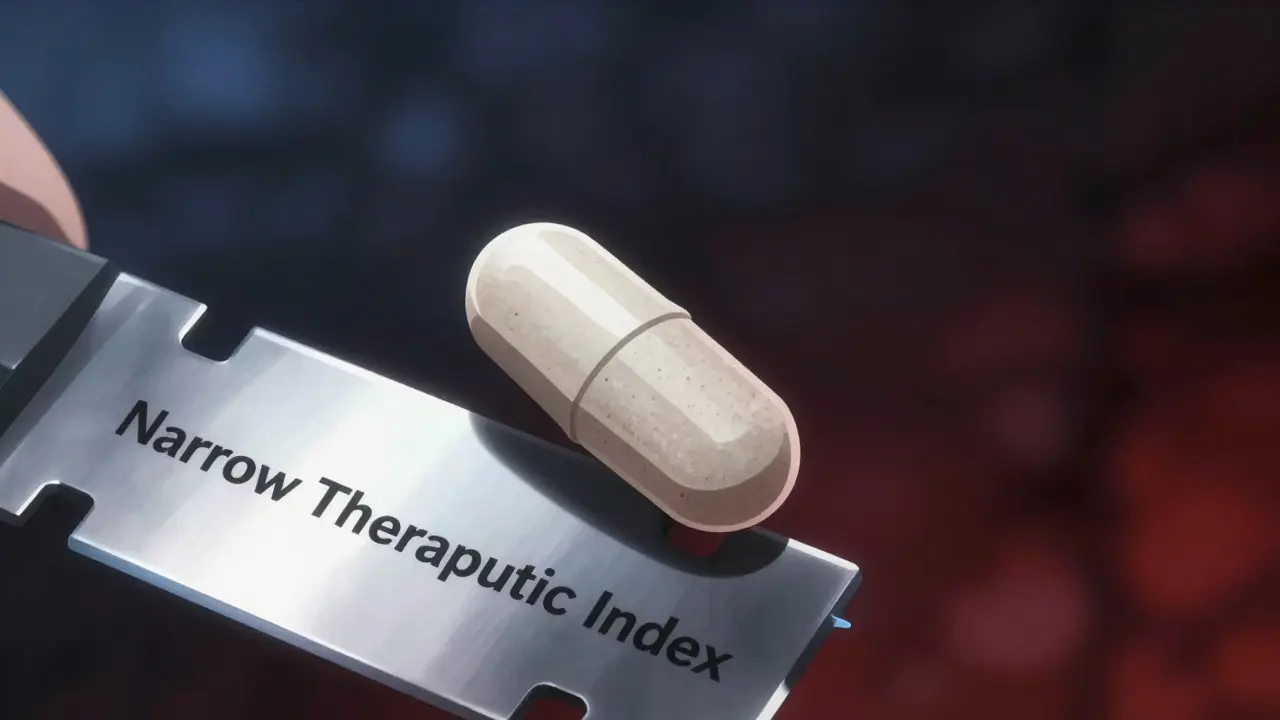
Imagine taking a pill for your heart or thyroid, only to find that a tiny shift in how your body absorbs it could mean the difference between feeling fine and ending up in the emergency room. This isn't hypothetical-it's the daily reality for millions of people taking Narrow Therapeutic Index (NTI) drugs. These medications have a razor-thin margin between the dose that helps you and the dose that harms you. Unlike common painkillers where missing one pill or taking an extra one rarely causes panic, NTI drugs demand precision. If you are prescribed one of these, understanding what they are and why they require special attention is crucial for your safety.
What Makes a Drug "Narrow Therapeutic Index"?
The term sounds technical, but the concept is straightforward. A Narrow Therapeutic Index drug is defined by the U.S. Food and Drug Administration (FDA) as a medication where small differences in dose or blood concentration may lead to serious therapeutic failures or adverse reactions that are life-threatening. Think of it like walking a tightrope. With most medications, the rope is wide; you can wobble a bit and still stay safe. With NTI drugs, the rope is thin. One slight step to the left might leave you untreated, while one step to the right could cause toxicity.
Technically, this means there is less than a twofold difference between the minimum toxic concentration and the minimum effective concentration in your blood. For example, with digoxin, used for heart conditions, the therapeutic range is incredibly narrow-between 0.5 and 2.0 ng/mL. A level of 2.1 ng/mL might seem insignificant on paper, but in your body, it could trigger dangerous arrhythmias. This sensitivity is why doctors monitor blood levels regularly for patients on these meds.
The Core List: Common NTI Medications You Might Know
While there is no single, universally fixed list that never changes, several authoritative bodies, including the FDA and various state pharmacy boards, maintain recognized compilations. These lists often overlap because certain drug classes inherently carry higher risks. Here are the most common categories and specific drugs you are likely to encounter.
| Drug Class | Common Examples | Typical Therapeutic Range/Monitoring Metric | Risk of Imbalance |
|---|---|---|---|
| Anticoagulants | Warfarin | INR 2.0-3.0 | Bleeding if too high; clots if too low |
| Thyroid Hormones | Levothyroxine | TSH 0.5-4.5 mIU/L | Metabolic disruption, heart strain |
| Immunosuppressants | Tacrolimus, Cyclosporine | Tacrolimus: 5-15 ng/mL | Organ rejection vs. kidney damage |
| Antiepileptics | Phenytoin, Carbamazepine | Phenytoin: 10-20 mcg/mL | Seizures vs. neurological toxicity |
| Psychiatric Meds | Lithium | 0.6-1.2 mmol/L | Mania/depression vs. organ toxicity |
| Cardiac Glycosides | Digoxin | 0.5-2.0 ng/mL | Ineffective vs. fatal arrhythmia |
Why Generic Substitution Can Be Tricky
You might wonder, "If I switch from brand-name Levothyroxine to a generic version, will it matter?" For standard drugs, bioequivalence standards allow generics to vary within 80% to 125% of the original drug’s absorption rates. However, for NTI drugs, the FDA requires stricter standards. The confidence intervals for peak concentration and total exposure must fall within 90.00% to 111.11% of the reference product. Even with these tighter rules, real-world experiences show that switching manufacturers can sometimes cause fluctuations in blood levels.
A notable case shared by pharmacists involved a patient whose Thyroid Stimulating Hormone (TSH) levels jumped from a healthy 1.2 to a concerning 8.7 after switching generic levothyroxine brands. It took three months of careful titration to stabilize. This doesn't mean generics are unsafe-they undergo rigorous testing-but it highlights why consistency matters. If you are stable on a specific brand or generic manufacturer, changing suppliers without consulting your doctor can introduce unnecessary variables into a delicate balance.

Monitoring Protocols: How Doctors Keep You Safe
Because the margin for error is so small, "set it and forget it" dosing rarely works for NTI drugs. Regular monitoring is non-negotiable. The frequency depends on the drug and your health status. For instance, when starting warfarin, a blood thinner, guidelines suggest checking the International Normalized Ratio (INR) every 3-5 days until stable, then weekly, and eventually monthly. Once stable, some patients use home INR monitors, which empower them to adjust doses based on immediate feedback.
For transplant patients taking immunosuppressants like tacrolimus, monitoring is even more intense during the first few months post-surgery, often requiring trough level checks three times a week. These tests measure the lowest concentration of the drug in the blood just before the next dose. Missing a monitoring appointment isn't just an inconvenience; it’s a risk. Studies indicate that about 32% of lithium patients miss their scheduled blood tests, increasing their vulnerability to side effects.
Emerging Trends: Newer Drugs Entering the NTI Category
The landscape of NTI drugs is evolving. While older staples like warfarin and phenytoin remain central, newer targeted cancer therapies are increasingly classified as having narrow therapeutic indices. Drugs like axitinib and ponatinib, used in oncology, require precise dosing because their efficacy drops sharply below certain thresholds, while toxicity spikes above them. The FDA has also been reviewing newer anticoagulants, such as apixaban and rivaroxaban. While generally considered safer than warfarin, the Institute for Safe Medication Practices still flags them for careful management due to bleeding risks at higher exposures.
This expansion reflects a broader trend toward personalized medicine. As treatments become more targeted, the window for safe administration often narrows. Healthcare providers are now using AI-driven tools to predict optimal doses based on genetic markers, aiming to reduce the time it takes to reach therapeutic levels. Preliminary results from NIH-funded studies on pharmacogenomic-guided dosing for warfarin have shown a 40% reduction in time to reach the correct blood level, hinting at a future where NTI management becomes less trial-and-error and more predictive.

Practical Tips for Patients on NTI Drugs
If you are prescribed an NTI drug, you don't need to live in fear, but you do need to be proactive. Here are concrete steps to manage your treatment effectively:
- Stick to one pharmacy: Try to fill all prescriptions at the same location. This ensures the pharmacist tracks your history and knows which manufacturer supplies your meds.
- Do not skip blood tests: Schedule your lab appointments immediately upon prescription. Treat them as critical as the medication itself.
- Be cautious with supplements: St. John’s Wort, for example, can drastically lower levels of many NTI drugs like cyclosporine and warfarin. Always check with your pharmacist before adding vitamins or herbal remedies.
- Report symptoms early: If you feel unusually tired, dizzy, or notice bruising, contact your provider. Don’t wait for the next scheduled test if something feels off.
- Keep a log: Note any changes in diet, stress, or other medications. Warfarin users, for instance, know that consistent Vitamin K intake is vital. Sudden changes in leafy green consumption can alter INR levels.
Frequently Asked Questions
Is aspirin considered an NTI drug?
No, aspirin is generally not classified as a Narrow Therapeutic Index drug. While it has side effects like gastrointestinal bleeding, its therapeutic window is wider compared to drugs like warfarin or digoxin. Standard doses are usually well-tolerated across a broad range of patients without needing frequent blood level monitoring.
Can I switch generic brands of my NTI medication?
You should consult your doctor or pharmacist before switching generic manufacturers. Although generics meet strict bioequivalence standards for NTI drugs, individual responses can vary. Switching brands may require re-testing blood levels to ensure the new formulation maintains therapeutic effectiveness without causing toxicity.
Why does warfarin require so much monitoring?
Warfarin interacts with many foods, other medications, and even your own liver enzyme activity. Its effect on blood clotting is measured by the INR, which can fluctuate significantly with minor changes. Because both under-dosing (risk of stroke/clot) and over-dosing (risk of severe bleeding) are dangerous, frequent INR checks are essential to keep the dosage precise.
Are all antibiotics NTI drugs?
Most common antibiotics like amoxicillin or azithromycin are not NTI drugs. However, aminoglycosides like gentamicin and vancomycin are considered NTI because they can cause kidney damage or hearing loss if blood levels get too high. These require specific peak and trough blood level monitoring during treatment.
What happens if I miss a dose of an NTI drug?
It depends on the specific drug and how long it has been since the missed dose. For some, doubling up can lead to toxicity; for others, waiting is safer. Never guess. Check the patient information leaflet or call your pharmacist immediately for instructions tailored to your specific medication and timing.
hareesh kumar
August 31, 2026 AT 06:12you think its just about the pill size or brand name but really its a massive conspiracy by big pharma to keep us dependent on their specific proprietary blends because if they let generic manufacturers make it exactly the same way then why would we need all these blood tests every few weeks which costs money and time that regular people like me do not have so i am convinced they are intentionally making the absorption rates slightly different just so they can bill insurance for more monitoring visits and honestly this whole narrow therapeutic index thing is just a fancy term for drugs that are basically poison if you sneeze wrong
i remember when my uncle took levothyroxine from a different company and suddenly he felt like garbage for months until he went back to the original brand and doctors acted like it was normal but it clearly shows that the system is rigged against the patient who just wants to save a few bucks at the pharmacy counter
Vivek Chaturvedi
September 1, 2026 AT 05:57people ignore the supplements warning at their own peril st johns wort is not some harmless herbal tea it messes with liver enzymes and ruins warfarin levels completely stop being lazy with your health and actually read the leaflet instead of relying on internet anecdotes
Crystal Torres
September 2, 2026 AT 21:30The distinction between standard bioequivalence and the stricter NTI standards is vital for patient safety. It is encouraging to see healthcare providers adopting AI-driven tools for pharmacogenomic-guided dosing as this reduces the trial-and-error period significantly. Consistency in medication sourcing remains the most practical advice for patients managing these delicate balances.
Patrick van der Velde
September 4, 2026 AT 02:58While the article presents a decent overview, it lacks the nuance required for true clinical mastery. One must consider the genetic polymorphisms in CYP enzymes that dictate metabolism, not merely rely on generic substitution warnings. The average person fails to grasp the complexity of hepatic first-pass metabolism, leading to unnecessary anxiety over minor formulation changes that are statistically insignificant for the majority of the population.
Furthermore, the mention of home INR monitors is somewhat misleading without discussing the calibration issues inherent in consumer-grade devices. True medical precision requires laboratory-grade analysis, not a finger-prick device bought at a drugstore. We should elevate our understanding beyond basic adherence tips and delve into the pharmacokinetic realities that govern these therapies.
fred eden
September 4, 2026 AT 07:26This is such helpful info! 🙌 I take lithium and sometimes forget how important those blood tests are 😅 Thanks for the reminder to stick to one pharmacy too 💊❤️
Sarah Kinch
September 6, 2026 AT 06:54typical oversimplification. you act like switching brands is always dangerous but half the time its just placebo effect or diet changes. people want to blame the generic manufacturer because its easier than admitting they ate too much kale last week. its sad really that we need articles like this to tell adults to take their meds consistently.
Lolo Del
September 6, 2026 AT 17:12Hey there! Just wanted to add that while consistency is key, don't panic if your pharmacy switches suppliers. Most modern generics are rigorously tested. If you feel off, just call your doc, but don't stress too much! Friendly advice: keep that log mentioned in the post, it's super useful for spotting patterns.
Tobi Oyewole
September 7, 2026 AT 09:38I appreciate the balanced perspective here. While vigilance is necessary, we must avoid fostering excessive fear among patients. The emergence of personalized medicine offers hope, yet we must respect the boundaries of current scientific consensus. It is respectful to acknowledge that while individual responses vary, the regulatory frameworks exist to protect us, even if imperfectly.
We should strive for assertive communication with our providers rather than passive acceptance or paranoid speculation. A calm, informed approach yields better outcomes than reactive emotional distress.
Venkatesan V.K.
September 8, 2026 AT 22:33The section on emerging trends feels rushed and emotionally hollow. It lists drugs without conveying the sheer terror of organ rejection versus toxicity. This text tries to be informative but fails to capture the human cost of missing a single dose. It is dry and unengaging.
Gurjit Singh
September 10, 2026 AT 12:29Morally speaking, it is unacceptable that patients are left to navigate this complexity alone. The healthcare system has a duty to provide clear guidance, not just hand out pamphlets. When we talk about 'narrow therapeutic index,' we are talking about lives hanging in the balance due to systemic inefficiencies. We must demand better support structures, not just better pills.