
Pharmaceutical Equivalence for Generics: What It Means in Practice
 May, 12 2026
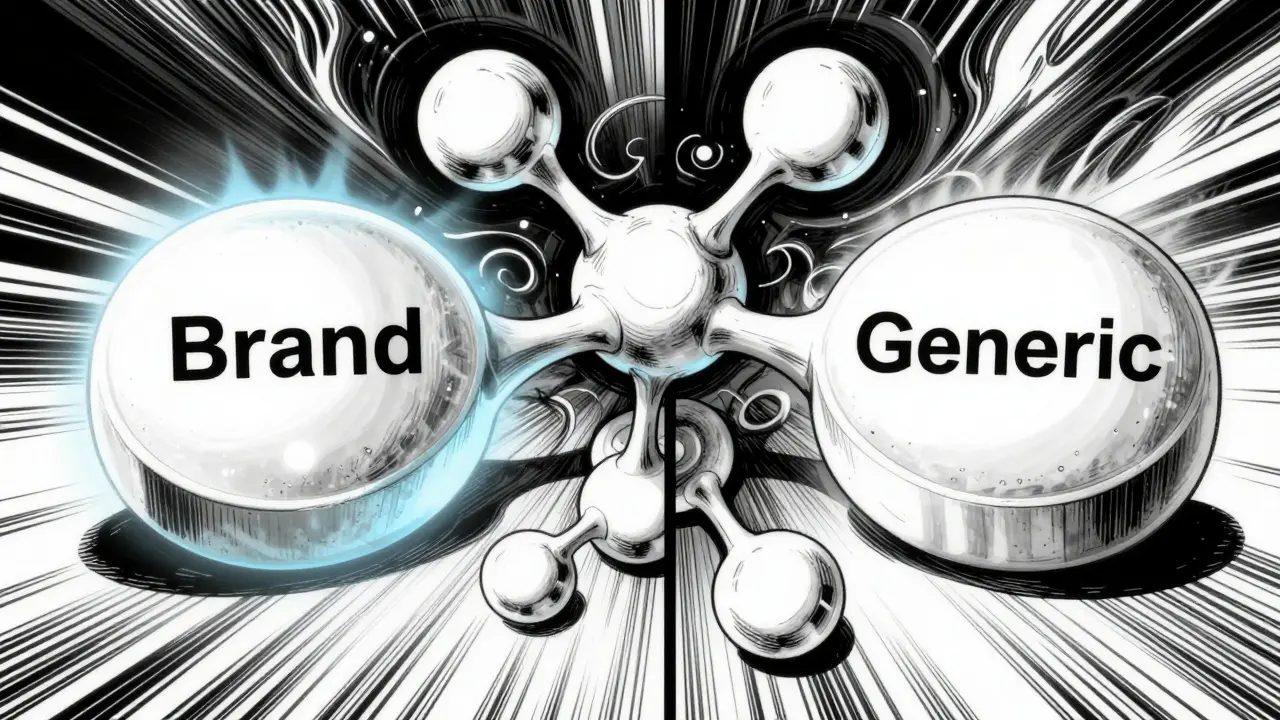
When you pick up a prescription at the pharmacy, there is a high chance you are getting a generic drug. In the United States, roughly 90% of prescriptions are filled with generics. But what actually makes that pill "equivalent" to the expensive brand-name version? The answer lies in a specific regulatory concept called pharmaceutical equivalence.
This isn't just about saving money-though it does save the healthcare system trillions. It’s about safety and consistency. Pharmaceutical equivalence ensures that the generic drug you take contains the exact same active ingredient, in the same strength, and in the same form as the original brand-name drug. However, meeting this standard is only the first step in a complex approval process. Let’s break down what this means for patients, pharmacists, and doctors.
The Core Definition of Pharmaceutical Equivalence
To understand how generics work, we have to look at the rules set by the U.S. Food and Drug Administration (FDA). The FDA defines pharmaceutical equivalence very specifically. For two drug products to be considered pharmaceutical equivalents, they must meet four strict criteria:
- Same Active Ingredient: They must contain the identical active pharmaceutical ingredient (API).
- Same Dosage Form: If the brand name is a tablet, the generic must be a tablet. If it’s an injectable solution, the generic must also be an injectable solution.
- Same Route of Administration: Both must be taken the same way-oral, topical, intravenous, etc.
- Same Strength: They must contain the same amount of the active ingredient (e.g., 500 mg).
These drugs must also meet the same compendial standards for quality, purity, and identity. This framework was established by the Drug Price Competition and Patent Term Restoration Act of 1984, commonly known as the Hatch-Waxman Act. This legislation created the modern pathway for generic approval, allowing manufacturers to prove their product matches the reference-listed drug without repeating costly clinical trials.
Crucially, pharmaceutical equivalence does allow for differences in inactive ingredients. These excipients include fillers, binders, dyes, and coatings. A generic pill might be a different color or shape than the brand-name version, but chemically, the medicine inside is identical.
How Manufacturers Prove Equivalence
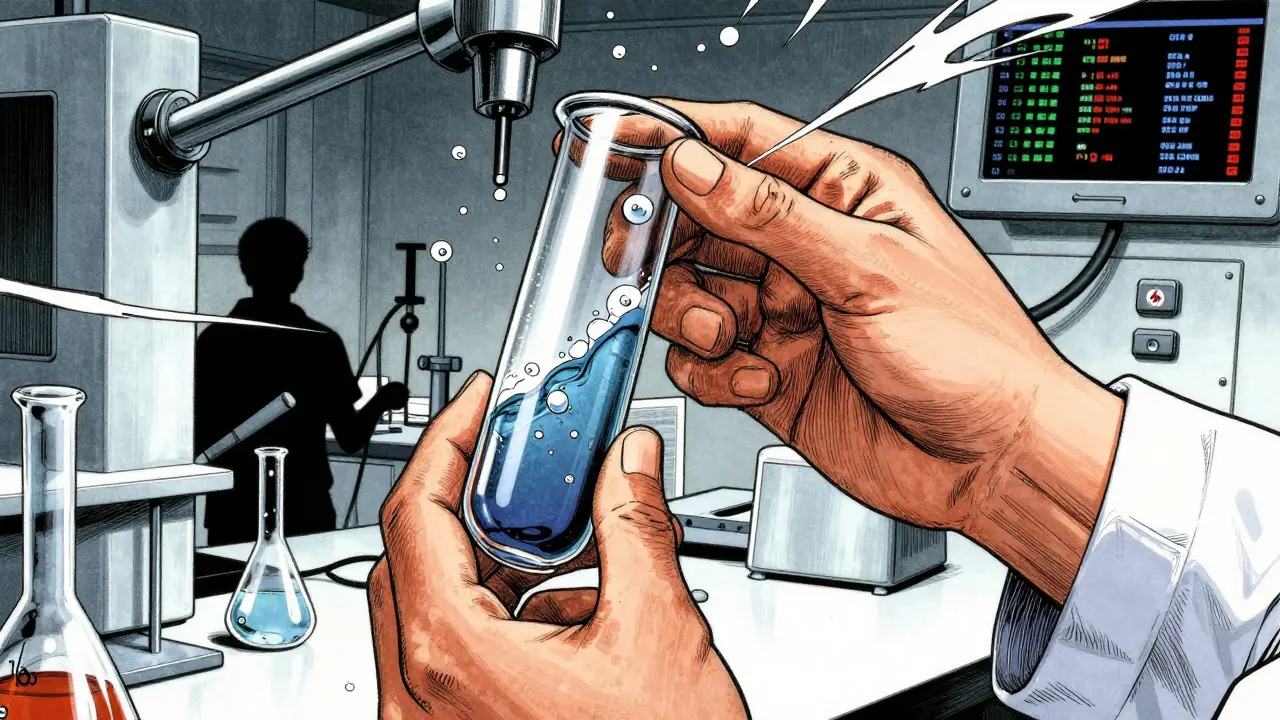
Generic manufacturers don’t just claim their product is equivalent; they have to prove it through rigorous testing submitted via an Abbreviated New Drug Application (ANDA). This process involves several key analytical steps:
- HPLC Analysis: High-performance liquid chromatography is used to verify that the API content is within ±5% of the labeled amount.
- Dissolution Testing: This ensures the generic releases the drug into the body at a comparable rate to the brand-name product.
- Stability Testing: Conducted under ICH Q1A(R2) guidelines, this confirms the generic has a shelf life equivalent to the reference product.
According to FDA guidance updated in January 2023, these tests ensure that the physical and chemical characteristics of the generic match the reference-listed drug. This data forms the foundation for the next stage of evaluation: bioequivalence.
The Three Tiers of Drug Equivalence
Pharmaceutical equivalence is just the starting point. The FDA uses a three-tiered framework to evaluate generics. Understanding the difference between these tiers is vital for interpreting drug labels and substitution policies.
| Tier | Focus | Key Requirement | Clinical Implication |
|---|---|---|---|
| Pharmaceutical Equivalence | Physical/Chemical composition | Identical API, dosage form, strength | Ensures basic structural similarity |
| Bioequivalence | Biological performance | AUC and Cmax within 80%-125% of reference | Ensures drug reaches bloodstream similarly |
| Therapeutic Equivalence | Clinical outcome | Rated 'A' in the Orange Book | Expected to have same clinical effect and safety profile |
Bioequivalence requires that the generic delivers the same amount of active ingredient into the patient’s bloodstream at the same rate. Pharmacokinetic studies show that the Area Under the Curve (AUC) and Maximum Concentration (Cmax) must fall within 80%-125% of the reference product at a 90% confidence interval. Therapeutic equivalence is the final goal, indicating that the generic can be expected to have equivalent clinical effects and no significant difference in adverse effects.
Practical Implications for Healthcare Providers
For pharmacists and doctors, pharmaceutical equivalence is the baseline for substitution. However, real-world practice involves more nuance. While the active ingredient is identical, differences in inactive ingredients (excipients) can occasionally cause issues.
A 2022 survey published in the Journal of the American Pharmacists Association found that 87% of pharmacists reported at least one patient experiencing minor side effects due to excipient differences in generics. Fortunately, only 2.3% of these cases required switching back to the brand-name product. Common culprits include lactose intolerance, gluten sensitivity, or allergies to certain dyes.
Pharmacists rely on the FDA’s electronic Orange Book, which is updated monthly, to check therapeutic equivalence ratings. Products rated "AB" are considered both pharmaceutically and bioequivalent, making them safe for automatic substitution. As of June 2024, the Orange Book listed 15,372 approved generic drug products, with 12,845 rated "AB."
Patient Misconceptions and Education
One of the biggest hurdles in generic adoption is patient misunderstanding. A 2023 Kaiser Family Foundation survey revealed that 42% of patients incorrectly believed generic drugs contain only 80% of the active ingredient. This confusion stems from misinterpreting the 80-125% bioequivalence range, which refers to variability in how the body processes the drug, not the amount of medicine in the pill.
Healthcare providers play a critical role in correcting this misinformation. Training materials from the FDA’s Generic Drug User Fee Amendments (GDUFA) program emphasize that pharmaceutical equivalence guarantees identical active ingredient content. Explaining this distinction can alleviate patient anxiety and improve adherence to cost-effective treatments.
Economic Impact and Market Dynamics
The economic benefits of pharmaceutical equivalence are staggering. The U.S. generic drug market was valued at $135.7 billion in 2023. According to the Generic Pharmaceutical Association (GPhA), pharmaceutical equivalence standards have saved the U.S. healthcare system $2.2 trillion from 2009 to 2023 alone. On average, each generic prescription saves approximately $1,008 compared to its brand-name counterpart.
This cost savings drives widespread adoption. Approximately 90% of all prescriptions in the U.S. are filled with generics. Regulatory harmonization efforts through the International Council for Harmonisation (ICH) have aligned these standards across 50 countries, though some regions, like the European Medicines Agency, require additional in vitro equivalence demonstrations for modified-release products.
Challenges with Complex Generic Drugs
While simple tablets and capsules are straightforward to evaluate, complex drug products pose unique challenges. Inhalers, topical steroids, and narrow therapeutic index (NTI) drugs like warfarin require extra scrutiny. Dr. Aaron Kesselheim of Harvard Medical School noted in a 2016 study that pharmaceutical equivalence may not adequately predict therapeutic outcomes for these complex delivery mechanisms.
In response, the FDA launched the Complex Generic Drug Product Development program in 2023. This initiative enhances pharmaceutical equivalence requirements for drugs with complex delivery systems, requiring additional physicochemical characterization beyond standard ANDA submissions. Future developments, including proposed rules issued in May 2024, aim to incorporate advanced analytical methods like Raman spectroscopy and X-ray powder diffraction to better characterize solid-state properties.
Future Directions in Generic Regulation
The landscape of generic drug regulation continues to evolve. The FDA’s GDUFA III provisions, implemented in October 2022, have streamlined the review of pharmaceutical equivalence data, reducing average approval times from 24 months to 18 months. The FDA’s 2024 Strategic Plan for Generic Drugs identifies improving standards for complex products as a priority, allocating $15 million for research on advanced analytical methods.
Industry analysts at Evaluate Pharma predict that by 2027, pharmaceutical equivalence standards will increasingly rely on sophisticated techniques to ensure even higher levels of consistency. Additionally, the American Society of Health-System Pharmacists advocates for greater transparency in excipient disclosure, arguing that while pharmaceutical equivalence ensures identical active ingredients, clearer labeling of inactive components would further improve patient care for those with specific sensitivities.
What is the difference between pharmaceutical equivalence and bioequivalence?
Pharmaceutical equivalence focuses on the physical and chemical composition of the drug, ensuring it has the same active ingredient, dosage form, and strength as the reference product. Bioequivalence goes a step further, demonstrating that the generic drug delivers the same amount of active ingredient into the bloodstream at the same rate as the brand-name drug, typically verified through pharmacokinetic studies.
Can generic drugs have different inactive ingredients?
Yes. Pharmaceutical equivalence allows for differences in inactive ingredients, such as fillers, binders, and dyes. These differences can result in variations in color, shape, or taste, but they do not affect the drug's active medicinal component. However, patients with specific allergies or sensitivities should always inform their pharmacist.
What does an 'AB' rating in the FDA Orange Book mean?
An 'AB' rating indicates that the generic drug is both pharmaceutically and bioequivalent to the reference-listed brand-name drug. It is considered therapeutically equivalent, meaning it can be expected to have the same clinical effect and safety profile, making it suitable for automatic substitution in most pharmacies.
Why are narrow therapeutic index drugs treated differently?
Narrow therapeutic index (NTI) drugs, such as warfarin, have a small margin between effective dose and toxic dose. Even minor variations in bioavailability can lead to significant clinical consequences. Therefore, while they may meet pharmaceutical equivalence standards, they often require additional scrutiny and careful monitoring when switching between brands or generics.
How much money do generic drugs save the healthcare system?
From 2009 to 2023, pharmaceutical equivalence standards helped save the U.S. healthcare system approximately $2.2 trillion. On average, each generic prescription costs about $1,008 less than its brand-name counterpart, contributing to the fact that 90% of prescriptions in the U.S. are now filled with generics.
Derick Garcia
May 14, 2026 AT 05:05It is absolutely preposterous to suggest that pharmaceutical equivalence is merely a bureaucratic formality designed to appease the masses. The very notion that one can substitute a meticulously crafted brand-name compound with a generic equivalent without considering the subtle, yet profound, philosophical implications of chemical identity is an affront to scientific rigor. You speak of 'equivalence' as if it were a static state, when in reality, it is a dynamic interplay of molecular structures that defies such simplistic categorization. The FDA's criteria are not just rules; they are the fragile scaffolding holding back the chaos of unregulated medical experimentation. To ignore this is to invite anarchy into our healthcare system.
Abhimanyu Pandey
May 15, 2026 AT 04:30The real issue here isn't the chemistry... it's the control! They want you to believe in these 'standards' so you don't question who is really pulling the strings behind the scenes. Think about it. Why do they need all these tests? To keep us dependent on their narrative. I have seen things. I know what happens when you trust the big pharma machine. It is a trap. A beautiful, pill-shaped trap. Do not be fooled by their fancy graphs and charts. They are hiding something. Always remember: if it looks too good to be true, it probably is. Stay vigilant. Stay suspicious. Trust no one.
Dat Alexander
May 17, 2026 AT 03:58look i get why people worry but we gotta respect the process here its not just about money its about access for everyone we need to make sure nobody feels left out when it comes to health care its important to listen to each other and understand where others are coming from even if we disagree the science is there for a reason lets keep the conversation open and kind
Sarah Grenberg
May 17, 2026 AT 06:35This is such a crucial topic! We often overlook how much effort goes into ensuring safety behind the scenes. It is truly inspiring to see how regulations protect us every single day. Let’s continue to support transparency in healthcare because knowledge is power! 🌟
Brian Lee
May 17, 2026 AT 12:51Good info thanks for sharing i learn something new everyday its cool how they test the pills now i feel better about taking my meds
Jake Williams
May 18, 2026 AT 09:51Oh please. Another article praising the American system while ignoring the fact that our neighbors across the border pay half the price for the exact same thing. It is pathetic that we celebrate 'savings' when we are still being ripped off by insurance companies. The generics are fine, sure, but the whole structure is broken. Wake up sheeple.
Nilesh Mandani
May 18, 2026 AT 14:59Interesting perspective on the regulatory side. In India, we see similar challenges with quality control in smaller manufacturers. It is a global issue really. The key is consistent enforcement rather than just having laws on paper. What do you think about international harmonization efforts?
Guy Birtwhistle
May 19, 2026 AT 05:49Sure, let’s pretend that 'pharmaceutical equivalence' means anything when your pharmacist swaps your medication without asking. I had a reaction to a dye once, thank you very much. Maybe read the label before handing over the bag. Not everything is black and white folks.
Kenny Pines
May 19, 2026 AT 07:21Haha, nice try trying to scare everyone with jargon 😂 But seriously, generics save lives by making meds affordable. Don’t hate the player, hate the game! 💊✨
Liz and Nick
May 20, 2026 AT 18:59i dont get why people stress so much about this stuff just take the pill and move on life is too short to worry about fillers honestly its exhausting reading all these long explanations
Brian Fibelkorn
May 21, 2026 AT 03:11The epistemological framework surrounding bioequivalence is fundamentally flawed when applied to narrow therapeutic index drugs. One cannot simply dismiss the pharmacokinetic variability as negligible. The assumption of interchangeability is a dangerous oversimplification that ignores the complex interplay of excipients and absorption rates. We must demand higher standards of proof before accepting such equivalencies as absolute truths.
David Rangkhal
May 22, 2026 AT 19:47Let’s keep the peace here everyone has valid points. Generics are great for most people but we should always listen to our bodies. No need to fight over pills 😊🙏
Chelsea Grdina
May 23, 2026 AT 23:10I love how this discussion highlights the intersection of policy and personal health! In Canada, we often debate similar issues regarding drug coverage and availability. It is fascinating to see how different countries approach the balance between cost and quality. I think it is important to recognize that while the active ingredient might be the same, the experience of accessing care varies greatly depending on where you live. We should advocate for systems that prioritize both affordability and rigorous testing standards for all patients regardless of their location or socioeconomic status because health is a universal right that deserves thoughtful consideration and robust protection mechanisms.