
Pharmacy Errors with Generics: How to Prevent and Fix Common Mistakes
 Jan, 28 2026
Every year, generic medication errors put thousands of patients at risk-not because the drugs don’t work, but because of simple, avoidable mistakes in how they’re prescribed, dispensed, or explained. Generics make up 90% of prescriptions in the U.S., and they’re just as safe and effective as brand-name drugs when handled correctly. But when pharmacists, prescribers, or patients get confused about which version is being given, things go wrong. A patient might get a blue pill one week and a white one the next, think it’s a different medicine, and stop taking it. Or worse, they might be given the wrong dose because the label didn’t match the prescription. These aren’t rare events. In community pharmacies, dispensing errors happen about 1.4 times for every 10,000 prescriptions. And for generics? The risk is higher because of how they’re made, labeled, and managed.
Why Generics Are More Error-Prone
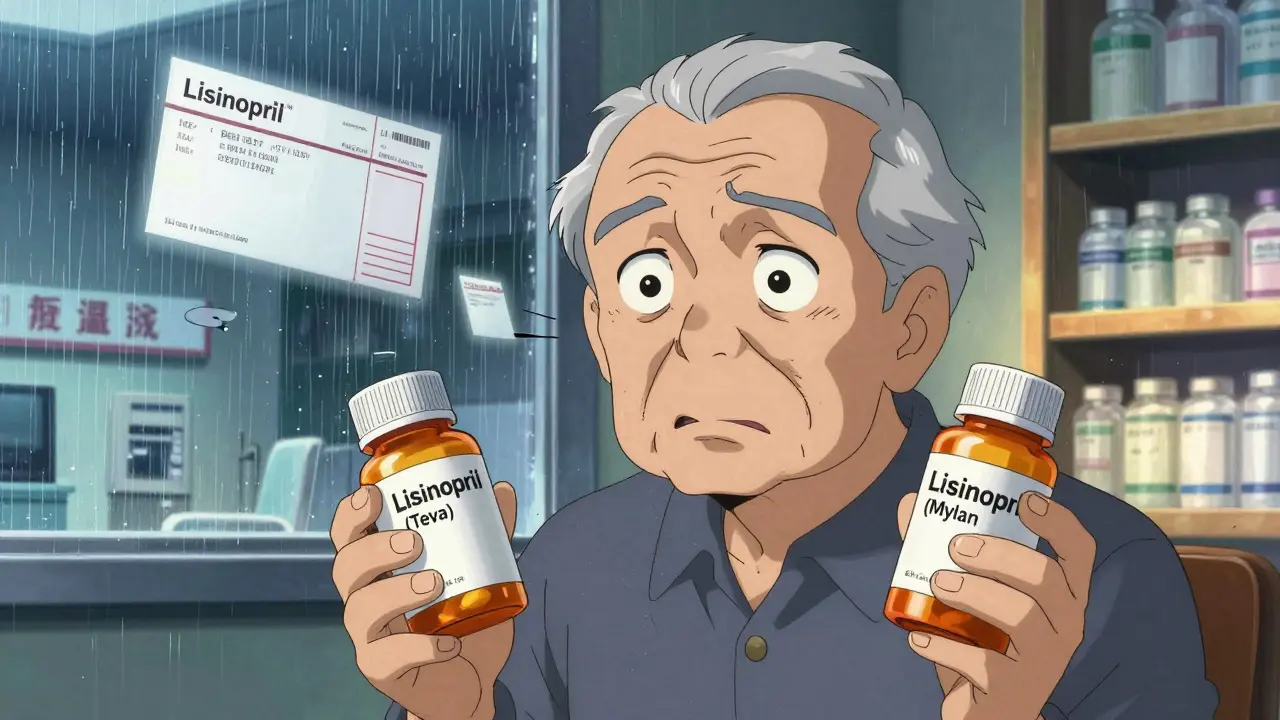
Generics aren’t copies-they’re legally required to be bioequivalent. That means they deliver the same active ingredient at the same rate and amount as the brand-name drug, within an 80%-125% absorption range. Sounds solid, right? But here’s the catch: the FDA doesn’t control what the pill looks like. One manufacturer’s 10mg lisinopril might be a small white oval. Another’s could be a large blue capsule. Same drug. Different shape, color, size, even the imprint on the pill. Patients notice. And when they do, they panic. They think they’ve been given the wrong medicine. That’s the first kind of error: perceived error. It leads to non-adherence, which can be just as dangerous as a real mistake.
Then there’s the real stuff. Look-alike, sound-alike names. A patient gets prescribed glimepiride but the pharmacist pulls glipizide because they look similar on the screen. Or a prescriber writes “hydrochlorothiazide 25mg” but the system auto-fills a different generic version that’s only available in 12.5mg tablets. The pharmacist doesn’t catch it because the system doesn’t flag it. These aren’t hypotheticals. In one documented case, a patient was given a twice-weekly dose of a generic anticoagulant instead of twice-daily-because the label printed by the wrong manufacturer used the same abbreviation for both. The patient ended up in the hospital with a dangerous bleed.
And it’s not just the pills. Inactive ingredients matter too. One generic version of levothyroxine might use lactose as a filler. Another might use corn starch. For patients with allergies or intolerances, that difference can trigger a reaction. Pharmacists don’t always know which manufacturer’s version they’re dispensing unless they check the bottle or the system. And many don’t.
The Most Common Generic Errors
Based on data from 40 U.S. pharmacies handling over 400,000 prescriptions, the top five generic-related errors are:
- Dosage errors (37.4%) - Wrong strength, wrong frequency (e.g., daily vs. weekly)
- Strength discrepancies (19.2%) - Prescribed 10mg, dispensed 5mg because the system defaulted to the wrong generic formulation
- Dispensing form issues (14.4%) - Pill vs. capsule vs. tablet mismatch, or wrong package size
- Quantity mistakes (11.3%) - Dispensing 30 pills instead of 90 because the generic bottle label didn’t match the prescription
- Wrong manufacturer substitution - Patient gets a new generic brand without warning, leading to confusion or perceived loss of efficacy
These aren’t random. They happen because of gaps in technology, training, and communication. A 2023 survey found that 42% of pharmacists were working with outdated drug databases that didn’t reflect the latest generic formulations. That means when they looked up “metformin,” they might not see that the new version from Manufacturer X is now scored for splitting, while Manufacturer Y’s isn’t. If a prescriber doesn’t specify, the pharmacist picks the cheapest one-and the patient gets confused.
How Technology Can Prevent These Mistakes
Technology isn’t magic-but when used right, it’s the best tool we have. Computerized Physician Order Entry (CPOE) systems cut medication errors by 55% in hospitals. Bar code scanning at the pharmacy counter cuts adverse events by half. Clinical Decision Support Systems (CDSS) can flag when a generic substitution might conflict with a patient’s allergy, kidney function, or other meds.
But here’s the problem: most community pharmacies don’t have these systems. Only 35-40% do. Hospitals? 68%. That’s a huge gap. And even when they’re in place, they’re not perfect. Alert fatigue is real. If your system pops up 20 warnings a shift, and 18 of them are false alarms, you start ignoring them. That’s why the WHO warns against overloading systems with “stop alerts.”
What works better? Smart, targeted alerts. For example, if a patient has been on Brand X’s lisinopril for years, and the system sees a new generic from Manufacturer Z being dispensed for the first time, it should trigger a patient counseling alert-not just a generic substitution warning. That way, the pharmacist knows to sit down and explain: “This is still lisinopril, just made by a different company. The pill looks different, but it’s the same medicine.”
AI-powered CDSS tools are starting to emerge. In pilot programs, they’ve reduced errors by an extra 22% by learning which patients are more likely to have issues with substitutions based on their history, age, or language. A 72-year-old woman who speaks limited English? She’s more likely to miss the change. The system learns that and nudges the pharmacist to use pictures or simple language.
Human Checks Still Matter-The 8 R’s and Counseling
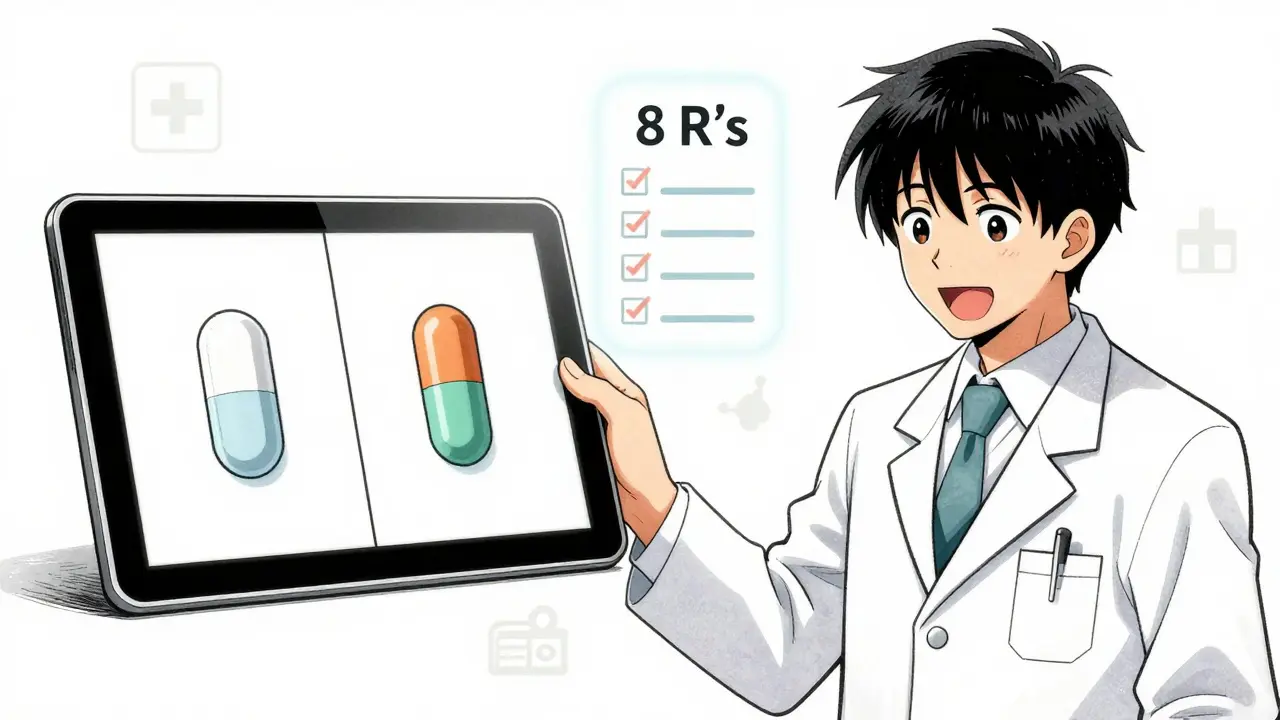
No system replaces a trained pharmacist. That’s why the “8 R’s” still matter:
- Right patient - Double-check ID, birth date, address
- Right drug - Confirm active ingredient, not just brand name
- Right dose - Match the strength to the prescription
- Right route - Is this supposed to be swallowed, injected, or applied?
- Right time - Once daily? Twice a week? Don’t assume
- Right documentation - Record every substitution
- Right reason - Why was this generic chosen? Insurance? Availability?
- Right response - Did the patient understand? Did they ask questions?
And then there’s counseling. Mandatory counseling for first-time generic fills catches 12-15% of potential errors. That’s huge. But in busy retail pharmacies, it’s often skipped. Five minutes per patient sounds like a lot when you’re filling 80 prescriptions a day. But think about this: one error can lead to a hospital stay that costs $15,000. Counseling costs $25 in staff time. The math isn’t even close.
Some pharmacies now use digital counseling tools-tablet-based videos showing what the pill looks like, how to take it, and why the color changed. One chain in the Midwest saw a 30% drop in return visits after rolling this out. Patients didn’t call back confused. They didn’t stop taking their meds. They felt informed.
What Pharmacists Can Do Today
You don’t need a $75,000 system to reduce errors. Start here:
- Update your drug reference - Buy or subscribe to Drug Facts and Comparisons or Epocrates. Update it yearly. Outdated info is the #1 reason for form errors.
- Label every generic - Always write the manufacturer name on the bottle or sticker. “Lisinopril (Teva)” is better than just “Lisinopril.”
- Ask patients - “Have you taken this medicine before?” If they say no, explain the change. If they say yes, ask: “Does this pill look different?” That’s your cue to double-check.
- Use the “two-check” rule - One pharmacist fills. A second verifies. Especially for high-risk drugs like warfarin, insulin, or seizure meds.
- Track your own errors - Even if your pharmacy doesn’t have a formal system, keep a log. What happened? How? Could it be prevented? You’ll start seeing patterns.
One pharmacist in Bristol started doing this last year. She kept a notebook. Within three months, she noticed that 8 out of 12 errors were linked to a single generic metformin brand that had changed its tablet shape. She contacted her wholesaler, asked them to stop sending it unless requested, and switched to a more consistent version. No more patient calls. No more confusion.
What’s Changing in 2026
The FDA’s 2022 GDUFA III rules now require manufacturers to notify pharmacies and prescribers when they change the physical appearance of a generic drug. That’s new. And the WHO’s 2023 guidelines are pushing for standardized naming-no more “metformin hydrochloride” vs. “metformin HCl.” Just one way to write it.
Also, the Leapfrog Group now requires hospitals to track generic substitutions across care settings. That means if a patient is discharged from the hospital on one generic brand, the pharmacy should know about it. No more surprises.
By 2030, experts predict that with full adoption of existing tools, we could cut generic-related errors by 70-75%. That’s over a million fewer adverse events a year. But only if we act now.
Final Thought: It’s Not About Cost-It’s About Care
Generics save money. That’s why they’re everywhere. But saving money shouldn’t mean cutting corners on safety. The cheapest pill in the bin isn’t always the best one for the patient. The best one is the one they understand, trust, and take as directed. That’s what pharmacy is really about-not filling prescriptions, but protecting lives.
Every time you pause to explain a generic change, you’re not just preventing an error. You’re building trust. And that’s the most powerful medicine of all.
Kacey Yates
January 29, 2026 AT 15:10Generic meds are a nightmare and everyone knows it. I got a blue pill that was supposed to be white and I thought I was getting ripped off. Stopped taking it for a week. Ended up in the ER. No one told me it was the same damn drug. Pharmacies are just profit machines.
kabir das
January 30, 2026 AT 06:01Oh my GOD, this is SO TRUE!!! I’ve had this happen THREE times with my blood pressure med!! One week it’s a tiny white oval, next week it’s a big blue capsule-same script, same pharmacy!! I nearly called the police thinking I was being poisoned!! And the pharmacist just shrugs and says, “It’s bioequivalent.” BIOEQUIVALENT?!?!? I don’t care if it’s mathematically identical-I care that my body knows the difference!!
Ryan Pagan
January 31, 2026 AT 21:18Let’s be real-this isn’t about generics being bad. It’s about the system being lazy. The FDA lets manufacturers change pill shapes like they’re swapping out TikTok filters. Meanwhile, patients are left guessing if they’re getting the real deal. I’ve seen pharmacists hand out meds without even checking the manufacturer label. It’s not incompetence-it’s systemic neglect. We need mandatory visual aids at the counter. Not just “take as directed.” Show me the damn pill. Use pictures. Use videos. Use whatever it takes. This isn’t rocket science-it’s basic human communication.
Laura Arnal
February 2, 2026 AT 21:06This made me cry a little. I’m a nurse and I’ve seen so many elderly patients stop their meds because the pill changed color. One woman thought her antidepressant was “weaker” because it was now green instead of yellow. She stopped taking it and spiraled. A 5-minute chat with a pharmacist could’ve saved her. We need to stop treating pharmacy like a conveyor belt. People aren’t packages.
Andy Steenberge
February 4, 2026 AT 20:33One thing I’ve noticed in my work: the most effective interventions aren’t tech-based. They’re human. A simple, “Hey, this looks different, right? It’s the same medicine, just made by someone else.” That’s it. That one sentence prevents 80% of the panic. Training isn’t about memorizing drug databases-it’s about teaching empathy. And yes, I know it’s harder when you’re doing 70 scripts an hour. But if we don’t fix this, we’re not just losing money-we’re losing trust. And trust? You can’t algorithm that back.
Paul Adler
February 6, 2026 AT 17:49While the systemic issues are real, it’s worth noting that many patients are also misinformed. I’ve had patients insist their generic isn’t working because it’s “not the brand.” But when asked if they’ve ever compared the active ingredients, they stare blankly. Education needs to start earlier-maybe even in high school health classes. We can’t expect patients to be pharmacists. But we also can’t expect them to be passive recipients.
Eli In
February 7, 2026 AT 01:57Thank you for writing this. 🙏 I’m from a rural town where the pharmacy is literally the only place people get medical advice. Last month, a 78-year-old man came in crying because his “heart pill” changed shape. We showed him a picture on the tablet, explained it was the same, and he hugged me. I cried too. This isn’t just about pills. It’s about dignity. 💙
DHARMAN CHELLANI
February 7, 2026 AT 19:44Generics? Pfft. Just prescribe the brand name. If you can’t afford it, don’t take it. People need to stop whining about pill colors. My grandpa took the same blue pill for 20 years. He didn’t care what company made it. He just took it. Maybe we should stop coddling patients.
rajaneesh s rajan
February 9, 2026 AT 00:10So we’re now treating patients like toddlers who can’t handle a change in packaging? Next they’ll need a color-coded pill chart with cartoons. Meanwhile, the real issue? The FDA lets companies change pill designs without notifying anyone. And we’re blaming the pharmacist? Nah. Blame the bureaucracy that treats medicine like cereal. Same active ingredient, different box. Who cares? Oh wait-people die from this. 🤡
ryan Sifontes
February 10, 2026 AT 19:18They’re lying. It’s not about safety. It’s about control. The big pharma lobby doesn’t want you to know that generics can be manufactured in the same factories as the brand names. They just slap a different label on it. The FDA is in their pocket. You think the color change is random? Nah. It’s to make you doubt. To make you buy the brand again. Wake up.