
Planning for Patent Expiry: What Patients and Healthcare Systems Need to Do Now
 Dec, 5 2025
When a drug’s patent expires, it doesn’t just mean a cheaper version hits the shelf. It means your prescription might change, your insurance formulary could shift, and your monthly bill could drop-or spike-depending on how well your healthcare system is prepared. For patients, this isn’t theoretical. For hospitals and insurers, it’s a financial earthquake. And right now, we’re in the middle of the biggest wave of patent expirations in history.
What Happens When a Patent Expires?
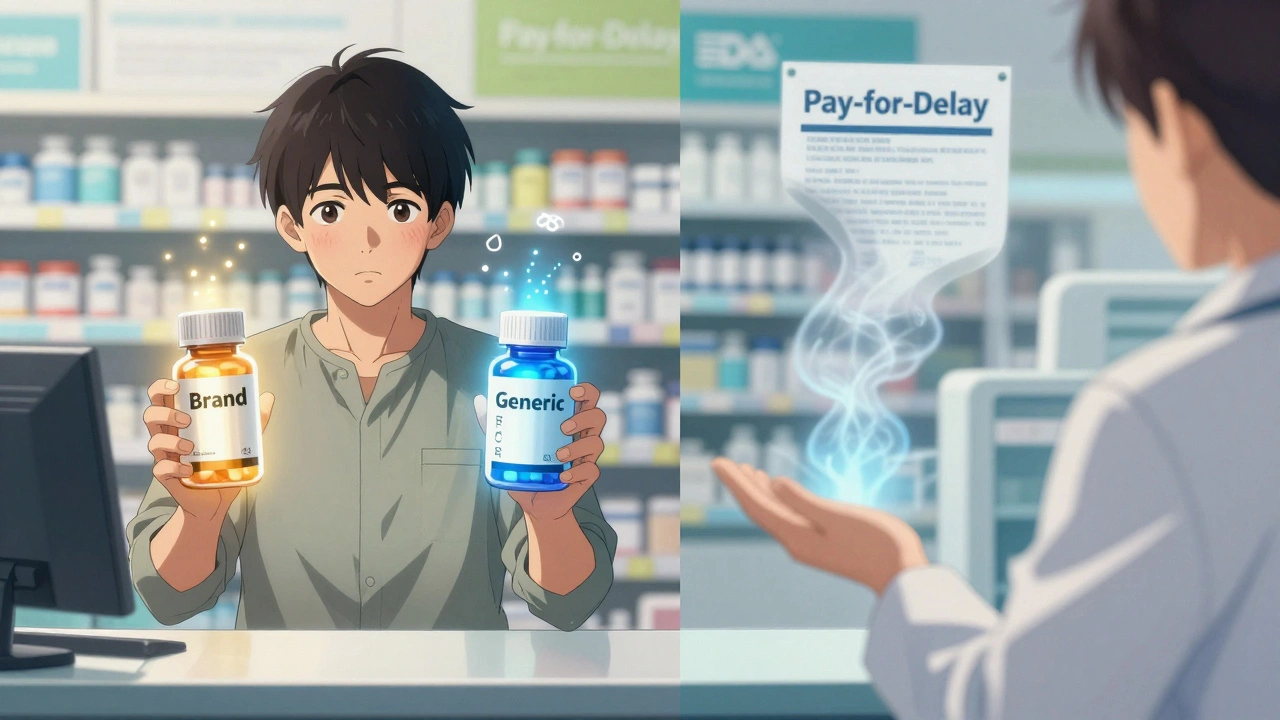
A pharmaceutical patent gives a company exclusive rights to sell a drug for up to 20 years from the filing date. But because it takes 7-10 years just to develop and get FDA approval, most drugs only have 7-10 years of actual market exclusivity. Once that clock runs out, generic manufacturers can step in with identical versions at 80-85% lower prices. For example, when Lipitor’s patent expired in 2011, its generic version sold for less than $10 a month compared to $200+ for the brand. But here’s the catch: companies don’t just sit back and wait. They build patent thickets-dozens of secondary patents on minor changes like new coatings, extended-release formulas, or combo pills-to delay generics. Nearly 80% of the top 100 selling drugs have more than 10 patents each. Some even pay generic makers to stay off the market (called “pay-for-delay”), which cost U.S. patients $13 billion in unnecessary spending in 2023 alone.Why This Matters for Patients
If you’re on a chronic medication-say, for diabetes, high cholesterol, or rheumatoid arthritis-you’re likely affected by this. When a patent expires, your pharmacy might switch you to a generic without asking. That’s usually fine. But not always. Generic drugs must be bioequivalent to the brand-name version, meaning they deliver 80-125% of the active ingredient into your bloodstream. That’s legal. But inactive ingredients? Those can differ. One patient might switch from brand-name Lamictal to a generic and suddenly get headaches or rashes because of a different filler. In a 2022 Kaiser Family Foundation survey, 37% of patients on long-term meds reported new side effects after switching to generics-even when they met all regulatory standards. And if you’re on a biologic-like Humira, Enbrel, or Keytruda-the story gets more complicated. Biosimilars aren’t exact copies. They’re highly similar, but harder to make. They take years to develop and cost millions to produce. As a result, they’re only 20-40% cheaper at first, not 80%. And even after two years, only 38% of biologic prescriptions switch to biosimilars in the U.S., compared to over 90% for small-molecule generics.How Healthcare Systems Are (and Aren’t) Preparing
Hospitals, insurers, and pharmacy benefit managers (PBMs) are facing a $356 billion storm of expiring patents between 2023 and 2028. The biggest hits? Immunology ($45 billion at risk), neuroscience ($38 billion), and oncology ($32 billion). The smart ones start planning two years in advance. That means:- Tracking every patent expiration date across 1,400+ drugs annually
- Building a team of pharmacists, finance officers, and clinicians to assess alternatives
- Negotiating contracts with generic makers before the drug hits the market
- Updating formularies so the cheapest, safest option becomes the default
The U.S. vs. The Rest of the World
In Europe, when a patent expires, prices drop fast-often to 30-40% of the original cost-because governments set reference prices. If a brand-name drug costs $100, the generic can’t be priced higher than $40. The U.S. doesn’t do that. Instead, we have rebates, formulary tiers, and complicated deals between drugmakers and PBMs. So while generics are cheaper, they’re not always as cheap as they seem. For example, after a patent expires, a brand-name drug might still be listed as “preferred” on your insurance plan because the manufacturer is paying a rebate to the PBM. That means you pay more out-of-pocket, even if the generic is technically cheaper. This is why U.S. drug prices fall only to 60-70% of the original over 18-24 months, while Europe sees 70-90% drops within months.What You Can Do as a Patient
You don’t have to wait for your doctor or insurer to act. Here’s what you can do:- Know your drug’s patent status. Use the FDA’s Drug Shortage Database or the Purple Book to check if your drug is still under patent. If it’s not, ask if a generic is available.
- Ask about biosimilars. If you’re on a biologic like Humira, ask if a biosimilar is an option. Some are just as effective and far cheaper.
- Don’t assume the generic is the same. If you feel different after switching-more fatigue, new rash, mood changes-tell your doctor. It’s not “all in your head.”
- Check your formulary. Log into your insurer’s website and see what’s covered. If your drug just went generic, your copay might drop dramatically.
- Use mail-order pharmacies. Many offer generics at $5-$10 a month for 90-day supplies.
What Systems Need to Do Next
Healthcare organizations need to stop treating patent expiry like a surprise. Here’s how to get ahead:- Use patent tracking tools like Symphony Health’s PatentSight or Clarivate’s Cortellis. These platforms alert teams to upcoming expirations and patent extensions.
- Build a cross-functional LOE (Loss of Exclusivity) team with pharmacy, finance, clinical, and IT staff.
- Start clinical education 9 months before expiry-train doctors on therapeutic substitution and how to explain it to patients.
- Develop patient communication materials in plain language. A simple handout can reduce confusion and discontinuation by 35%.
- Push for reference pricing models. Even if your state doesn’t have them, advocate for them. They work.
The Future Is Here
The Inflation Reduction Act of 2022 lets Medicare negotiate prices for 10-20 drugs starting in 2026-most of which will be nearing patent expiry. That could force manufacturers to lower prices even before generics arrive. AI is helping too. Health systems using AI to predict patent expirations have improved forecasting accuracy from 65% to 89%. The FDA is also speeding up approvals for complex generics under GDUFA III, cutting the transition time from 18 to 12 months. But the biggest threat? Next-gen therapies like gene and cell treatments. These aren’t covered by traditional patent rules. Their protections are murky. And when they expire? We’re not ready.Bottom Line
Patent expiry isn’t a distant legal issue. It’s your next prescription. It’s your next bill. It’s your next doctor’s visit. The system is changing. Patients who ask questions, track their meds, and speak up get better outcomes. Systems that plan ahead save millions. The clock is ticking. Don’t wait until your drug disappears from your formulary to start paying attention.What happens to my medication when its patent expires?
When a drug’s patent expires, generic versions can legally enter the market. Your pharmacy may switch you to a cheaper generic version unless your doctor specifies “dispense as written.” The active ingredient is the same, but inactive ingredients (like fillers or dyes) may differ, which can sometimes cause side effects. For biologics, you may be offered a biosimilar, which is highly similar but not identical.
Are generic drugs as safe and effective as brand-name drugs?
Yes, by law, generics must meet the same FDA standards for safety, strength, and quality as brand-name drugs. They must be bioequivalent, meaning they deliver the same amount of active ingredient into your bloodstream within the same timeframe. However, differences in inactive ingredients can cause minor side effects in some people, especially those with sensitivities. If you notice changes after switching, talk to your doctor.
Why are biosimilars more expensive than regular generics?
Biosimilars are made from living cells, not chemicals, so they’re far more complex to produce. Developing one costs hundreds of millions and takes years. Unlike small-molecule generics, they can’t be exact copies. This makes them harder to manufacture and slower to enter the market. As a result, they’re typically 20-40% cheaper than the original biologic, not 80-85% like regular generics.
How can I find out when my drug’s patent expires?
Check the FDA’s Purple Book for biologics or the Orange Book for small-molecule drugs. You can also use tools like Drugs.com or the FDA’s Drug Shortage Database. Many health systems now use AI-powered platforms to track expirations, but patients can access public databases for free. If you’re unsure, ask your pharmacist or doctor.
Why does my insurance still cover the brand-name drug after generics are available?
Drugmakers often pay rebates to pharmacy benefit managers (PBMs) to keep their brand-name drug on a preferred tier-even after generics are available. This can make the brand appear cheaper to your insurance, even if it costs you more out-of-pocket. Always compare the copay for the generic versus the brand. If the generic is cheaper, ask your doctor to switch you.
What should I do if I experience side effects after switching to a generic?
Don’t ignore it. Document your symptoms and bring them to your doctor. It’s not uncommon for people to react to different inactive ingredients in generics. Your doctor can request the brand-name version be dispensed “dispense as written,” or try a different generic manufacturer. Some states allow pharmacists to switch generics back to the brand if you report issues.
Is there a way to save money before a patent expires?
Yes. Start now. Ask your doctor if there’s a therapeutically equivalent drug already available as a generic. Use mail-order pharmacies for 90-day supplies. Check if your manufacturer offers a patient assistance program. Some drugmakers offer coupons even before patent expiry to retain customers. And if you’re on Medicare, review your Part D plan during open enrollment-you might switch to a plan with better coverage for your upcoming generic.
joanne humphreys
December 6, 2025 AT 22:03I switched from brand-name Lamictal to a generic last year and developed a rash that wouldn’t go away. My doctor thought I was overreacting until I insisted on switching back. Turns out, the filler in the generic was triggering my skin. Now I always check the manufacturer before accepting any switch. It’s not just about the active ingredient-it’s the whole package.
Patients deserve transparency, not just a cheaper label.
Nigel ntini
December 8, 2025 AT 00:55It’s staggering how little the average patient knows about patent cliffs. In the UK, we’ve had reference pricing for decades-when a patent expires, the price drops like a stone, and everyone adapts. Here in the US, it’s a chaotic free-for-all where rebates and PBMs play puppet master. The system isn’t broken-it was designed this way to enrich intermediaries, not patients.
Someone needs to pull back the curtain.
Priya Ranjan
December 9, 2025 AT 10:14Why do people still trust generics? The FDA’s bioequivalence standard is a joke. 80-125% range? That’s not medicine-that’s gambling. I’ve seen people go from stable to suicidal after switching. And no one takes responsibility. The system is a scam disguised as progress. If you’re not on brand-name, you’re playing Russian roulette with your health.
Stop pretending cost savings are worth your life.
Gwyneth Agnes
December 10, 2025 AT 02:49Generics aren’t the same. I switched. Got sick. Doctor didn’t care. Now I pay out of pocket. Worth it.
Ashish Vazirani
December 11, 2025 AT 22:06Oh, so now America’s the villain because we don’t let Europe dictate our drug prices? We invented these drugs! We funded the research! Now they come here, buy generics for pennies, and act like we’re the ones being greedy? This isn’t capitalism-it’s theft wrapped in a NHS blanket. And don’t get me started on how India’s generic factories are flooding the market with subpar stuff-no one checks quality there!
We protect our innovation, and we should be proud of it.
Mansi Bansal
December 12, 2025 AT 02:47It is imperative to underscore the systemic failure inherent in the American pharmaceutical landscape. The commodification of human health, driven by profit-maximizing entities such as Pharmacy Benefit Managers and pharmaceutical conglomerates, has precipitated a crisis of trust and therapeutic efficacy.
The regulatory framework, while ostensibly robust, permits a pernicious opacity wherein inactive ingredients-unmonitored for immunogenicity or neurotoxicity-are permitted to vary without patient notification. This constitutes a profound breach of the physician-patient fiduciary relationship. Furthermore, the proliferation of biosimilars, while economically advantageous, introduces a therapeutic uncertainty that is neither disclosed nor adequately studied in real-world populations.
It is not merely a matter of cost-it is a moral imperative to restore transparency, accountability, and patient autonomy to the pharmacological ecosystem.
Kay Jolie
December 13, 2025 AT 11:30Okay but have you seen the AI tools that predict patent expirations now? Like, Clarivate’s Cortellis uses NLP to scrape global patent filings and cross-reference with FDA submissions-it’s like having a crystal ball for your formulary team. We integrated it last quarter and saved $2.1M on just three drugs.
It’s not magic. It’s data. And if your hospital is still using Excel spreadsheets? Honey, you’re in the Stone Age.
Also-biosimilars are the future. If you’re on Humira, you’re basically paying for the brand’s marketing budget. Time to upgrade.
pallavi khushwani
December 13, 2025 AT 18:52I’ve been on a biologic for 8 years. When the first biosimilar came out, I was scared. But I talked to my rheumatologist, read the studies, and tried it. No difference. Saved me $1,200 a month. Why are we so afraid of change? We accept different brands of coffee or toilet paper-why not medicine?
It’s not about trust in science. It’s about fear of the unknown. And that fear? It’s being exploited.
Billy Schimmel
December 14, 2025 AT 15:12So let me get this straight… the same pills, just cheaper, but we’re supposed to be scared of them? Meanwhile, the guy who invented the drug retired on a yacht 15 years ago. And now you’re telling me I should pay $200 for the same thing because… reasons?
Y’all really out here fighting for Big Pharma’s vacation fund.
Shayne Smith
December 14, 2025 AT 15:49My pharmacy switched me without telling me. I didn’t notice until my refill was a different color. Then I Googled it and found out it was generic. I called them. They said ‘it’s the same thing.’ I said ‘then why’s it a different color?’ They hung up.
So yeah. I’m not trusting them anymore.
Jackie Petersen
December 15, 2025 AT 15:54Patent expiry? That’s just the tip of the iceberg. Did you know the FDA gets pressured by lobbyists to fast-track generics from China? Those pills? They’re made in factories with no inspections. I know a guy whose mom had a stroke after switching. The FDA knew. They just didn’t care.
This isn’t about cost. It’s about control. And the people who run this? They’re not doctors. They’re investors. And you? You’re just a number on a spreadsheet.
Annie Gardiner
December 15, 2025 AT 18:02Wait, so the reason we can’t have nice things like affordable meds is because… the system is designed to fail? That’s not a flaw-that’s the feature. The whole thing is a Ponzi scheme where the middlemen get rich and the sick get the bill.
Why do we keep pretending this is healthcare? It’s a market. And markets don’t care if you die.
Kumar Shubhranshu
December 16, 2025 AT 10:47Patent thickets are legal fraud. 10 patents on a pill coating? That’s not innovation. That’s extortion. And the U.S. lets it happen because Congress is owned by pharma. Simple as that.
Fix the law. Not the patient.