
Sunscreen Science: SPF, UVA/UVB, and Daily Protection Explained
 Nov, 25 2025
Most people think sunscreen is just for beach days. But if you’re not using it every day, you’re letting invisible damage pile up on your skin-slowly, silently, and permanently. UV rays don’t wait for clear skies or summer heat. They’re there when you walk to the bus, sit by the window, or check your phone in the morning. And the damage adds up faster than you realize.
What SPF Really Means (And Why Higher Numbers Don’t Mean Much More)
SPF stands for Sun Protection Factor. It’s not a measure of how long you can stay in the sun. It’s a measure of how much UVB radiation gets blocked. SPF 15 blocks about 93% of UVB rays. SPF 30 blocks 97%. SPF 50 blocks 98%. That’s it. There’s no magic jump from 97% to 100%. The difference between SPF 30 and SPF 50 is just 1% more protection. But here’s the catch: most people apply less than half the amount they should. So if you’re using SPF 50 but only putting on a quarter of the right amount, you’re effectively getting SPF 12 or less.
The FDA and the Skin Cancer Foundation now recommend SPF 30+ for daily use and SPF 50+ for extended outdoor time. Why? Because real-world use is messy. You sweat. You rub your face. You miss spots. Higher SPF gives you a buffer. It’s not about perfection-it’s about safety nets.
UVA vs. UVB: The Two Types of Sun Damage You Can’t See
Not all UV rays are the same. UVB rays are the ones that burn. They’re shorter wavelengths, hitting the top layer of your skin, causing redness, peeling, and the classic sunburn. These are the main culprits behind skin cancers like melanoma and squamous cell carcinoma.
But UVA rays? They’re the silent destroyers. Longer wavelengths, deeper penetration. They reach the dermis, where collagen and elastin live. That’s why you get wrinkles, sagging, and dark spots-even on cloudy days or through windows. UVA makes up 95% of the UV radiation that reaches Earth. And here’s the kicker: it doesn’t care about the season. It’s just as strong in January as it is in July.
That’s why “broad spectrum” isn’t just a marketing word. It’s a legal requirement. To be labeled broad spectrum, a sunscreen must protect against UVA rays in proportion to its SPF. That means if it’s SPF 50, the UVA protection must be at least one-third of that-so UVA-PF of at least 16.6. The Skin Cancer Foundation now requires SPF 50+ products to have UVA-PF scores of 20 or higher to earn their Seal of Recommendation. That’s not arbitrary. It’s science.
Mineral vs. Chemical: What’s Actually in Your Sunscreen?
There are two main types of sunscreen: mineral and chemical. They work differently, and your skin type might make one better than the other.
Mineral sunscreens use zinc oxide and titanium dioxide. These sit on top of your skin and physically block UV rays like tiny mirrors. They start working immediately. They’re less likely to irritate sensitive skin or cause breakouts. But they can leave a white cast-especially on deeper skin tones. That’s why newer formulas use micronized or tinted versions. Brands like Suntribe and CeraVe have made big strides here.
Chemical sunscreens use ingredients like avobenzone, octinoxate, and octocrylene. They absorb UV rays like a sponge, converting them into harmless heat. They tend to feel lighter, blend better, and don’t leave a white cast. But some people react to them. Oxybenzone, in particular, has been linked to breakouts and eye stinging. Reddit users with acne-prone skin report clearing up within weeks after switching to mineral formulas. And while chemical sunscreens are effective, some ingredients like oxybenzone and octinoxate are banned in places like Hawaii and Palau because they harm coral reefs.
Neither is “better.” It’s about what works for your skin and lifestyle. If you’re sensitive, go mineral. If you hate the white cast and don’t react to chemicals, go chemical. Just make sure it says “broad spectrum” and SPF 30+.
How Much Should You Actually Use? (Most People Are Getting It Wrong)
Here’s the truth: you’re probably using too little. Dermatologists recommend 1/4 teaspoon for your face and neck. That’s about the size of a nickel. For your whole body? About an ounce-the size of a shot glass.
But studies show 90% of people apply only 25-50% of that amount. And here’s what happens when you underapply: SPF 30 drops to SPF 7.5. SPF 50 drops to SPF 12.5. You think you’re protected. You’re not. That’s why you still get sun damage even with “high SPF” sunscreen.
Apply it like you’re painting your skin. Don’t just dot it on. Spread it out. Wait 15 minutes before going outside or putting on makeup. If you’re using it under makeup, let it sink in first. Otherwise, it pills. And if you’re wearing foundation or powder on top? That’s fine-but make sure the sunscreen was applied properly underneath.
Reapplication: When and Why You Need to Do It
You don’t need to reapply every two hours if you’re sitting at your desk. But if you’re outside, sweating, swimming, or wiping your face? Yes. Every two hours. Or immediately after towel-drying.
Water resistance isn’t waterproof. It’s either 40 or 80 minutes. After that, protection fades. And sweat? It washes sunscreen away. Even if you’re not getting wet, your skin’s natural oils break it down over time.
Pro tip: If you’re wearing makeup, use a sunscreen spray or powder with SPF for touch-ups. But don’t rely on them alone. They rarely give you enough coverage unless you spray 5-6 times per side of your face. And even then, you’re not getting the same protection as a proper cream application.

What About Cloudy Days, Winter, or Indoors?
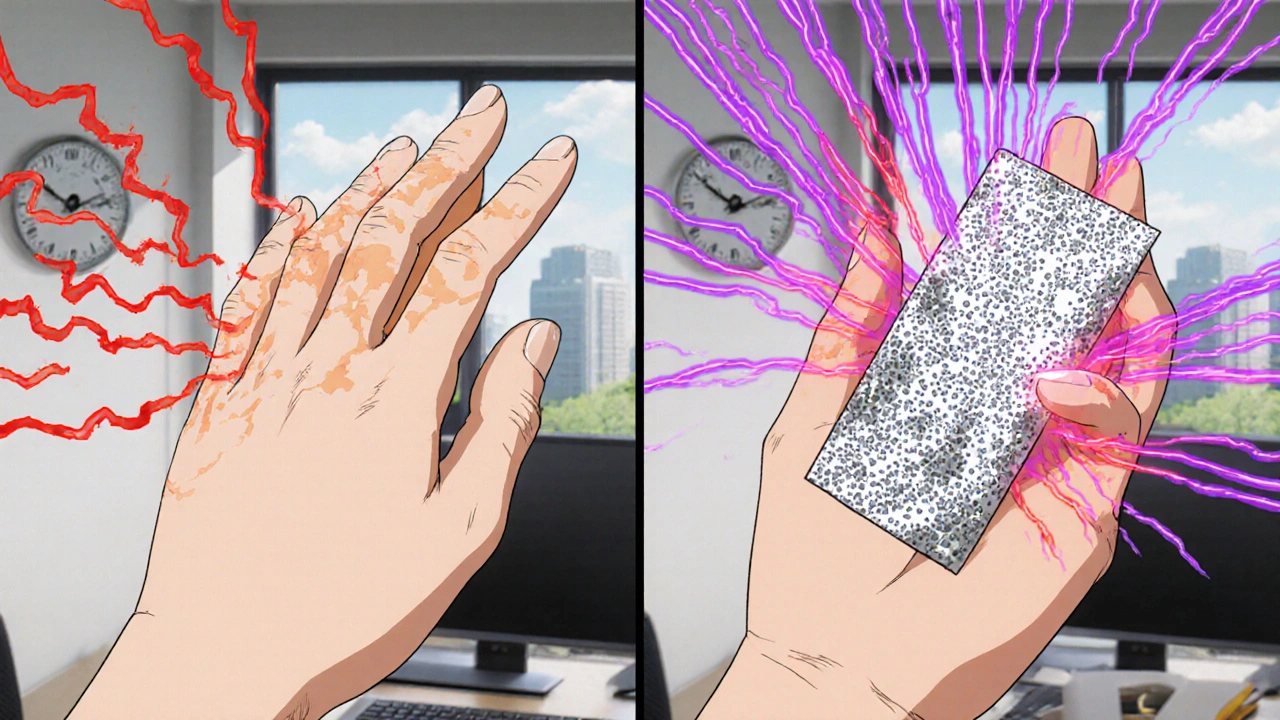
UVA rays penetrate clouds. They penetrate glass. That means if you sit by a window at home or in your car, you’re getting exposure. A 2022 study by dermatologist Dr. Leslie Baumann found that UVA intensity remains steady all day, year-round-even in the UK. That’s why daily sunscreen isn’t optional. It’s preventative healthcare.
And yes, you still need it in November. The UV index in Bristol might be low, but UVA doesn’t care. It’s still there. And cumulative exposure is what leads to aging and skin cancer. You wouldn’t skip brushing your teeth because you didn’t eat sugar that day. Don’t skip sunscreen because it’s cloudy.
What to Look for on the Label (And What to Ignore)
Ignore “waterproof.” That term is banned by the FDA. Look for “water resistant (40 minutes)” or “water resistant (80 minutes).”
Look for “broad spectrum.” Always. If it’s not there, it’s not protecting you from UVA.
Look for SPF 30 or higher. SPF 15 is no longer considered adequate for daily use by the Skin Cancer Foundation or the American Academy of Dermatology.
Avoid oxybenzone if you’re sensitive or concerned about the environment. Look for “reef-safe” labels if you’re near oceans. Zinc oxide and titanium dioxide are the safest bets for reefs and skin.
Check the expiration date. Sunscreen loses effectiveness after two years. If it’s separated, smells weird, or changed color? Pitch it.
The Bottom Line: Daily Sunscreen Is Non-Negotiable
You don’t need the most expensive bottle. You don’t need SPF 100. You don’t need to wear it like armor. You just need to use a broad-spectrum SPF 30+ every single day-rain or shine, summer or winter, indoors or out.
It’s the single most effective anti-aging product you’ll ever use. It’s the most proven way to lower your risk of skin cancer. And it’s cheaper than laser treatments, fillers, or dermatologist visits for precancerous lesions.
Find one you like. Test it on your jawline for a week. If it doesn’t irritate, doesn’t leave a white cast, and feels okay under makeup? Stick with it. Use it. Every. Single. Day.
Because your skin doesn’t remember yesterday’s sunscreen. It only remembers what you did today-and yesterday-and the day before that.
Is SPF 30 enough for daily use?
Yes, SPF 30 is the minimum recommended for daily use by the Skin Cancer Foundation and the American Academy of Dermatology. It blocks 97% of UVB rays. Higher SPFs offer only marginally more protection, but they help compensate for most people applying too little. The key is using it every day and applying enough.
Do I need sunscreen if I’m indoors all day?
Yes. UVA rays penetrate glass and can reach your skin even through windows. Daily exposure adds up over time, contributing to premature aging and increasing skin cancer risk. If you sit near a window at home or work, you’re getting UV exposure. A daily SPF 30+ is a simple, low-effort way to protect your skin.
What’s the difference between mineral and chemical sunscreen?
Mineral sunscreens use zinc oxide or titanium dioxide to physically block UV rays. They start working immediately and are less likely to irritate sensitive skin, but can leave a white cast. Chemical sunscreens absorb UV rays using ingredients like avobenzone or octinoxate. They blend more easily and don’t leave a cast, but some people react to them. Choose based on your skin’s needs, not marketing claims.
Why does my sunscreen pill under makeup?
Pilling happens when sunscreen doesn’t fully absorb before applying other products. Let your sunscreen sit for 15 minutes before moisturizer or foundation. Use a lightweight formula, and avoid layering too many thick products on top. Some sunscreens are specifically designed to work under makeup-look for "non-pilling" or "makeup-friendly" on the label.
Are expensive sunscreens better than drugstore ones?
Not necessarily. Brands like CeraVe, Neutrogena, and La Roche-Posay offer effective, dermatologist-recommended sunscreens at affordable prices. What matters is the SPF, broad-spectrum coverage, and whether you’ll actually use it daily. A cheap sunscreen you apply every day is better than an expensive one you leave on the shelf.
Can I rely on makeup with SPF instead of sunscreen?
No. Most makeup with SPF contains too little product to give you adequate protection. You’d need to apply 7-10 times the normal amount of foundation to reach the labeled SPF. Use a dedicated sunscreen underneath your makeup. SPF in makeup is a bonus, not a replacement.
Is sunscreen safe for acne-prone skin?
Yes, but choose the right type. Mineral sunscreens with zinc oxide are often less irritating and can even help calm acne. Look for labels that say "non-comedogenic" and avoid oxybenzone or fragrances. Many users report clearer skin after switching from chemical to mineral formulas. Patch test first, but don’t skip sunscreen-it can prevent post-acne dark spots from worsening.
Mqondisi Gumede
November 27, 2025 AT 00:30Sunscreen is just another capitalist scam to sell you overpriced lotion while the real enemy is pollution and blue light from your phone
Douglas Fisher
November 27, 2025 AT 00:57I just want to say… thank you… for writing this… with such clarity… and care… I’ve been skipping sunscreen for years… and this… this actually made me stop… and apply… right now…
Albert Guasch
November 28, 2025 AT 08:52It is imperative to underscore the significance of consistent, evidence-based photoprotection as a cornerstone of preventive dermatological health. The data unequivocally supports the utilization of broad-spectrum SPF 30+ as a non-negotiable component of daily hygiene protocols. Under-application remains the primary variable undermining efficacy, and thus, behavioral adherence is paramount. The biological imperative to mitigate cumulative DNA damage cannot be overstated.
Ginger Henderson
November 29, 2025 AT 14:19UVA penetrates glass? Yeah, right. I sit by a window all day and I’m fine. Also, I’ve never gotten skin cancer. Coincidence? I think not.
Bethany Buckley
December 1, 2025 AT 07:38How quaint. SPF 30? How pedestrian. If you’re not using a zinc oxide-based, reef-safe, tinted, non-nano, antioxidant-infused, pH-balanced, fragrance-free, microbiome-friendly, dermatologically tested, clinically proven, 100% mineral formulation with UVA-PF 30+, you’re not protecting your skin-you’re just performing a performative ritual of self-neglect. 🌿✨
Stephanie Deschenes
December 2, 2025 AT 01:22Thank you for the clear breakdown. I’ve been using SPF 15 because I thought it was enough. I’m switching to SPF 30+ today. And I’ll use the nickel-sized amount. No more guessing.
Cynthia Boen
December 3, 2025 AT 20:43This is the dumbest thing I’ve read all week. You’re telling me I need to slather chemical poison on my face every morning just because of some vague ‘risk’? My grandma never used sunscreen and lived to 92. You’re fearmongering.
Amanda Meyer
December 5, 2025 AT 02:28I get that sunscreen is important. But the tone here feels a bit preachy. Not everyone can afford $40 bottles. And what about people with darker skin? The white cast issue is real. Can we talk about accessibility and equity in sun protection, not just science?
Jesús Vásquez pino
December 5, 2025 AT 20:28Wait-you said SPF 50 only blocks 98%? So what’s the point of paying extra? And why are we even talking about this like it’s a moral obligation? I’ve got a job, kids, and a life. I don’t have time to micromanage my sunscreen application like it’s a NASA mission.