
Therapeutic Drug Monitoring for Tricyclic Antidepressants: Reducing Toxicity
 May, 23 2026
TCA Therapeutic Level Analyzer
Enter your latest blood test result (ng/mL) to analyze safety.
Analysis Details
- Medication:
- Your Level: ng/mL
- Target Range: ng/mL
- Toxicity Threshold: > ng/mL
Enter a blood level above to see if it falls within the safe therapeutic window.
ng/mLTricyclic antidepressants (TCAs) are powerful medications that saved countless lives from severe depression decades ago. But they come with a dangerous catch: the line between a helpful dose and a deadly one is razor-thin. You might think that if you take your pill exactly as prescribed, you’re safe. With TCAs, that isn’t always true. Some people metabolize these drugs slowly, causing levels to build up to toxic ranges even at standard doses. This is where therapeutic drug monitoring becomes a lifesaver.
We aren't talking about guessing how you feel. We are talking about precise blood tests that measure the exact amount of medication in your system. This guide explains why this monitoring matters, how it works, and what you need to know to stay safe while treating depression or chronic pain.
Why are Tricyclic Antidepressants so dangerous compared to newer drugs?
Unlike modern SSRIs, which have a wide safety margin, TCAs like Amitriptyline and Nortriptyline block multiple receptors in the body, including those controlling heart rhythm. A slight overdose can cause fatal cardiac arrhythmias. Their "narrow therapeutic index" means the effective dose is very close to the toxic dose.
What is the therapeutic range for common TCAs?
According to international consensus guidelines, the typical therapeutic ranges are: Amitriptyline (80-200 ng/mL), Nortriptyline (50-150 ng/mL), and Desipramine (100-300 ng/mL). Levels above 500 ng/mL for Amitriptyline are associated with severe toxicity and high risk of death.
When should I get my blood tested?
Blood must be drawn at "trough" levels, meaning immediately before your next scheduled dose. Testing should only happen after you have been on a stable dose for 5-7 days, allowing the drug to reach steady-state concentrations in your body.
Can genetic testing replace blood monitoring?
Genetic testing for enzymes like CYP2D6 helps predict how fast you metabolize drugs, but it doesn't give real-time data. Blood monitoring confirms actual drug levels. Combining both methods is considered best practice in advanced care settings.
What are the signs of TCA toxicity?
Early signs include dry mouth, blurred vision, constipation, and rapid heartbeat (tachycardia). Severe toxicity involves confusion, seizures, low blood pressure, and dangerous heart rhythm changes like QRS prolongation on an ECG.
The Narrow Window: Why TCAs Need Watching
Imagine driving a car where the speedometer has no numbers, only a tiny green zone between "too slow" and "engine explosion." That is what treating patients with Tricyclic Antidepressants feels like for doctors. Developed in the late 1950s, these drugs work by blocking the reuptake of serotonin and norepinephrine. They are incredibly effective for treatment-resistant depression and certain types of nerve pain.
But here is the problem: everyone’s body processes chemicals differently. Two people taking the same 50mg pill might have vastly different blood levels. One person might clear the drug quickly, getting no benefit. The other might process it slowly, letting the drug accumulate to toxic levels. This variability is driven largely by liver enzymes, specifically CYP2D6 and CYP2C19. Genetic differences in these enzymes can cause plasma concentrations to vary by up to 30-fold between individuals.
Without monitoring, you are flying blind. The risk isn't just discomfort; it's life-threatening toxicity. Fatal outcomes have been reported from single-tablet ingestions in sensitive individuals. This is why experts call TDM "indispensable" for safe TCA therapy. It transforms guesswork into precision medicine.
Understanding the Numbers: Therapeutic Ranges
You cannot manage what you do not measure. To keep you safe, labs look for specific concentration ranges in your blood. These ranges are not arbitrary; they are based on decades of clinical data linking blood levels to both efficacy and side effects.
| Medication | Therapeutic Range (ng/mL) | Toxic Threshold (Approx.) | Primary Use |
|---|---|---|---|
| Amitriptyline | 80 - 200 | > 500 | Depression, Neuropathic Pain |
| Nortriptyline | 50 - 150 | > 300 | Depression, Migraine Prevention |
| Desipramine | 100 - 300 | > 450 | ADHD, Depression |
Notice that Nortriptyline has a lower ceiling than Amitriptyline. This is because Nortriptyline is an active metabolite of Amitriptyline. In fact, doctors often monitor the ratio of parent drug to metabolite. If you are taking Amitriptyline, your body converts some of it into Nortriptyline. A high ratio of Nortriptyline to Amitriptyline is generally associated with fewer side effects and better tolerability. This nuance is something only blood testing can reveal.
How the Test Works: Timing Is Everything
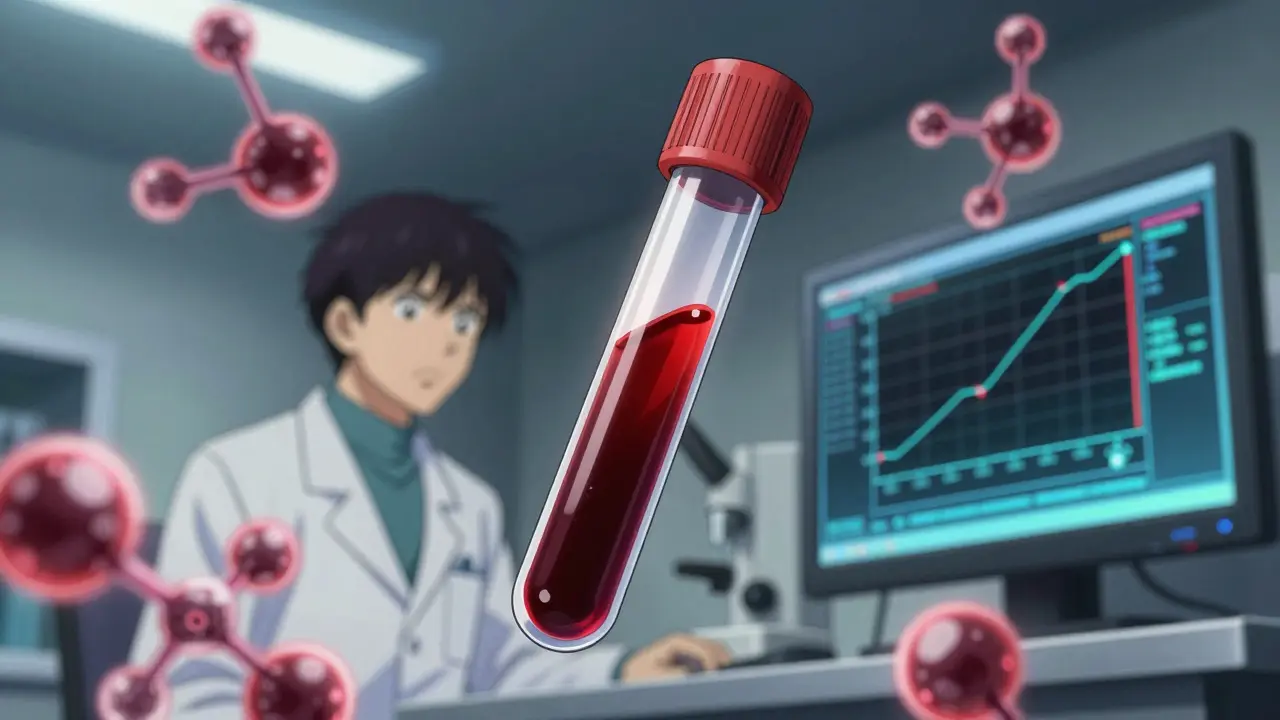
Getting a blood test for TCA levels seems simple, but timing is critical. If you draw blood too soon after taking your pill, you will measure the peak level, which doesn't reflect your baseline exposure. If you wait too long, the level drops. The gold standard is measuring "trough" levels.
This means you must take your blood sample immediately before your next scheduled dose. For example, if you take your pill every morning at 8 AM, your blood draw should be at 7:55 AM, right before you swallow the pill. Furthermore, you need to be on a consistent dose for at least 5 to 7 days before testing. This allows the drug to reach "steady state," where the amount entering your body equals the amount leaving it.
Laboratories typically use High-Performance Liquid Chromatography (HPLC) or Mass Spectrometry to detect these tiny amounts of drug. Turnaround time is usually 24 to 48 hours. While this might seem slow, it is necessary for accuracy. Newer point-of-care devices are emerging, promising results in 20 minutes, but widespread adoption is still pending.
Who Needs Monitoring Most?
Not every patient needs weekly blood draws. However, certain groups are at significantly higher risk. If you fall into any of these categories, TDM is not optional-it is essential.
- Elderly Patients: Older adults make up nearly 40% of TCA users. Aging reduces liver function and kidney clearance, leading to slower drug elimination. They are also more sensitive to anticholinergic side effects like confusion and falls.
- Polypharmacy Patients: If you take other medications, especially those that inhibit CYP2D6 (like fluoxetine or paroxetine), your TCA levels can skyrocket. Drug interactions are a leading cause of accidental toxicity.
- Treatment-Resistant Cases: If you aren't feeling better despite being on a "standard" dose, your metabolism might be clearing the drug too fast. TDM can confirm if you need a higher dose or a switch to a different agent.
- Suspected Non-Adherence: Sometimes patients forget pills or take them irregularly. A zero or near-zero blood level confirms non-adherence, helping doctors address behavioral issues rather than increasing the dose unnecessarily.
Beyond the Blood Test: Clinical Correlation
A common mistake is treating the number instead of the patient. A blood level of 180 ng/mL might be perfectly fine for one person but cause dizziness in another. This is called individual sensitivity variance.
Doctors must combine lab results with clinical signs. Key indicators of impending toxicity include:
- Cardiac Changes: An ECG showing QRS widening greater than 100 milliseconds is a red flag. This indicates sodium channel blockade in the heart, which can lead to fatal arrhythmias.
- Anticholinergic Effects: Dry mouth, blurred vision, urinary retention, and constipation.
- CNS Symptoms: Tremors, confusion, or excessive sedation.
The Future: Genetics and AI
The landscape of TCA management is evolving. Pharmacogenetic testing, which analyzes your DNA for enzyme variants, is becoming more common. About 32% of major academic medical centers now offer combined genotyping and TDM. Knowing you are a "poor metabolizer" of CYP2D6 allows doctors to start with much lower doses, potentially reducing the need for frequent blood draws later.
Artificial Intelligence is also stepping in. New platforms integrate blood levels, ECG data, and symptom reports to predict toxicity risks in real-time. These tools help clinicians spot subtle trends before a crisis occurs. While we move toward personalized algorithms, the core principle remains unchanged: respect the narrow window of TCAs, and let data guide your safety.
Naresh Chandra
May 25, 2026 AT 00:54I really appreciate this detailed breakdown, because it highlights the critical importance of therapeutic drug monitoring for those on TCAs! It is fascinating how narrow the therapeutic window is, and I agree that blood tests are essential for safety! The point about CYP2D6 metabolism variability is particularly insightful, as it explains why standard doses can be dangerous for some individuals! We must not underestimate the role of precision medicine in managing these potent medications!
Cyburg Adeoye
May 25, 2026 AT 12:23It is truly encouraging to see such comprehensive information shared here, as it empowers patients to take control of their health outcomes! The emphasis on trough levels before dosing is a vital clinical pearl that many might overlook! Furthermore, the integration of pharmacogenetic testing with traditional TDM represents a significant leap forward in personalized care! Let us continue to support evidence-based practices that enhance patient safety and efficacy!
Joseph Teichman
May 26, 2026 AT 04:23good info but my doc never ordered blood work just guessed dose. felt like crap until i switched meds.
Grace Gayle McMullen
May 26, 2026 AT 05:54i totally get that frustration! its wild how many doctors still wing it with old school psych meds. im lucky my pcp insisted on checking my nortriptyline levels after i got dizzy all the time. turned out i was a slow metabolizer so even low dose was too much for me. definitely ask for the test if u feel weird!
Tim Reynolds
May 26, 2026 AT 09:02This entire premise is flawed; they want you dependent on labs so they can charge more fees! The pharmaceutical industry pushes these expensive tests to keep you hooked on their narrative! Real healing comes from natural remedies, not toxic chemicals monitored by corporate shills! Wake up people! Do not trust the medical establishment!
Groman Neta
May 27, 2026 AT 16:41The article is poorly written and fails to address the fundamental flaws in modern psychiatry. It assumes that biochemical markers equate to mental health improvement, which is a simplistic and outdated view. Patients should focus on lifestyle changes rather than relying on dangerous drugs with severe side effects.
Ryan Jones
May 27, 2026 AT 21:45u think u r safe with blood tests? nah man they r watching ur dna through the lab results. big pharma knows exactly who r poor metabolizers and uses that data against u. stop taking the pills and start thinking for urselves. the system is rigged to keep u sick and compliant
Ramanath Rao
May 28, 2026 AT 04:21In India we often have limited access to such specialized monitoring services. This creates a huge disparity in patient safety compared to western countries. Doctors here rely heavily on clinical observation due to cost constraints. It is unacceptable that life-saving precision medicine is treated as a luxury item. We need affordable genetic testing and routine TDM for all patients regardless of socioeconomic status!
irine sabrina
May 28, 2026 AT 06:45I find this perspective incredibly valuable and thought-provoking. It underscores the necessity of individualized treatment plans in psychiatric care. By embracing both genetic insights and real-time monitoring, we can foster a more compassionate and effective healthcare environment. Let us advocate for equitable access to these advanced diagnostic tools for everyone.
Gary Helminiak
May 29, 2026 AT 12:35Hey folks! Just wanted to chime in with some extra context about how HPLC works since I mentioned it earlier 😊 High-Performance Liquid Chromatography separates compounds based on polarity, allowing precise quantification of TCAs in serum. Mass spec is even cooler because it detects mass-to-charge ratios 🧪✨ Many labs now use LC-MS/MS for better sensitivity. If your doctor doesn't explain the method used, ask them! Knowledge is power 💪📚
dane thorp
May 30, 2026 AT 04:23Please stick to the topic of therapeutic drug monitoring. Off-topic conspiracy theories do not contribute to the discussion.
Russell Russell
May 30, 2026 AT 05:45Consider the philosophical implications of reducing human suffering to mere numbers. While data guides us, empathy must drive our actions. True healing occurs when science serves humanity, not the other way around. Let us remain vigilant against dehumanizing metrics.
Christina Mitchell
May 31, 2026 AT 19:25This discussion highlights the beautiful intersection of biology and personal experience. Each person's metabolic journey is unique, shaped by genetics and environment alike. Embracing this diversity allows us to tailor treatments with greater compassion and precision. Let us celebrate the complexity of human health.
Christopher Laver
May 31, 2026 AT 20:49Boring. Read the title.