
What Does a Medication Expiration Date Mean for Safety? A Guide to Shelf Life and Risks
 Jun, 16 2026
It happens to almost everyone. You reach into your medicine cabinet during a headache or a minor illness, pull out a bottle of pills, and glance at the label. The date has passed. Maybe by a month. Maybe by two years. Your immediate thought is likely: "Is this still safe to take?" It feels wasteful to throw away perfectly good-looking tablets, but taking them feels risky. So, you stand there, holding that little plastic container, wondering what that printed date actually means for your health.
The short answer is that an expiration date is not a magic switch that flips a drug from "safe" to "poison" overnight. Instead, it represents the final day a manufacturer guarantees the full potency, safety, and purity of the medication when stored under specific conditions. However, ignoring that date entirely can be dangerous depending on the type of drug. Understanding the science behind these dates helps you make smarter decisions about what stays in your cabinet and what goes in the trash.
How Expiration Dates Are Determined
To understand why we have expiration dates, we have to look at how they are created. These dates aren't guessed; they are derived from rigorous scientific protocols known as stability testing. Since the U.S. Food and Drug Administration (FDA) mandated these requirements in 1979, pharmaceutical companies must prove their drugs remain effective over time.
Manufacturers subject their products to extreme environmental conditions to predict long-term stability. This process, often called accelerated stability testing, exposes drugs to high temperatures (around 40°C or 104°F) and humidity levels (75% relative humidity) for several months. The goal is to simulate years of aging in a much shorter timeframe. If a drug maintains at least 90% of its labeled potency after this stress test, the manufacturer sets an expiration date-usually between 12 to 60 months from the production date.
This system ensures that when you buy a new prescription, you get exactly what the doctor prescribed. The FDA verifies these dates using guidelines from the International Council for Harmonisation (ICH). Essentially, the date on the box is a legal guarantee of quality, not just a suggestion.
The Myth of Instant Toxicity
A common fear is that expired medications turn toxic immediately after the date passes. For most solid oral dosage forms like tablets and capsules, this is largely a myth. Drugs generally degrade slowly. They don't suddenly release harmful chemicals; instead, they gradually lose strength.
Historical data supports this. The Shelf Life Extension Program (SLEP), conducted by the U.S. military between 1985 and 2006, tested thousands of lots of unopened drugs stored in ideal conditions. The results were surprising: approximately 88% of the medications remained effective well beyond their original expiration dates, with some lasting up to 15 years. For example, ciprofloxacin maintained 97% of its potency 12 years past its expiry, and amoxicillin retained 94% effectiveness eight years later.
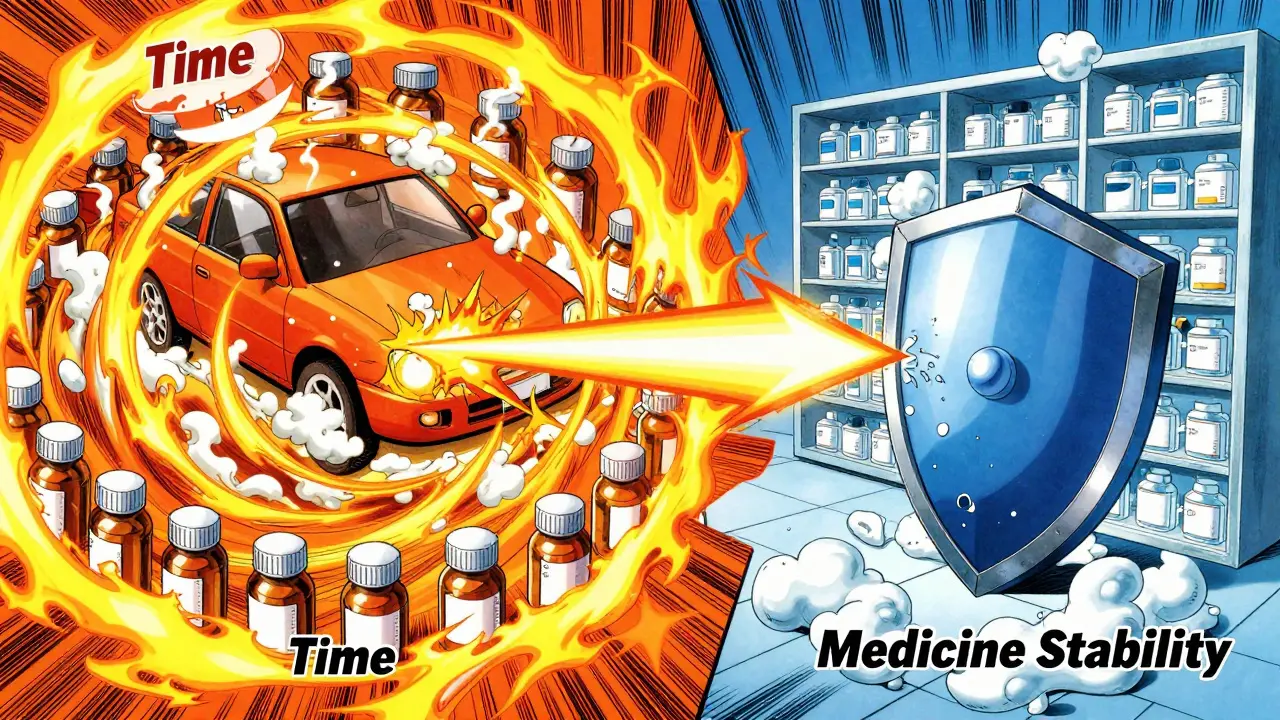
However, "ideal conditions" is a key phrase here. Most people do not store their medicines in climate-controlled military warehouses. We keep them in bathroom cabinets where humidity spikes during showers, or in cars where temperatures swing wildly. These real-world conditions accelerate degradation, making the SLEP findings less applicable to the average home medicine cabinet.
When Expired Drugs Are Dangerous
While many stable pills might retain enough potency to work for a few months past their date, some medications pose serious risks if they expire. You should never use expired versions of the following:
- Nitroglycerin: Used for chest pain (angina), this drug degrades rapidly. Sublingual tablets can lose 50% of their potency within 3 to 6 months of opening the bottle, even before the printed expiration date. Using a weakened dose during a heart attack could be fatal.
- Insulin: Diabetes management requires precise dosing. Insulin degrades significantly when exposed to temperatures above 8°C (46°F). Studies show it can lose 1.5-2.5% of its effectiveness per month if not refrigerated properly. An expired or heat-damaged vial can lead to dangerously high blood sugar levels.
- Liquid Antibiotics: Once you mix a liquid antibiotic suspension (like amoxicillin-clavulanate) with water, the clock starts ticking fast. These suspensions typically become ineffective within 14 days of reconstitution, regardless of the powder's original expiration date. Taking a weakened antibiotic can fail to kill bacteria, leading to treatment failure and resistance.
- Epinephrine Auto-injectors (EpiPens): In cases of severe allergic reactions (anaphylaxis), every milligram counts. Epinephrine loses 15-20% of its potency annually after expiration. Relying on an expired EpiPen during a life-threatening reaction could result in underdosing, which can be deadly.
- Warfarin: This blood thinner has a narrow therapeutic window. Fluctuations in its potency due to age or storage can lead to unpredictable bleeding risks or clot formation.
The Role of Storage Conditions
If expiration dates are based on ideal lab conditions, your home environment plays a huge role in actual shelf life. Heat and moisture are the enemies of drug stability. According to the European Medicines Agency, medications stored at 30°C (86°F) degrade 40-60% faster than those kept at 25°C (77°F).
Consider where you keep your meds. The bathroom is the most popular place for medicine cabinets, but it is also one of the worst. Showers create steam that raises humidity to 75-85%, which can cause tablets to crumble or coatings to break down. Instead, store medications in a cool, dry place like a bedroom drawer or a kitchen cupboard away from the stove and sink. Keep them in their original containers with child-resistant caps sealed tight to protect against light and air exposure.
Visible changes are your best warning signs. If tablets change color (e.g., white turning yellow), develop an unusual odor, or physically crumble or crystallize, discard them immediately. These physical changes indicate chemical breakdown that cannot be reversed.
Regulatory Perspectives vs. Reality
There is a disconnect between regulatory advice and scientific reality. The FDA consistently advises consumers not to use expired medicines, stating in a 2017 advisory that doing so is "risky and possibly harmful." Their stance is conservative, prioritizing absolute safety guarantees over potential waste reduction.
Conversely, experts like Dr. Lee Cantrell, Director of the California Poison Control System, have published studies showing that many prescription drugs retain 90% potency decades past expiration if stored properly. Dr. Joel Davis, Chief Pharmacist at Johns Hopkins Hospital, noted in a 2022 commentary that for stable chronic conditions like hypertension, expired ACE inhibitors might retain sufficient potency for short-term use during shortages, provided they were stored correctly.
Despite this nuance, the Institute for Safe Medication Practices (ISMP) categorizes expiration risks strictly. High-risk categories include nitroglycerin, insulin, and liquid antibiotics. Moderate risks include standard antibiotics and anticoagulants. Low-risk categories contain stable solid forms like statins and antidepressants. While a slightly weaker statin might not cause immediate harm, relying on it for critical conditions is unsafe because you cannot verify the exact remaining potency without laboratory testing.
Proper Disposal and Waste Reduction
Throwing expired medications in the household trash or flushing them down the toilet poses environmental and safety risks. Pills can leach into groundwater, and accessible medications can be mistaken for candy by children or pets.
The safest disposal method is through drug take-back programs. The DEA hosts National Prescription Drug Take-Back Days twice a year, with thousands of collection sites nationwide. In 2023, these events removed nearly 900,000 pounds of unused medications from homes. Many local pharmacies and police stations also offer permanent drop-off boxes.
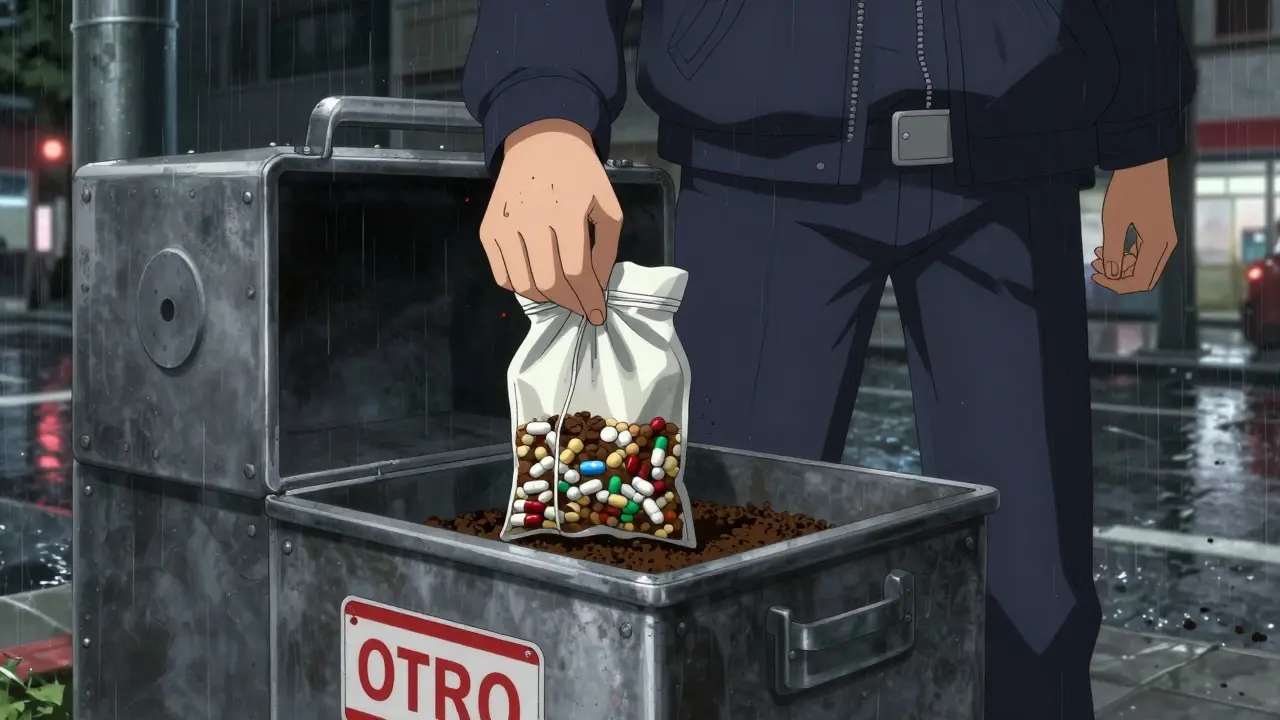
If no take-back option is available, the FDA recommends mixing non-flushable medications with an unappealing substance like dirt, cat litter, or used coffee grounds in a sealed plastic bag before throwing them in the trash. Only flush medications specifically listed on the FDA's Flush List, such as fentanyl patches and oxycodone immediate-release tablets, due to their high risk of overdose if misused.
Can I take a pill that expired last month?
For most stable solid medications like aspirin or ibuprofen, taking a pill that expired a month ago is likely safe and will still provide relief, though it may be slightly less potent. However, you should never do this with critical medications like insulin, nitroglycerin, or epinephrine auto-injectors, where even small losses in potency can be life-threatening.
Why do liquid antibiotics expire so quickly after mixing?
Liquid antibiotics are often supplied as powders to maintain stability. Once mixed with water, the chemical structure becomes vulnerable to degradation and bacterial growth. Most reconstituted suspensions lose effectiveness within 7 to 14 days, regardless of the original expiration date on the bottle. Always check the label for the specific "discard after" date provided by the pharmacist.
Does storing medicine in the bathroom ruin it?
Yes, bathrooms are poor storage locations due to high humidity and temperature fluctuations from showers. Moisture can cause tablets to degrade, crumble, or lose potency faster than intended. It is better to store medications in a cool, dry place like a bedroom drawer or a kitchen cupboard away from appliances that generate heat.
Are expired antibiotics dangerous?
Expired antibiotics may not be toxic, but they are dangerous because they might not work. If the potency has dropped below therapeutic levels, the antibiotic may fail to kill the infection completely. This can lead to treatment failure and contribute to antibiotic resistance, making future infections harder to treat. Never use expired antibiotics for active infections.
How should I dispose of expired medications safely?
The best option is to use a drug take-back program at a pharmacy or law enforcement agency. If that is not available, mix non-flushable medications with an unappealing substance like coffee grounds or cat litter, seal them in a bag, and throw them in the trash. Only flush medications explicitly listed on the FDA's Flush List, such as certain opioids, to prevent accidental ingestion.