
Zoonotic Diseases: How Animal-to-Human Infections Spread and How to Stop Them
 Jan, 26 2026
More than 60% of all known infectious diseases in humans started in animals. That’s not a statistic from a sci-fi movie-it’s the reality we live in. Every time you pet your dog, handle raw chicken, get bitten by a mosquito, or even clean out a reptile tank, you’re interacting with a hidden network of pathogens that can jump from animals to people. These are called zoonotic diseases, and they’re not rare outliers. They’re the reason we’ve had Ebola outbreaks, bird flu scares, and the global pandemic that reshaped life in 2020.
What Exactly Are Zoonotic Diseases?
Zoonotic diseases, or zoonoses, are infections caused by germs-viruses, bacteria, parasites, or fungi-that spread between animals and humans. The word comes from the Greek zoon, meaning animal. These aren’t just diseases that animals get and humans catch by accident. They’re a two-way street. Humans can pass diseases to animals too, like when a person with the flu infects their pet cat or dog. Some of the most well-known zoonotic diseases include:- Rabies: Nearly 100% fatal once symptoms appear, usually spread through bites from infected dogs, bats, or raccoons.
- Salmonella: Commonly linked to reptiles, chicks, and undercooked poultry. Causes severe diarrhea, fever, and stomach cramps.
- Lyme disease: Transmitted by ticks that picked up the bacteria from deer or mice.
- Trichinosis: From eating undercooked meat, especially wild game like bear or wild boar.
- Psittacosis: A pneumonia-like illness from breathing in dust from bird droppings, often affecting bird owners or poultry workers.
- Ringworm: Not a worm-it’s a fungal infection spread by direct contact with infected pets, especially cats.
What makes these diseases tricky is that animals often show no signs of illness. A healthy-looking turtle can carry salmonella. A bat flying over your backyard might be carrying Ebola or a cousin of SARS-CoV-2. You can’t always tell who’s dangerous just by looking.
How Do These Diseases Jump From Animals to Humans?
There are five main ways zoonotic diseases make the leap:- Direct contact: Touching, petting, or being bitten or scratched by an infected animal. A vet who got a cat scratch that turned into cat scratch disease (Bartonella henselae) had no idea the cat was carrying it-no fever, no lethargy, just a normal-looking pet.
- Indirect contact: Touching surfaces or environments contaminated by animal fluids. Cleaning a reptile tank without gloves? That’s a risk. So is walking through soil where infected livestock have defecated.
- Vector-borne: Bites from ticks, mosquitoes, fleas, or lice that picked up the pathogen from an animal. Lyme disease, West Nile virus, and plague all spread this way.
- Foodborne: Eating undercooked meat, raw milk, or eggs contaminated with pathogens. The CDC says 1 in 6 Americans gets sick from foodborne illness every year-and many of those cases are zoonotic.
- Waterborne: Drinking or swimming in water contaminated with animal waste. This is common in rural areas without clean water systems, but also happens when runoff from farms enters lakes or rivers.
Here’s something most people don’t realize: you don’t need to be near a wild animal to be at risk. Most human cases come from domestic animals or food sources. In 2023, a family in Wisconsin got salmonella from pet turtles. The kids didn’t even go outside-they just touched the tank and then their mouths. The youngest, age two, ended up in the hospital with dehydration.
Why Are Zoonotic Diseases Getting Worse?
It’s not just bad luck. Human activity is making zoonotic spillovers more likely.- Deforestation and land use: When we cut down forests for farming or housing, we push wild animals into closer contact with people and livestock. Studies show land-use change is behind 31% of new zoonotic disease events.
- Wildlife trade: Live animal markets, exotic pet sales, and bushmeat hunting bring species together in unnatural ways. This is how HIV likely jumped from chimpanzees to humans in the early 1900s.
- Intensive farming: Crowded conditions in poultry and pig farms create perfect breeding grounds for viruses to mutate and jump to humans. Avian flu strains keep popping up because of this.
- Climate change: Warmer temperatures let ticks and mosquitoes expand into new areas. By 2050, the area suitable for Lyme disease in North America could grow by 45%.
Dr. Anthony Fauci once said, “Four out of every five emerging infectious diseases come from animals.” That’s not hyperbole. It’s data. And it’s why the next pandemic won’t start in a city-it’ll start in a forest, a farm, or a backyard.
How to Protect Yourself (And Your Family)
The good news? You don’t need to avoid all animals. You just need to know how to reduce risk.- Wash your hands: After handling animals, cleaning cages, or touching soil. Use soap and water for at least 20 seconds. Studies show this cuts pathogen transfer by 90%.
- Cook meat properly: Poultry to 165°F, ground beef to 160°F. Don’t rely on color-use a thermometer. Salmonella and E. coli don’t care if your steak looks “done.”
- Don’t kiss your pets: Their mouths aren’t clean. Even dogs carry bacteria that can cause infections in humans.
- Use gloves: When cleaning litter boxes, bird cages, or reptile tanks. A 2021 JAMA study found gloves reduce zoonotic exposure by 85%.
- Check for ticks: After hiking or playing in grassy areas. Remove them with tweezers-don’t burn or twist them.
- Keep pets vaccinated: Rabies shots for dogs and cats aren’t just law in most places-they’re life-saving.
- Avoid wild animals: Don’t touch baby deer, raccoons, or bats. Even if they seem harmless, they’re carrying something you can’t see.
One of the biggest mistakes? Thinking zoonotic diseases only affect farmers or vets. In 2022, the American Veterinary Medical Association surveyed 1,200 pet owners. 23% had been exposed to a zoonotic disease. Most didn’t know how to prevent it. Ringworm and cat scratch disease were the top two. Neither required exotic animals-just regular pets.
The One Health Approach: Why Humans and Animals Need to Be Protected Together
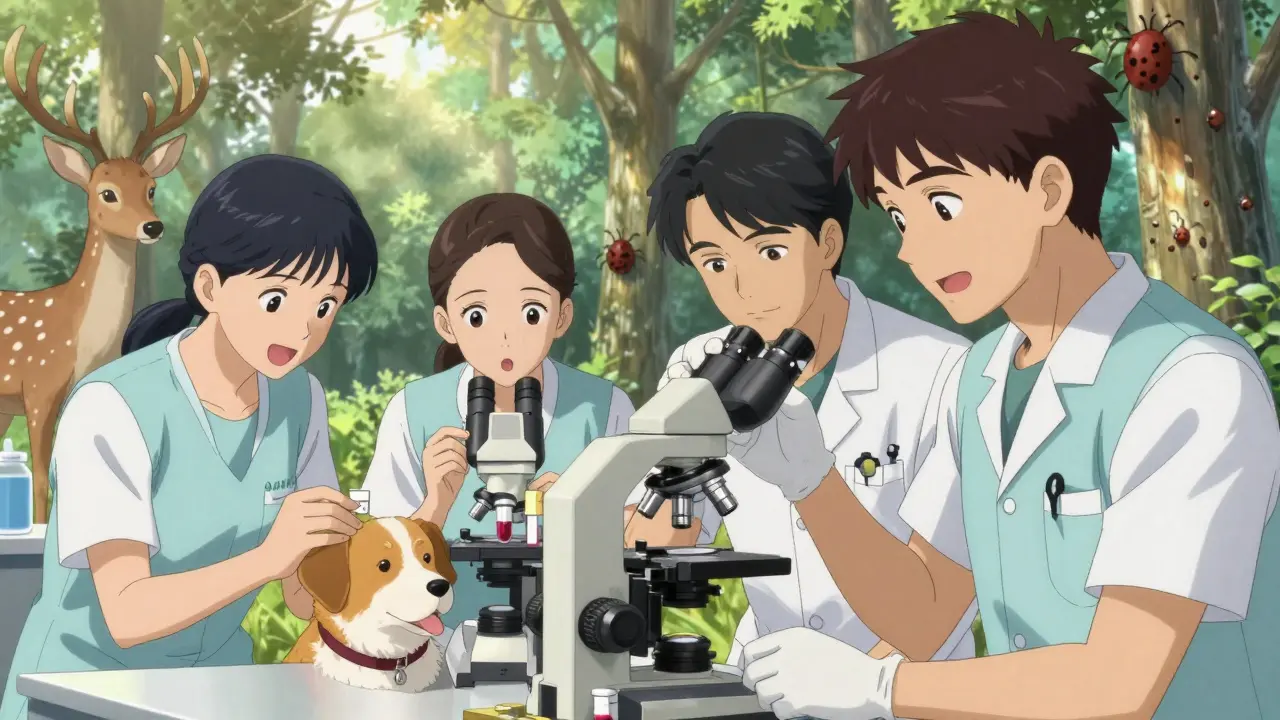
The solution isn’t just better handwashing. It’s systemic. That’s where the One Health approach comes in.One Health means linking human health, animal health, and environmental health into one system. Instead of doctors treating sick people and vets treating sick pets, they work together. Surveillance teams monitor animals for signs of disease before humans get sick. Water and soil samples are tested alongside patient reports. Farms and wildlife reserves are part of the same public health grid.
Uganda reduced rabies deaths by 92% by vaccinating 70% of its dog population. That’s One Health in action: protect the animals, protect the people.
But here’s the problem: only 17% of countries have full One Health coordination. In the U.S., only 28 states require all zoonotic diseases to be reported. Many doctors still don’t know how to spot them. A 2023 report found 68% of physicians lack training in zoonotic disease recognition.
That’s why the CDC launched a $25 million initiative in 2023 to create regional One Health University Centers. And why the WHO, FAO, and OIE are pushing for $10 billion a year in global investment. The return? For every dollar spent, you save $100 in pandemic costs.
What Happens When We Ignore the Signs?
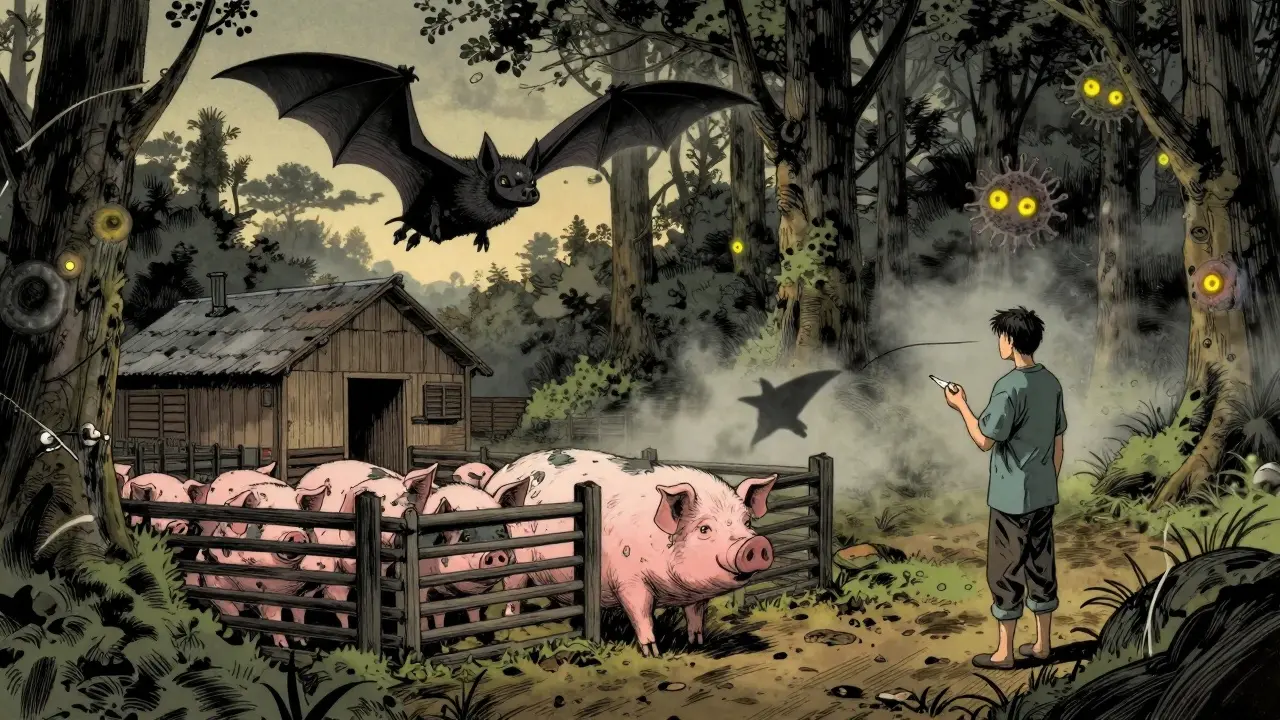
In 2018, a Nipah virus outbreak hit Kerala, India. Twenty-three people got sick. Seventeen died. Why? Because the first cases were mistaken for regular flu. By the time they realized bats were the source, it was too late. The virus had already jumped from bats to pigs to humans.That’s the cost of fragmentation. When human health workers don’t talk to wildlife biologists, and farmers don’t report sick animals, outbreaks grow quietly. And then they explode.
Antimicrobial resistance is another silent crisis. About 20% of the 2.8 million antibiotic-resistant infections in the U.S. each year come from zoonotic pathogens. Overuse of antibiotics in livestock is making these diseases harder to treat.
Final Thoughts: It’s Not About Fear-It’s About Awareness
You don’t need to live in fear of your pet or your food. But you do need to be informed.Zoonotic diseases aren’t going away. Climate change, urban sprawl, and global trade are making them more common. But they’re also preventable-if we act together.
Wash your hands. Cook your meat. Vaccinate your pets. Don’t touch wild animals. Report sick animals to your vet. Support policies that connect human and animal health.
The next big outbreak won’t be announced by a news alert. It’ll start with a farmer noticing his pigs are dying. A child getting sick after playing with a turtle. A hiker finding a tick stuck to their leg. Those are the warning signs. And they’re ours to act on.
astrid cook
January 27, 2026 AT 16:14Okay but let’s be real - if you own a reptile and don’t get salmonella, you’re just lucky. I’ve seen people kiss their turtles like they’re babies. This isn’t science, it’s negligence wrapped in cute hashtags. And don’t even get me started on ‘petting zoos’ at birthday parties. Kids with sticky hands and zero hygiene. We’re one bad outbreak away from a national panic and nobody’s doing anything.
Meanwhile, the CDC is out here handing out pamphlets like we’re in a 1990s health class. Wake up. This is 2025. We’re not stopping this with hand sanitizer and hope.
Marian Gilan
January 28, 2026 AT 10:47they told us it was all about bats but now its everythin. i saw a vid where a guy got sick from his goldfish. goldfish. like… who even touches those? and then they say its climate change? nah. its the gov’t. they’re releasing it in the water. why? to make us buy more antibiotics? or to push the one health agenda? they want to control everything. even your cat’s sneeze. you think your vet is your friend? nah. they’re reporting you. to the matrix. 🤫
Paul Taylor
January 28, 2026 AT 21:04Look I’ve been working with livestock for 25 years and I’ve never had a zoonotic disease but I’ve seen too many people panic over nothing. The truth is our immune systems evolved alongside these pathogens. We didn’t just suddenly become fragile. Washing hands is good. Cooking meat is good. But don’t turn your home into a biohazard lab because a blog told you to. Most of these risks are microscopic. Like, literally. We’re talking about odds lower than getting struck by lightning twice while winning the lottery. We need to stop fearmongering and start educating. And yeah, One Health is the way forward but it’s not a magic bullet. It’s a slow, messy, expensive process that requires trust between farmers, vets, doctors, and regular folks who just want to pet their dog without guilt.
Also, don’t let anyone tell you you’re irresponsible for having a pet. That’s not science. That’s anxiety dressed up as public health.
Murphy Game
January 30, 2026 AT 04:14They’re lying about the 60%. It’s 87%. They hide the real data because if people knew how many diseases come from pets, the pet industry would collapse. You think your dog’s clean? Your dog licks your face, your kids, your food. You think the FDA checks every batch of raw pet food? No. They’re underfunded. The CDC doesn’t track most cases because they don’t want to scare the public. You think they want you to know your parakeet could be carrying a strain of bird flu that mutates into something airborne? No. They want you to keep buying treats and toys. And the ‘One Health’ thing? That’s just a Trojan horse for government control. Next thing you know, they’ll require DNA scans on your cat before you can adopt it.
And don’t even get me started on the WHO. They’re not saving lives. They’re selling vaccines. Always vaccines.
John O'Brien
January 30, 2026 AT 22:15Bro I had a roommate who got ringworm from his cat and then blamed the vet. Dude didn’t even wash his hands after scooping litter. I told him to stop being a germaphobe and just clean up. He cried. I laughed. Look, pets are part of life. You don’t need to live in fear. Just be smart. Wash your damn hands. Don’t kiss your snake. Cook your chicken. Done. No need for panic, no need for $10 billion global programs. Just basic hygiene. And if you’re still scared, get a cactus. They don’t carry diseases. Just thorns. And you can’t kiss a cactus. Win win.
Also, stop giving your dog human food. That’s how you get E. coli. I’ve seen it. It’s gross.
Andrew Clausen
February 1, 2026 AT 17:47The statistic that 60% of infectious diseases are zoonotic is misleadingly presented. It conflates known zoonoses with emerging pathogens. The vast majority of these are rare, geographically limited, or historically contained. The inclusion of ringworm and salmonella - common, treatable, low-mortality conditions - inflates the perceived threat. Meanwhile, the article omits that human-to-human transmission accounts for over 90% of global infectious disease burden. The focus on pets and backyard turtles distracts from the real drivers: antimicrobial resistance in hospitals, vaccine hesitancy, and poor sanitation infrastructure in urban slums. One Health is a noble concept, but its implementation is being weaponized to justify regulatory overreach into private pet ownership under the guise of ‘prevention.’
Candice Hartley
February 3, 2026 AT 10:22my kid touched a turtle last week and i panicked 😭 but then i washed his hands and we watched a documentary about frogs. now he wants to be a vet. 🐢❤️🩺
thank you for this. i didn’t know half this stuff. i thought ringworm was just a weird rash. now i know to check my cat’s ears. 🙏
Harry Henderson
February 3, 2026 AT 19:41Enough with the fear. We need action. Not handwashing pamphlets. Not ‘don’t kiss your dog’ memes. We need mandatory training for vet techs, public health officers, and school nurses. We need funding for rural clinics that can test animal waste. We need real-time data sharing between farms and hospitals. This isn’t a ‘be careful’ issue. It’s a systemic failure. And if you’re not screaming about it, you’re part of the problem. The next pandemic doesn’t care if you’re scared. It only cares if you’re ready. Are you ready? Or are you scrolling through TikTok while the ticks multiply?
suhail ahmed
February 5, 2026 AT 10:58In India, we’ve lived with zoonotic risks for centuries - cows, monkeys, stray dogs, monsoon floods carrying sewage. We didn’t have CDC guidelines. We had grandma’s wisdom: wash after touching animals, never drink from puddles, never feed wild birds with bare hands. Modern science just gave names to old practices. One Health? We’ve been doing it since the Vedas - humans, animals, earth, all connected. The real tragedy? We’re losing that wisdom because we’re too busy chasing ‘innovation.’
My uncle in Kerala? He vaccinates every stray dog he sees. No paperwork. No grant. Just love. That’s One Health in action. Not a $10 billion WHO campaign. Just a man with a syringe and a heart.
And yes, I’ve had ringworm from my cat. Took three weeks. Worth it. He’s still my best friend.
Desaundrea Morton-Pusey
February 7, 2026 AT 05:08Why are we even talking about this? America has bigger problems. Illegal immigration, border security, inflation. You think a turtle is gonna kill us? Get real. This is woke science. They want you to fear your own pet so you’ll vote for more government control. Wake up. This is just another way to make you feel guilty for living your life. Next they’ll say you can’t have a dog because it ‘contributes to climate change.’
My dog poops in the yard. I pick it up. That’s enough. Stop the fear porn.
April Williams
February 7, 2026 AT 18:02If you own a pet and don’t get tested for zoonotic pathogens every six months, you’re a danger to society. I’ve seen children die from cat scratch disease because their parents thought it was ‘just a scratch.’ You think your ‘loving’ cuddles are harmless? They’re biological time bombs. You’re not a pet owner - you’re a public health liability. Get your animals tested. Get yourself tested. Report every sneeze. If you won’t, the state should take your pets away. No exceptions. This isn’t cruel - it’s responsible. Your love is killing people.
And yes, I’m serious. I’ve filed reports. I’ve called the CDC. I’m not sorry.
Conor Flannelly
February 8, 2026 AT 17:32There’s a quiet beauty in the way life connects - the tick that feeds on a deer, carries Lyme, then bites a hiker who later passes it to their partner, who then infects their child’s teacher, who unknowingly spreads it in a classroom. It’s not a flaw. It’s a rhythm. We think we’re separate from nature. But we’re woven into it. The same bacteria that keep our gut healthy can, in another body, cause death. The same bat that pollinates a fruit tree might carry a virus that ends a life. It’s not about control. It’s about humility.
One Health isn’t about policy. It’s about remembering we’re not the center. We’re just one thread. And when we pull too hard on ours, the whole tapestry frays.
Wash your hands. Yes. But also: sit quietly. Listen. The animals are trying to tell us something.
Conor Murphy
February 8, 2026 AT 23:26I’ve been a vet tech for 18 years. I’ve seen it all. The guy who got salmonella from his pet iguana. The woman who got toxoplasmosis from her cat and thought it was the flu. The kid who got ringworm from a shelter puppy and got bullied for it. I’ve also seen the families who changed everything - started washing hands, got their pets vaccinated, stopped feeding raw meat. And guess what? They stayed healthy. No drama. No panic. Just common sense.
Don’t listen to the fearmongers. Don’t listen to the deniers. Listen to the data. And then do the simple things. Wash. Cook. Vaccinate. Report. That’s it. No need for conspiracy. No need for guilt. Just responsibility.
And if you’re still scared? Adopt a shelter animal. They need you. And you need them more than you know.
Paul Taylor
February 9, 2026 AT 04:40Look, I get why people panic. But here’s what no one says: the real risk isn’t your pet. It’s the fact that most doctors have never been trained to recognize zoonotic diseases. I had a friend with Lyme who went to four doctors before anyone even tested for it. They thought it was fibromyalgia. That’s the real failure. Not the turtle. Not the cat. The system. We spend billions on fancy tech but forget to teach basic diagnostics. If a doctor can’t tell the difference between a tick bite and a rash, no amount of handwashing will save us.
So yeah - wash your hands. But also demand better medical training. That’s the real win.